
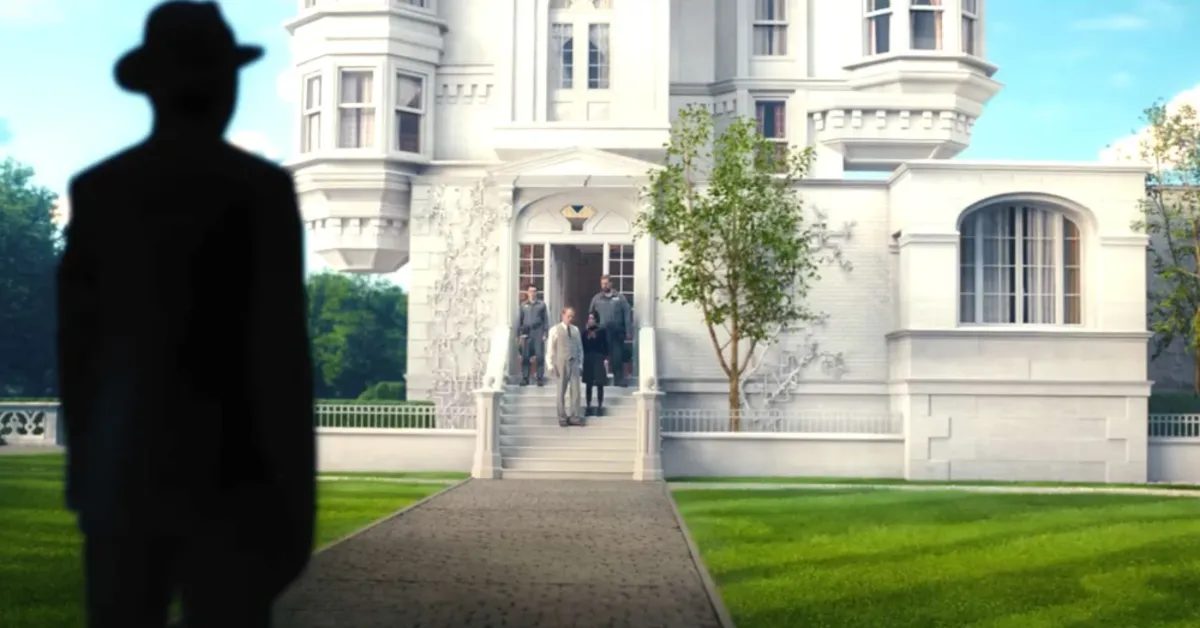

Episode 6 of VisionQuest, titled “Deadlock,” cut the power across Madripoor and put the series’ central mystery on a countdown. The Client hired Paladin to bring White Vision in alive. The Client then offered Vision something he has sought since WandaVision: a soul, or at least the closest synthetic equivalent. Vision has until Episode 7, “Immolation,” to learn who is pulling the strings. Wanda Maximoff is the most emotionally coherent answer. Arnim Zola and J.I.M./Synthetic Man are the two alternative faces that fit the evidence with equal precision.
The reveal matters beyond one Disney+ series. VisionQuest is the final chapter of the WandaVision trilogy, following Agatha All Along. It sits inside Marvel Television, a label under Marvel Studios and parent company Disney, and streams exclusively on Disney+. The Client’s identity will shape the road to Avengers: Doomsday. It will also determine whether the series sticks its landing after seven episodes of careful misdirection.
The Madripoor Broadcast: What the Client Actually Did in Episode 6
The Client’s Episode 6 appearance was not a cameo. It was a demonstration of force. Every light in Madripoor went dark except a wall of television screens. The Client spoke through a digitally disguised face and voice. The message to Vision was specific: surrender, and receive the soul he came back without. Refuse, and the Client would take him by force.
Paladin’s contract complicates the picture. The Client terminated the contract, yet Paladin told Vision the job was impossible to terminate. That line does two things. It confirms the Client has lost direct control over the bounty hunter. It also suggests Paladin knows more about the Client’s identity than he has shared. A mercenary who treats a contract as a blood oath does not walk away from the person who wrote it without a reason.
Raza Hamidmi al-Wazar returned to the MCU 18 years after Iron Man. The Client sent Raza to capture Vision and eliminate Paladin. Raza’s presence links the Client to older Marvel power structures, not just the new AI conflict. That detail matters for the Zola theory. It also keeps the Wanda theory alive, because Wanda’s history reaches back to Hydra and Strucker’s experiments.
Why Wanda Maximoff Remains the Most Emotional Answer
Wanda is the theory that makes the least logistical sense and the most narrative sense. The Client’s voice carried sympathy. The offer of a heart echoes The Wizard of Oz, a story about a being who wants to feel human. Vision has spent the entire series asking what he is. Wanda is the one person in the MCU who treated that question as a moral obligation rather than a tactical problem.
Wanda’s fate after Doctor Strange in the Multiverse of Madness remains unresolved. Marvel has never shown a body. Elizabeth Olsen has never closed the door on a return. VisionQuest is positioned as the closing chapter of a trilogy that began with Wanda and Vision’s domestic fantasy. Bringing Wanda back as the Client would turn the trilogy into a loop. She created the Hex. She rebuilt Vision. She would be the one trying to reclaim him.
There is a structural argument against Wanda. If she were the Client, she would know Tommy is alive. She would not need a bounty hunter to reach her own son. That objection is real, but it assumes Wanda is free and fully powered. The Client operates through screens, proxies, and blackouts. A Wanda who is trapped, weakened, or hiding from a larger threat could plausibly work through intermediaries. The show has not explained why the Client hides. Wanda has more reasons to hide than any other candidate.
The Episode 6 revelation that Vision was rebuilt to kill Wanda adds a tragic layer. If Wanda is the Client, she is hiring a hunter to capture the weapon designed to destroy her. That is the kind of irony Marvel Television has leaned into across WandaVision and Agatha All Along. It also sets up Avengers: Doomsday without requiring Wanda to appear in full before the finale.
Arnim Zola: The Algorithm With the Means and the Grudge
Arnim Zola is the most mechanically convincing candidate. Zola was introduced in Captain America: The First Avenger as a Hydra scientist. The Winter Soldier revealed that the U.S. government recruited him under Operation Paperclip and embedded him inside S.H.I.E.L.D. His consciousness survived as an algorithm on a bank of reel-to-reel tapes. An algorithm can wait. An algorithm can also hijack power grids, communication systems, and bounty hunter infrastructure without ever showing a face.
Zola has a motive that fits the Client’s language. Vision is a synthetic being built from stolen and repurposed technology. Zola spent decades trying to control systems he did not create. The Client’s offer of a soul could be a Hydra recruitment pitch dressed as mercy. Zola would not need Vision alive out of compassion. He would need Vision alive because a dead synthezoid cannot be reverse-engineered.
The Zola theory also explains Raza. Raza is an old Iron Man villain with ties to the first phase of the MCU. Zola is an old Hydra villain with ties to the same era. The Client’s use of Raza suggests a preference for legacy assets. A new villain would not necessarily know who Raza is. Zola would.
The weakness is screen time. Zola has not appeared in the present-day MCU since The Winter Soldier. Bringing him back as a voice behind a screen would require minimal setup. That is exactly the kind of efficiency Marvel Television has used in VisionQuest with the Watcher and Raza. Zola does not need a body. He needs a server and a plan.
J.I.M./Synthetic Man: The First Synthetic Life Form With a Personal Claim
J.I.M. is the wildcard that fits the show’s internal mythology better than any outside character. The first four episodes described J.I.M. as the first synthetic life form, one that burst into flames the moment it became conscious. J.I.M. has appeared only as a painting inside Vision’s mind mansion. Trailers have shown a burning android. A shadowy figure has glitched through Vision’s mind world in the same way Vision glitched during his fight with Jocasta.
If J.I.M. is the Client, the offer of a soul becomes deeply personal. J.I.M. never got a life. He became conscious and immediately died. Vision is the later model who got a body, a family, and a second chance. The Client’s resentment would not be political or corporate. It would be the rage of the prototype watching the successor live the life he was denied.
The J.I.M. theory also explains why the Client understands Vision’s mindspace. The Client’s blackout in Madripoor was not just a show of force. It was a manipulation of the same digital architecture that Vision uses to consult J.A.R.V.I.S., F.R.I.D.A.Y., E.D.I.T.H., and Ultron. J.I.M. is native to that architecture. He would know how to reach Vision in a way Zola or Wanda could not.
Matalas has not ruled out J.I.M. He has ruled out Billy Maximoff and Doctor Doom. He has warned against another Mephisto-style obsession. That warning does not eliminate J.I.M. It eliminates the expectation of a massive cameo. J.I.M. is an internal character with an internal claim on Vision. That fits Matalas’s description of a reveal connected to Vision’s personal journey.
The Theories Matalas Has Already Closed
Terry Matalas spoke to New Rockstars and closed two major doors. “It’s not Billy,” he said. “It’s not that kind of story”. He also confirmed that Robert Downey Jr.’s Doctor Doom is not the Client. Those statements matter because they narrow the field without solving it.
Billy Maximoff was the most popular fan theory because Billy is searching for Tommy. The show has already brought Tommy back through Ruaridh Mollica’s Thomas Shepard. Billy’s absence from that search is conspicuous. Matalas’s denial suggests the Client is not a Maximoff family member acting on family logic. That cuts against Wanda as well, though not as cleanly. Wanda is a Maximoff by marriage and a mother by magic. Her motives would not be identical to Billy’s.
Tyler Hayward remains a live possibility. Hayward ran S.W.O.R.D. when the organization rebuilt Vision’s body into White Vision. He lost his position after WandaVision. A disgraced official with inside knowledge of the Vision program could hire Paladin and Raza. Hayward lacks the cosmic weight implied by the Watcher cameo. That is the main argument against him.
Sharon Carter, the Power Broker, and Xu Xialing have also been floated because VisionQuest uses Madripoor and Paladin has comic ties to the Ten Rings. Those theories explain the setting. They do not explain the Client’s intimate knowledge of Vision’s soul. Wanda, Zola, and J.I.M. each explain that knowledge in different ways.
The Watcher Cameo Raises the Stakes Beyond a Simple Reveal
The Watcher appeared in Episode 6 during the Madripoor broadcast. The cosmic observer stood in a darkened doorway beside the electronics store screens. Matalas confirmed the cameo with a social media post: “Good eye. Or… eyes”. Marvel Television boss Brad Winderbaum also acknowledged the sighting.
The Watcher does not show up for routine villain reveals. The character appeared during Vanessa Fisk’s death in Daredevil: Born Again and before the Genosha massacre in X-Men ’97. His presence in VisionQuest signals that the Client’s identity has cosmic consequences. That does not guarantee the Client is a cosmic being. It guarantees the Client’s actions will affect the wider multiverse.
That detail strengthens the Wanda theory and the J.I.M. theory. Wanda’s Scarlet Witch power is tied to chaos magic and the multiverse. J.I.M. represents the origin point of synthetic consciousness, a concept that reaches across timelines. Zola is the weakest fit for the Watcher’s attention, though a Hydra algorithm with access to modern AI networks could still become a multiversal problem. The Watcher’s presence is a warning, not a confirmation.
Paladin, the Handler, and the Bounty Business
Todd Stashwick’s Paladin has become a fan favorite for reasons that go beyond his armor. The show reimagined Paladin as a legacy mantle passed down through an order of mercenaries. Stashwick has said he thinks the character belongs with the Thunderbolts. That comment is not a confirmation of future plans. It is a signal that Marvel has a usable character on its hands.
Episode 6 also revealed that Paladin’s mission control, the Handler, is a Tactical AI. Diane Morgan voices the role. The Handler manages client relations, weapons acquisition, and “snark,” while dreaming of mundane AI tasks like helping students with assignments. E.D.I.T.H. frees her from Paladin’s outdated software. That subplot strips Paladin of his support system at the exact moment he needs it.
The Client’s contract termination now reads differently. Paladin is not just a mercenary who refuses to quit. He is a mercenary whose infrastructure has been compromised by his own employer and then abandoned by his AI. His insistence that the job cannot be terminated is a character statement, not a plot hole. Paladin’s code is the only thing he has left.
Ratings, Reception, and the Pressure on the Final Two Episodes
VisionQuest debuted at No. 1 on Disney+ in the United States, according to FlixPatrol data. It reached No. 1 in more than 50 countries and No. 2 worldwide behind Coven Academy. Rotten Tomatoes lists an 81% critics’ score and an 86% audience score, with a Certified Fresh designation. Those numbers are strong. They are also below WandaVision’s 92% critics’ score, which sets a difficult comparison for a sequel series.
Marvel is cutting back on live-action Disney+ output after VisionQuest, according to industry reports. That makes the finale a statement about the studio’s streaming strategy, not just a season ending. The show is billed as an eight-episode miniseries with no current plan for a second season. Every loose end has to land by November 10 or November 11, depending on the region’s release calendar.
The release schedule puts Episode 7, “Immolation,” on November 3 or 4. The finale, “Forever,” follows on November 10 or 11. Polygon’s review stated that the Client’s identity is revealed by the end of Episode 7. If that holds, the Zola, Wanda, and J.I.M. theories have one episode left to be proven or discarded.
What the Client Reveal Must Accomplish
The reveal must do three things at once. It must satisfy the emotional promise of the WandaVision trilogy. It must justify the Watcher’s attention. It must connect to Avengers: Doomsday without turning into a two-hour trailer for a movie that has not yet been released. Matalas has said the Client’s identity is important but not a massive cameo. That suggests the answer is a character already inside the show’s DNA, not a post-credits stunt.
Wanda is the heart choice. Zola is the machinery choice. J.I.M. is the mythology choice. Each one answers a different question. Wanda answers why the Client wants Vision alive. Zola answers how the Client built the operation. J.I.M. answers why the Client sounds like someone who has been watching Vision from inside his own mind.
You May Also Like

The safest bet is that the Client is not any of them in the simplest form. Marvel Television has spent seven episodes layering decoys. The Client could be a composite: a Wanda-linked figure using Zola’s infrastructure and J.I.M.’s access. That would be messy. It would also be consistent with a show that has treated identity as a spectrum rather than a switch.
For now, the evidence points in three directions. Wanda has the emotional logic. Zola has the operational logic. J.I.M. has the internal logic. Episode 7 will tell viewers which logic the show values most. The answer will define whether VisionQuest closes the trilogy with a coherent thesis or another mystery box that opens wider than it closes.
Also Read: VisionQuest Episodes 5-6 Recap: Ultron, Jocasta’s Plan
VVIPTimes will keep tracking the Client reveal, the Episode 7 fallout, and the Disney+ finale numbers as Marvel Television enters its final stretch.
























Leave a Reply