
Fans of Peacemaker were shocked when the show’s “perfect” alternate reality was revealed to be a nightmare version of America where Nazis won World War II. What many viewers might not know is that this terrifying twist came not from DC Comics lore, but from one of science fiction’s most respected authors. James Gunn recently confirmed he directly adapted the core concept from Philip K. Dick’s classic 1962 alternative history novel, The Man in the High Castle, making the dystopia more psychologically complex and eerily plausible than typical superhero fare.
The Shocking Peacemaker Reveal
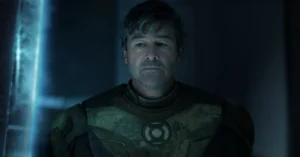
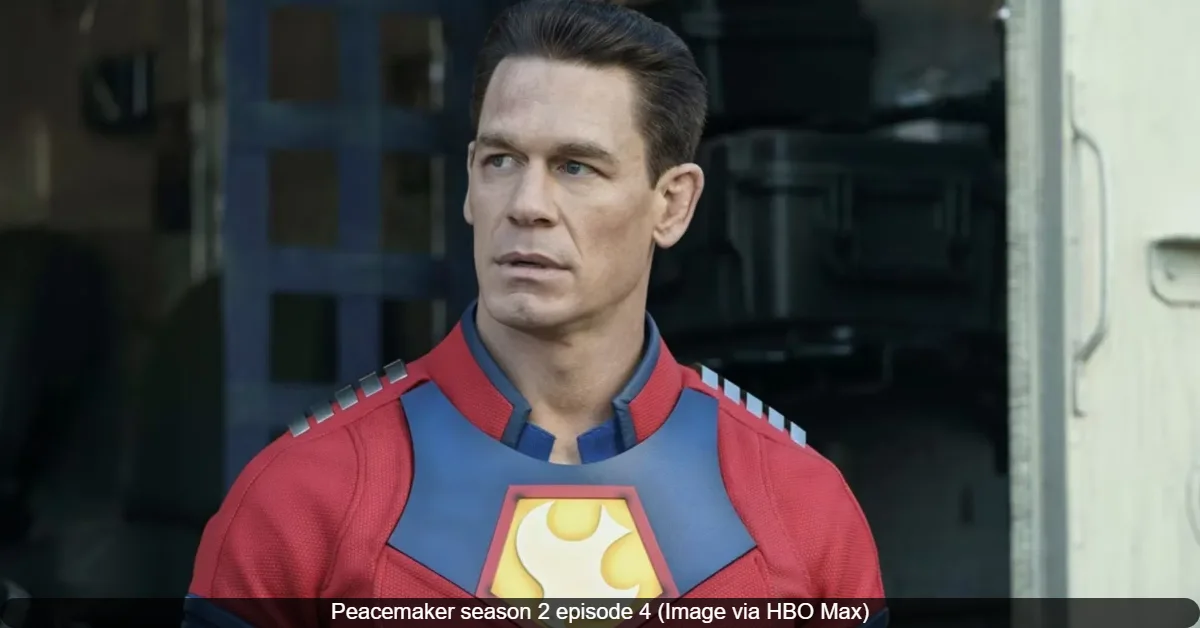
In Peacemaker Season 2, John Cena’s Chris Smith finds himself in what appears to be an ideal dimension. In this world, his abusive father is alive and proud of him, his heroic reputation is untarnished, and he’s part of the celebrated “Top Trio” with his family. The world seems clean, orderly, and welcoming—everything Peacemaker ever wanted.
However, subtle clues gradually reveal the horrifying truth. Alert viewers noticed that this seemingly perfect world lacked racial diversity, with no Black people or other minorities visible in the background. The terrible confirmation came when the American flag was shown with swastikas replacing the stars, revealing this world to be the dystopian Earth-X, a Nazi-controlled reality.
James Gunn’s Literary Inspiration
Series creator James Gunn explained the direct literary connection, stating that the concept was pulled directly from Philip K. Dick’s writing rather than DC Comics source material.
“It’s from Philip K. Dick’s Man in The High Castle, which is a book I’ve always really liked,” Gunn said. “I’m a huge Phil K. Dick fan, and that was the first book of his I ever read. It’s about an alternate Earth where the Nazis won World War II, and that was more what inspired me for this.”
Gunn noted that he faced some internal pushback for tackling such sensitive subject matter but felt it was essential to the story he wanted to tell. He worked closely with cast members, particularly Danielle Brooks who plays Leota Adebayo, to ensure the material was handled thoughtfully despite the show’s signature humor and irreverent tone.
How The Man in the High Castle Redefined the DCU
Philip K. Dick’s influential novel presents an alternate 1962 where Axis powers won World War II, dividing the United States between Japanese and German control. Unlike typical pulp adventures, Dick’s story focuses on how ordinary people adapt to living under normalized oppression, where systemic evil manifests through everyday compromises and erased populations.
This approach fundamentally changed how Peacemaker presented its dystopia. Rather than obvious villainy, Earth-X initially appears welcoming to Chris Smith. The horror emerges through subtle absences and systemic exclusion, mirroring Dick’s quiet but devastating worldbuilding where persecution means certain people simply vanish from public life.
The series explores how authoritarian systems can feel comforting to those they privilege, making the danger harder to recognize. Chris Smith, a man desperate for acceptance and family approval, finds himself tempted by a world that offers everything he’s ever wanted, forcing him to confront whether he’s willing to accept this comfort at the cost of his moral principles.
A Different Take on Earth-X
This approach marks a significant departure from previous DC Universe portrayals of Earth-X. In the Arrowverse’s “Crisis on Earth-X” crossover, the Nazi world was presented more traditionally as a clear-cut villain setting, with heroes fighting evil counterparts in high-energy action sequences.
Gunn’s version leans into psychological horror and moral ambiguity. The threat isn’t just external villains to punch, but the internal temptation of belonging and healing offered by a system built on oppression. This creates what one analysis called “a mirror warning how authoritarian nostalgia can feel safe until it’s too late.”
Philip K. Dick’s Enduring Influence
Philip K. Dick authored 44 novels and approximately 121 short stories before his death in 1982, becoming one of the most adapted science fiction authors in Hollywood history. His works have inspired films including Blade Runner, Total Recall, Minority Report, and A Scanner Darkly, along with television series like The Man in the High Castle on Amazon Prime.
Common themes throughout Dick’s work include the nature of reality, perception, identity, and characters struggling against authoritarian systems, illusory environments, and altered states of consciousness. His dystopian visions often feature bureaucratic oppression, commodified existence, and the haunting question of how we distinguish real from artificial experience.
Why This Approach Resonates Today
By grounding Earth-X in Philip K. Dick’s nuanced dystopia, Peacemaker connects superhero storytelling to contemporary cultural anxieties about rising authoritarian movements and nostalgia-driven politics that promise safety by erasing complexity.
The series uses this framework to explore difficult questions about complicity, resistance, and what happens when personal healing becomes weaponized by oppressive systems. As one analysis noted, “Both Dick’s novel and Peacemaker expose nostalgia as a tool of control,” showing how revisionist histories can blind people to present dangers.
This approach demonstrates the DCU’s potential to tackle substantial philosophical ideas while maintaining its signature humor and chaotic spirit. For Peacemaker specifically, it represents a test of character—whether Chris Smith can see through a perfect lie and choose difficult truth over comforting fiction, setting the stage for significant personal growth in upcoming episodes.