
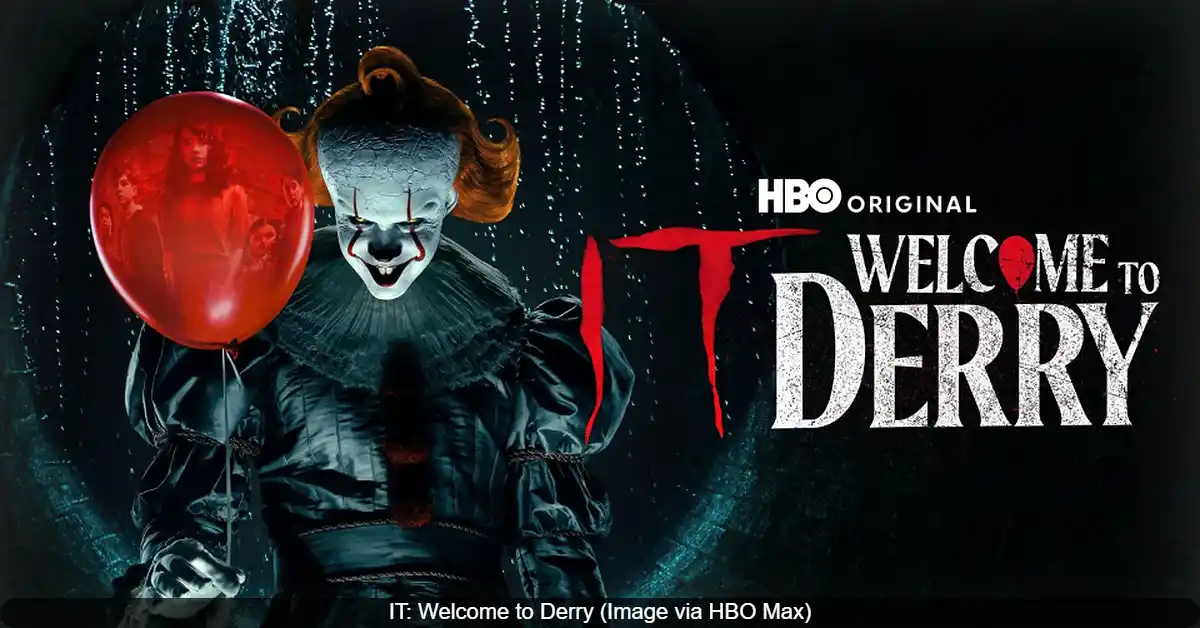
The penultimate episode of IT: Welcome to Derry’s first season, titled “The Black Spot,” aired this week and delivered more than just a major horror sequence. It laid the groundwork for several major storylines that will drive the season finale and the show’s future. The creators have explained that the episode acts as a massive launch point for new mysteries, moving the story far beyond a simple monster hunt.
The episode features a horrific race massacre at a club called the Black Spot, reveals the tragic origin of the human Pennywise, and ends with a dangerous new plot by the U.S. military. While these events provide some answers, showrunner Jason Fuchs and the creative team promise that each resolution leads to even more questions, setting the stage for a complex finale.
The Reveal of Bob Gray and Ingrid’s Heartbreaking Obsession
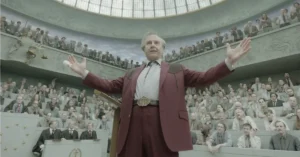
The episode finally answers a long-standing question for fans: who was Bob Gray, the man whose identity the creature Pennywise stole. A flashback to 1908 shows Bob as a real, gentle clown performer, deeply loved by his young daughter, Ingrid. The creature that becomes Pennywise is drawn to Bob because children are drawn to him, and it takes his place, leaving Ingrid with only a bloody handkerchief.
This revelation makes the mythology more personal and tragic. The episode then shows the devastating result of Ingrid’s lifelong grief and obsession. As an adult, Ingrid Kersh (played by Madeline Stowe) has spent years trying to lure the monster she believes is her father back into the open.
Andy Muschietti explained the importance of this moment, stating, “We have to make justice to the impact of the Black Spot in the book. Such a tragic event… committed, not by It, but by the people of Derry. It’s another layer… that tells us one of the big truths of the book, which is: Humans are capable of doing things as bad or worse than this monster.”
In a shocking move, Ingrid admits to betraying her lover, Hank Grogan, and the patrons of the Black Spot. She tipped off the racist police chief to Hank’s location, hoping the resulting violence would be a big enough spectacle to attract Pennywise. Her plan works, but with a terrible outcome. When she finally confronts Pennywise, she realizes he is not her father. In response, Pennywise uses the Deadlights on her, leaving her in a nearly comatose state. This storyline creates a new, unpredictable character whose fate is now tied directly to Pennywise’s power.
The Deadlights’ Aftermath and Will Hanlon’s Uncertain Fate
The Deadlights are a core part of Pennywise’s nature, representing its true, monstrous form beyond the clown disguise. In this episode, they are used as a weapon with lasting consequences, setting up major future plot points.
Ingrid is not the only victim. After the creature is temporarily forced back into hibernation, the U.S. military deliberately destroys one of the ancient pillars that acts as a cage, reawakening it. The episode ends with a liberated Pennywise attacking young Will Hanlon and blasting him with the Deadlights.
This creates two parallel stories of aftermath. Ingrid’s catatonic state serves as a warning of the Deadlights’ power, but she also shows flickers of awareness, suggesting she could become a tool for Pennywise later. Will’s fate is a bigger question mark. He is destined to become the father of Mike Hanlon from the original It story, but it is unclear how this trauma will change him. He could carry the scars of the experience or, more dangerously, be influenced or controlled by the entity that attacked him.
A Dangerous Military Plot to Weaponize Fear
One of the biggest twists in Episode 7 comes from the U.S. military characters, revealing a terrifying new direction for the story. Major Leroy Hanlon and Dick Hallorann locate one of the mystical pillars that confines the creature to Derry, believing they will use it to trap and kill Pennywise for good.
Instead, they discover the military’s true plan. General Francis Shaw orders the pillar to be destroyed, intentionally freeing the creature. Shaw explains his reasoning to a horrified Hanlon: he believes a fractured America needs a unifying enemy.
General Shaw justifies his plan by saying, “This country is slowly fracturing into a thousand, jagged, ill-fitting pieces… I am only trying to prevent another civil war.” He argues that the fear Pennywise creates acts as an anesthetic that controls the population.
This twist introduces a major new antagonist that is not supernatural but institutional. It shifts the show into a dark cautionary tale about power and the weaponization of fear. The storyline suggests the real danger may no longer be just a clown in the sewers, but powerful people who see cosmic horror as a tool for control. This plotline is poised to extend far beyond the town of Derry, raising the stakes for the entire series.
The Cosmic Curse of Derry Itself
Finally, the episode strongly suggests that the real monster of the story might be the town of Derry. The show’s structure, jumping between 1962, 1935, and 1908, shows a repeating cycle: violence and fear escalate, people disappear or die, and the town collectively forgets and moves on.
The Black Spot massacre is a prime example. The atrocity is committed by the people of Derry, not the monster, yet it feeds the creature and strengthens it. This raises a fundamental new question for the series: Why is Derry this way?
The storyline explores whether the town sits on a cosmic weak spot that naturally attracts predators like Pennywise, or if the people of Derry themselves unknowingly feed the cycle through their hatred, fear, and silence. The show has hinted that the town was built as a trap, and the pillars are part of a cage. If this is true, then Pennywise is just a part of a larger, more ancient horror. The finale may focus on revealing the dark architecture of Derry itself, suggesting that saving the town might be impossible if the town is the source of the evil.
The IT: Welcome to Derry Season 1 finale premieres on HBO and HBO Max on Sunday, December 14, 2025.
Also Read: Love Island Australia: Fans Unconvinced by Kye’s “Not a Bad Guy” Defense After Messaging Controversy