
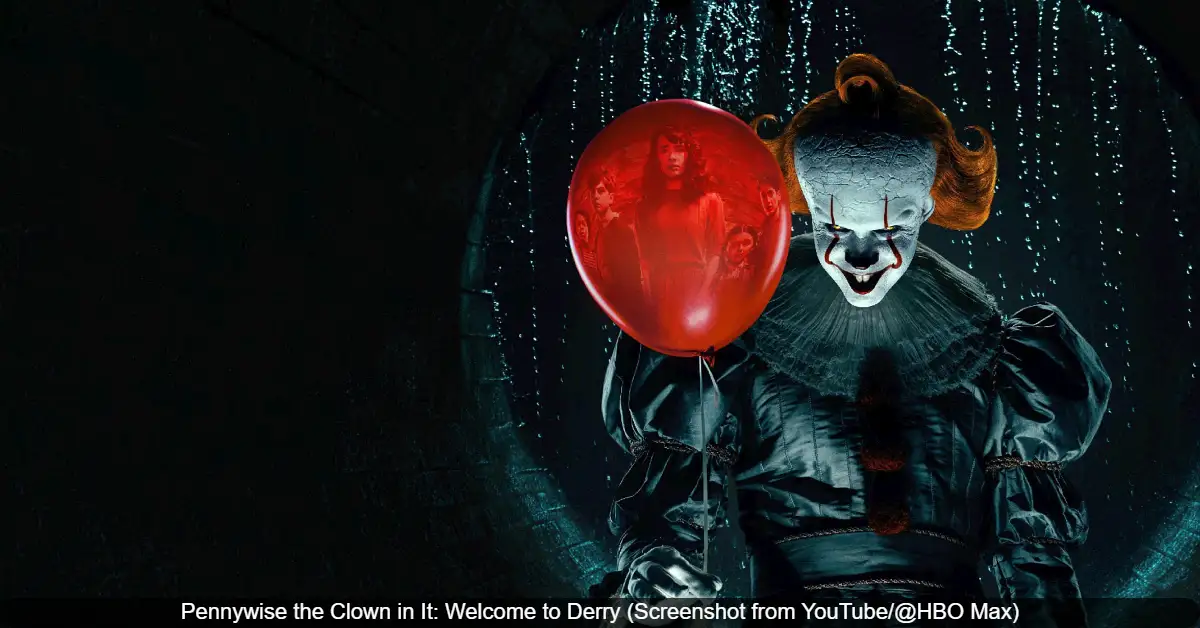
Watching the seventh episode of IT: Welcome to Derry, viewers experienced a powerful sense of déjà vu. The episode’s tragic destruction of a Black nightclub called the Black Spot felt deeply familiar to anyone who saw Ryan Coogler’s 2025 hit film Sinners. Both stories show a vibrant, safe space for a Black community being violently attacked and burned. Despite the clear similarities—one story involves a killer clown and the other vampires—the creators of both projects say this was a complete coincidence. The eerie parallel is not a case of copying, but a reflection of two different artists drawing from the same painful chapters of American history.
The Tragic Story of the Black Spot in IT: Welcome to Derry
In IT: Welcome to Derry, the story of the Black Spot is a central part of the first season. The show expands on a brief mention from Stephen King’s original 1986 novel. The club is created in the early 1960s by Dick Hallorann and other Black soldiers stationed at the Derry Air Force Base. Facing racism in the town’s white-owned bars, they get permission to fix up an old, rundown building as their own space for music and dancing.
For a short time, the Black Spot becomes a haven. The show depicts joyful scenes of the community gathering, with characters like young Rich even joining the band to play drums. This happiness is destroyed when a masked white mob, led by the former police chief, arrives looking for a man named Hank Grogan. When the patrons refuse to hand him over, the mob chains the doors shut from the outside and throws firebombs through the windows. The club is engulfed in flames, leading to many deaths, including Rich, who dies trying to save his friend Marge.
“In Stephen King’s IT, the story of the Black Spot is one that is recounted to young Mike Hanlon… The elder Hanlon recalls being stationed in Derry during his time in the army, and he joined a group of other Black soldiers in transforming a decommissioned shed into a safe space for partying,” said Andy Muschietti, co-creator of Welcome to Derry.
The Parallel Burning in Ryan Coogler’s Sinners
The scene in Sinners follows a strikingly similar emotional arc, though the details differ. The film, set in 1932 Mississippi, follows the Smokestack Twins (played by Michael B. Jordan), who open a juke joint in an abandoned sawmill. Like the Black Spot, this place becomes a sanctuary where the local Black community can enjoy music and freedom away from the hostile gaze of white residents.
The threat here is a gang of vampires led by a figure named Remmick. A conflict erupts when a character, angry at the vampires, throws a Molotov cocktail. The makeshift club catches fire, leading to a chaotic and deadly fight for survival within the burning building. The film’s protagonist, Smoke, survives the vampire attack only to face the Ku Klux Klan at dawn, where he ultimately loses his life.
Director Ryan Coogler shared that his inspiration was personal, not literary. He explained that the idea came to him while listening to blues music and thinking of his uncle. This suggests the parallel stories emerged independently from different creative wells.
Why These Stories Feel So Similar
The shared nightmare between these two works can be broken down into clear, matching story beats:
- A Sanctuary Created: Both narratives begin with a marginalized Black community building a joyous, self-determined space—a nightclub in Derry, a juke joint in Mississippi.
- Violent Intrusion: An outside, hateful force seeks to invade or destroy that sanctuary. In Welcome to Derry, it’s a racist human mob; in Sinners, it’s a gang of vampires.
- Destruction by Fire: The primary tool of destruction in both is fire, specifically through the use of thrown firebombs or Molotov cocktails.
- Mass Tragedy: The attacks result in the deaths of many patrons inside each establishment.
The creators have both addressed the coincidence. Andy Muschietti acknowledged the similarity but noted the Black Spot story came directly from King’s book. Barbara Muschietti added that she loved Sinners but didn’t connect the dots between the two stories until someone else pointed it out. Ryan Coogler’s comments indicate his story sprang from a different, personal source.
The Historical Truth Behind the Horror
The reason these fictional horrors feel so similar is because they are both rooted in non-fictional American history. The attack on the Black Spot and the juke joint in Sinners are not just plot devices; they mirror a long and brutal pattern of violence against Black gathering spaces throughout U.S. history.
Real churches, businesses, and entire neighborhoods that served as pillars for Black communities were targeted for bombings and arson by white supremacist groups. This historical trauma provides a shared foundation that two separate creative teams unconsciously tapped into. As one social media commenter noted, “the similarity between them is only coincidence because these kinds of racist acts actually happened”.
The horror in both works comes from two layers: the supernatural monster (Pennywise or vampires) and the very real monster of human hatred and racial violence. Many argue that the latter is often the more frightening element.
Fan Reactions to the Shared Themes
The similarity between the two projects quickly became a talking point among fans online. On social media and fan pages, viewers expressed their surprise at the parallel scenes.
Some fans defended Welcome to Derry, pointing out that its story originates from Stephen King’s 1986 book, long before Sinners was made. Others focused on the historical context, arguing that it’s not strange for multiple stories to reflect this painful reality. Discussions also touched on the concept of a “collective consciousness,” where artists in the same culture might independently generate similar ideas rooted in shared societal memories and anxieties.
The consensus among many fans is that the similarity doesn’t hurt either project. Instead, it reinforces the power and persistence of the historical truth they both reference. As stated in one analysis, “When separate creators end up telling matching stories, it reveals how deeply the wounds run”.
Also Read: The Abandons Episode 8 Explained: Show’s 7-Episode End Sparks Major Cliffhanger