
The Star Trek franchise built its legacy by doing what others wouldn’t. For nearly 60 years, while other science fiction played it safe with simple adventures, Star Trek consistently took major creative risks. These bold moves not only saved the series at critical points but also changed television, cinema, and the entire sci-fi genre. From a show almost no one watched to a global cultural force, here are the five biggest chances Star Trek took that paid off better than anyone expected.
Turning Sci-Fi Into Serious Adult Drama
When Star Trek: The Original Series premiered in 1966, science fiction on television was largely seen as children’s entertainment. Shows like Flash Gordon offered simple, serialized adventures. Creator Gene Roddenberry pitched a radically different idea: a serious, thoughtful drama for adults that used futuristic settings to explore complex, real-world issues. He sold the show to NBC as a “Wagon Train to the Stars,” a classic adventure format, but his true intent was more sophisticated. The network and advertisers were skeptical that audiences would accept serious themes in a spaceship show.
“Gene Roddenberry wanted to tell more sophisticated stories, using futuristic situations as analogies for current problems on Earth.”
The risk worked. The show treated its sci-fi concepts with respect, and its actors performed the material with conviction. It proved that science fiction could be a powerful vehicle for meaningful stories, paving the way for everything from The Expanse to Battlestar Galactica. Star Trek established that the genre deserved attention from writers and audiences worldwide, moving it from the fringe to the cultural mainstream.
Using Alien Stories To Confront Real Earth Problems
Star Trek didn’t just tell stories about aliens; it used aliens to talk about us. In an era when most television avoided controversy, the show made its mission the direct exploration of society’s toughest issues. Episodes served as clear allegories for the Cold War, racism, and social justice.
The most famous example is the episode “Let That Be Your Last Battlefield,” a direct commentary on racism and pointless hatred. The plot involved two aliens whose faces were each half black and half white, locked in a generations-old war over which side was the “correct” color. The story left no doubt about its message. This was a bold, aggressive style of storytelling unfamiliar to television at the time.
The show’s progressive vision extended to its cast. At a time when American television had few non-white roles, Roddenberry created a uniquely multi-ethnic crew for the USS Enterprise. This included an African communications officer (Uhura), an Asian helmsman (Sulu), and a Russian ensign (Chekov) added during the Cold War. The series is also famously credited with featuring American television’s first scripted interracial kiss between Captain Kirk and Lieutenant Uhura, a moment of enormous cultural significance.
The impact of this representation was profound. Actress Whoopi Goldberg, upon seeing Nichelle Nichols as Uhura, famously exclaimed to her mother, “There’s a black woman on television and she ain’t no maid!”. Nichols herself recounted how Dr. Martin Luther King Jr. personally told her she could not leave the show because she was “part of history”.
Running Multiple TV Shows At The Same Time
In the 1990s, Star Trek accomplished something unprecedented in television: it successfully ran three major series simultaneously. This was a huge gamble, testing whether fans’ appetite for the franchise was deep enough to support multiple stories.
The strategy began when Star Trek: Deep Space Nine premiered in 1993, while Star Trek: The Next Generation was still producing new episodes. Star Trek: Voyager launched soon after in 1995. For several years, a fan could watch a new episode from a different Star Trek universe almost every night of the week. Each show had a distinct tone and setting—TNG was the flagship exploratory vessel, DS9 was a gritty space station drama, and Voyager was a lost ship trying to get home.
This move transformed how studios thought about franchise building. It proved that a dedicated audience would embrace expanded storytelling within a single universe, a model later adopted by franchises like Marvel and DC. The success showed that fans wanted depth and variety, not just repetition of the same formula.
Rebooting The Universe Without Erasing Its History
By the 2000s, the Star Trek franchise was struggling. The last classic-era movie, Star Trek: Nemesis, underperformed, and the prequel series Enterprise was cancelled. The brand needed rejuvenation, but its decades of beloved history felt like a burden. The solution, directed by J.J. Abrams in 2009, was a masterstroke of risk-taking: a reboot that respected the old stories while making room for new ones.
The film used a clever time-travel plot to create an alternate reality known as the Kelvin Timeline. An event from the original “Prime” timeline—a supernova and a time-traveling Romulan ship—created a splinter universe where familiar characters like Kirk and Spock lived different lives. This brilliant trick allowed the new films to feature younger versions of classic characters, change major events, and adopt a faster-paced, modern style, all without invalidating the decades of stories fans loved.
“This brilliant trick preserved the old canon while allowing new stories to arise. The fans would not have to be deprived of anything.”
The gamble was a massive success. Star Trek (2009) grossed over $385 million worldwide and won an Academy Award for Best Makeup, a first for the franchise. It introduced Star Trek to a new generation and showed other franchises a way to honor legacy while embracing change.
Related:




Leaping A Thousand Years Into The Future Mid-Series
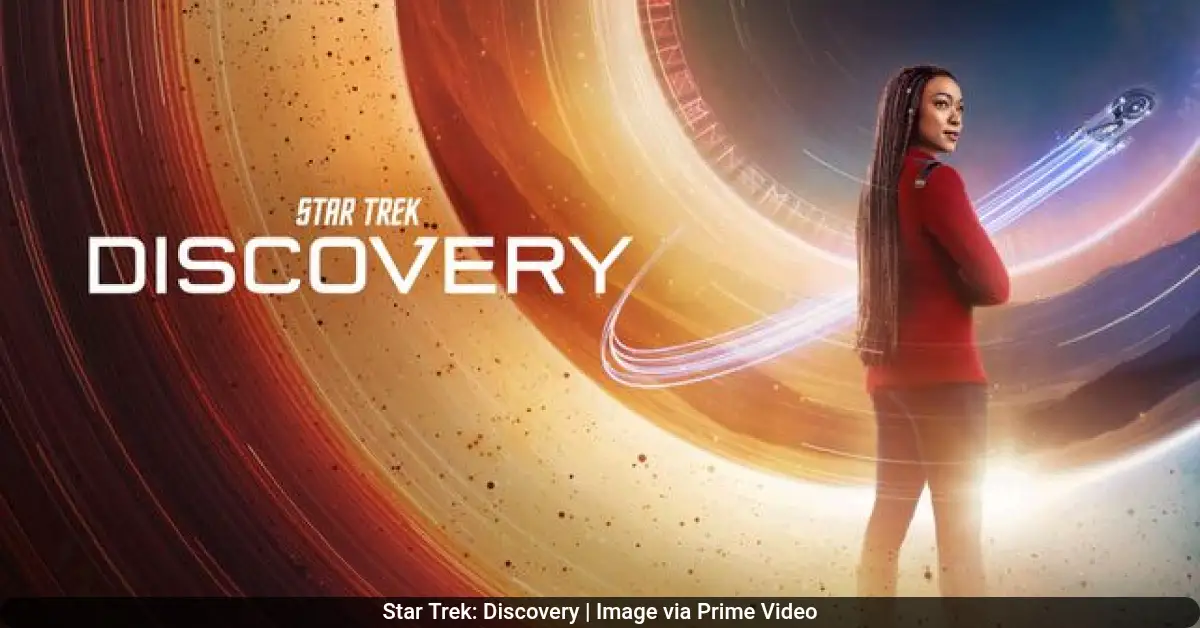
The most recent major risk came from Star Trek: Discovery. The show launched as a prequel set just before the era of Captain Kirk. After receiving criticism for its connections to established lore, the show made a stunning move at the end of its second season in 2019: it jumped 930 years into the future.
This wasn’t a small time jump. It was a complete overhaul of the series’ premise during active production. The show left behind the familiar 23rd century to enter the uncharted 32nd century. The story shifted from one of exploration to a fight for survival in a fragmented galaxy where Starfleet was nearly destroyed.
This radical change established entirely new rules, technology, and political landscapes. It was a huge bet that audiences would follow characters they loved into a completely unfamiliar setting. The risk proved that viewers remain dedicated to strong characters, even when the storytelling environment changes completely. It gave the writers freedom to tell original stories without being constrained by existing canon, opening up a new frontier for the entire franchise.
Also Read: The Pitt’s Top 5 Characters Who Drive the Show’s Authentic Energy