

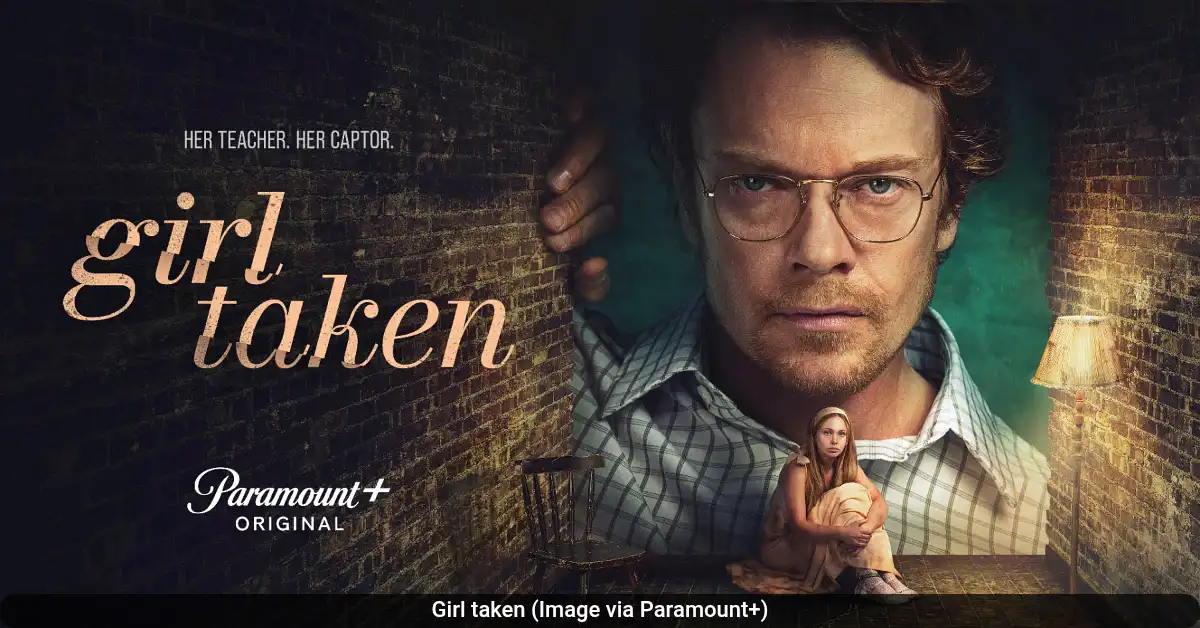
A new six-part thriller on Paramount+ is getting attention for how it tells a difficult story. Girl Taken chooses to focus on the long-term impact of a crime rather than just the mystery of who did it. The series, which started streaming on January 8, 2026, follows a family after one twin sister is kidnapped. While the show has suspense, its main goal is to show the deep and lasting trauma that follows such a violent event. This approach has led to strong reactions from both viewers and critics, with many praising its emotional honesty, though some feel the story loses its momentum.
The series is based on Hollie Overton’s 2016 novel Baby Doll. It features Tallulah Evans and Delphi Evans as the twin sisters Lily and Abby, with Jill Halfpenny as their mother, Eve. Alfie Allen plays Rick Hansen, the trusted teacher who commits the crime. The show quickly became one of the most-watched titles on Paramount+ after its release.
What Girl Taken Is About
The story begins in a quiet town where 17-year-old twins Lily and Abby are finishing school. Their teacher, Rick Hansen, is a respected figure in the community. In a shocking turn, Rick kidnaps Lily and holds her captive for years. The show reveals early on that Rick is the kidnapper, moving away from a “whodunit” mystery.
Instead, the plot focuses on two main timelines. The first shows Lily’s captivity and her eventual escape. The second, and more central, timeline explores what happens after she returns home. The series asks how a family rebuilds itself when one member has endured unimaginable horror and the person responsible is still free, trying to control the story and avoid justice.
Paramount+ describes the series as “raw and emotionally charged,” noting that “this isn’t a fairy tale. Healing is messy, painful, and far from guaranteed.”
A Deliberate Choice to Avoid Sensationalism
Many thrillers about similar subjects focus on graphic scenes of violence or create complex puzzles with big twists. Girl Taken makes a different creative decision. The most disturbing acts of abuse happen off-screen. The camera stays with the emotional fallout, not the act itself.
This means the most intense moments are not sudden plot reveals, but quiet scenes showing how trauma changes people. It could be Lily struggling to feel safe in her own home, Abby dealing with guilt because she was the original target, or their mother Eve trying to hold the family together. The show suggests that the real horror is not a single event, but the lasting damage that follows and reshapes every part of life.
The show’s structure supports this idea. It jumps through time, showing life before the kidnapping, during Lily’s captivity, and long after her return. This technique tells viewers that the crime itself is not the whole story; the long, difficult road to recovery is the real narrative.
The Challenging Role of the Villain
A key part of the show’s power comes from how the villain is written and performed. Alfie Allen plays Rick not as a cartoonish monster, but as a chillingly ordinary man. He is a teacher who is well-liked, helps search for the missing girl, and blends into the community perfectly.
This choice makes the story more unsettling. A clearly evil villain can feel distant and unreal. A villain who looks and acts like someone you might trust is far more frightening because it reflects a real-world danger. Rick’s manipulation is social and gradual, relying on his position of power and good reputation.
Allen’s performance has been widely praised. Critics note he brings a disturbing restraint to the role, making Rick’s calm demeanor more terrifying than any outburst. One review called his performance “fantastically restrained”.
How Cast and Critics Have Responded
The performances, especially from the central family, have been a major point of discussion. Real-life sisters Tallulah and Delphi Evans bring a natural chemistry to their roles as twins. Jill Halfpenny plays Eve, a mother crumbling under grief and guilt, with a painful authenticity that avoids melodrama.
However, not all critical reception has been positive. Some reviews argue that after a strong start, the series becomes slow and loses its focus. One critic felt the writing for the family members was repetitive, reducing them to constant weeping and shouting, while Rick’s story remained more compelling. Another noted that the show’s pacing suffers from “redundant scenes” that slow the story down.
Audience reactions on review platforms are mixed but highlight the show’s emotional impact. One viewer on IMDb wrote, “Episode 2 and 3 will stick with me for a long time – very dark but also very engrossing.” Another called it “unsettling and thoughtful – intense but more reflective than formulaic.”
You May Also Like:


The Real-Life Inspirations Behind the Story
While Girl Taken is not directly based on one true crime, it draws from real human experiences. The novel’s author, Hollie Overton, is an identical twin herself, which informed the deep bond between the sisters in the story. She has also spoken about her own difficult childhood, with a father who was charming in public but violent in private. This personal history helped her write about manipulation and family trauma with a sense of truth.
Some viewers have compared the story to the real-life case of Natascha Kampusch, an Austrian woman who was kidnapped as a child and held for eight years. The series shares themes of long-term captivity and the complex aftermath of escape. However, the creators have not cited this case as a direct source.
Also Read: Drops of God Season 1 Recap and Release Info for Season 2


Leave a Reply