

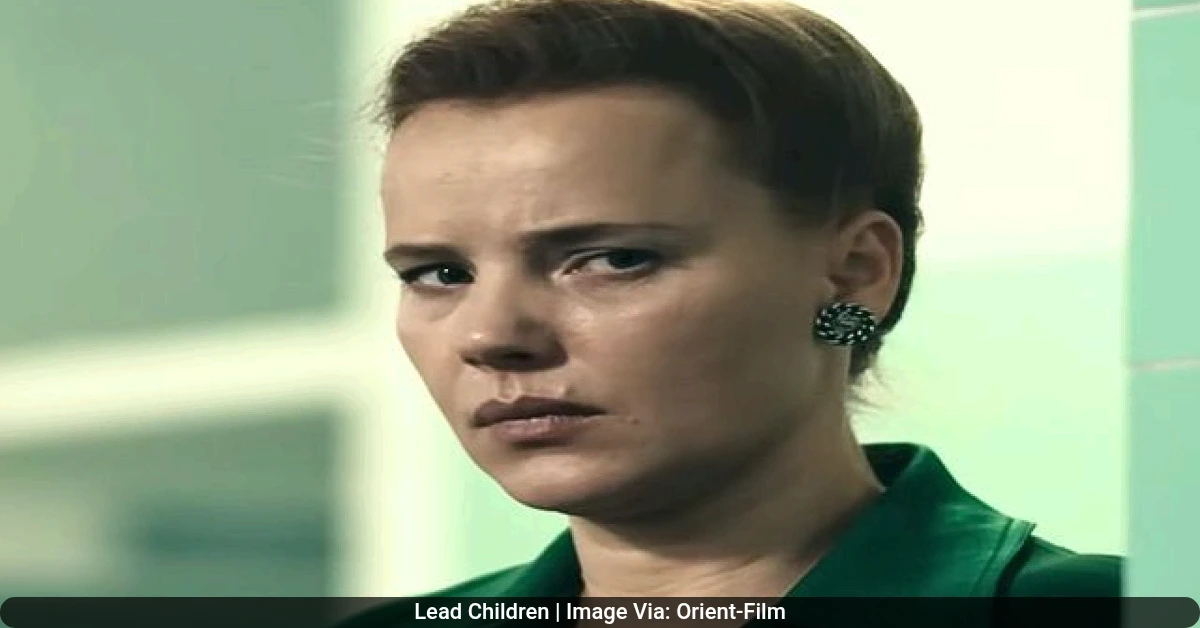
The six-part Polish Netflix original series The Lead Children arrived on the streaming platform on February 11, 2026, bringing with it the grim, rain-soaked atmosphere of 1970s Communist Poland. Directed by Maciej Pieprzyca, the show tells the true story of Dr. Jolanta Wadowska-Król (Joanna Kulig), a physician who discovered mass lead poisoning among children living near a state-run smelter in the Silesian region. While the narrative focuses on her fight against an authoritarian government, the physical setting of the series acts as a silent character. The mud-covered streets, the looming factory chimneys, and the cramped worker housing were not built on a backlot. The production team traveled directly to the historical sites where the real tragedy unfolded.
The Industrial Heart of Upper Silesia Served as the Primary Backdrop
Rather than constructing sets from scratch, the filmmakers chose to shoot on location in the actual cities and towns where Dr. Wadowska-Król conducted her research in the 1970s. The majority of filming took place across the Upper Silesian Industrial Region in southern Poland. This area, known for its heavy coal and steel industries, provided the authentic, gritty texture that director Maciej Pieprzyca required to tell the story honestly .
Katowice, specifically the district of Szopienice, served as the central hub for production. Szopienice was home to the real non-ferrous metal smelter that caused the lead contamination. The production filmed extensively in this district, using the actual architecture, narrow streets, and period-appropriate worker housing that still stands today . The decision to film in Szopienice allowed the actors to walk the same paths that the real doctor and the affected families walked fifty years ago.
The smelter itself, while heavily modified in post-production with visual effects to depict the billowing black smoke of the 1970s, was filmed on location at industrial sites in the region. The production did not rely solely on CGI backdrops; crews captured real factory exteriors in Ruda Śląska and Świętochłowice to maintain authenticity .
Filming Spread Across Eight Polish Cities for Authentic Texture
To accurately portray the widespread nature of the industrial pollution and the communities it impacted, the production schedule required movement across multiple Silesian cities. The complete list of filming locations includes:
- Katowice (including the Szopienice district) – Primary location for the smelter exteriors, doctor’s clinic, and residential streets
- Ruda Śląska – Industrial exteriors and factory worker neighborhoods
- Świętochłowice – Period street scenes and community gathering areas
- Zabrze – Mining museum and preserved industrial architecture
- Gliwice – Additional factory exteriors and administrative building scenes
- Bytom – Residential quarters and market square sequences
- Warsaw – Government office interiors and political bureau scenes
This extensive travel across the region was not simply for logistical convenience. Each city in Upper Silesia developed its own relationship with heavy industry during the Communist era. By filming in multiple locations, the production captured subtle differences in architecture, street layout, and urban planning that distinguish these formerly distinct industrial towns .
Warsaw Stood in for the Seat of Communist Power
While the Silesian locations provided the industrial working-class environment, Warsaw was used to film scenes depicting the corridors of political authority. The contrast between the grey, polluted streets of Szopienice and the sterile, imposing government offices in Warsaw visually reinforces the central conflict of the series. Dr. Wadowska-Król must leave her familiar environment to plead her case in the capital, where distant bureaucrats prioritize industrial production quotas over children’s health. These scenes were filmed in the Polish capital to leverage its distinct post-war reconstruction architecture, which differs significantly from the older industrial layout of Silesia .
Why the Production Chose Real Locations Over Studio Sets
Director Maciej Pieprzyca is known in Poland for his documentary-style approach to fictional storytelling. Rather than constructing a sanitized version of the 1970s on a soundstage, he insisted on shooting in the actual neighborhoods where the events occurred. Many of the residential buildings seen in the series are original structures from the Communist era, some of which still house families today.
Lead actress Joanna Kulig spoke about the impact of filming in these authentic locations. She described the experience of working in the real Szopienice district as intense and physically demanding. The atmosphere on set, surrounded by the actual factory grounds and worker housing, allowed her to feel the rhythm of the character’s daily life. She noted that the proper preparation and the genuine environment helped the cast immerse themselves completely in the world of 1970s Silesia .
The Historical Accuracy of the Szopienice Smelter
The real Szopienice non-ferrous metal smelter operated for decades, processing lead and zinc ores. During the 1970s, pollution controls were minimal, and the facility released significant amounts of heavy metals into the air and soil. The series does not exaggerate the environmental conditions. Historical records confirm that lead dust settled on playgrounds, entered vegetable gardens, and contaminated the water supply.
By filming on location, the production avoided the temptation to romanticize the past. The weather during the shoot was deliberately chosen to match the overcast, damp climate of the region. There are no sunny, nostalgic flashbacks in The Lead Children. The persistent grey skies and wet streets reflect the actual meteorological conditions of Silesian autumns and winters, both in the 1970s and today .
Preservation of Locations and Modern Tourism
Several of the filming locations, particularly the preserved industrial areas in Zabrze and Bytom, are part of Poland’s cultural heritage. The Zabrze site operates partially as a mining museum, which allowed the production crew to access authentic machinery and factory interiors that would be difficult to replicate. These locations have not been significantly modernized, making them valuable resources for period filmmaking.
While The Lead Children is a drama, its production choices contribute to the preservation of industrial heritage. By featuring these cities prominently in a global Netflix release, the series draws international attention to the architectural and historical character of Upper Silesia—a region often overlooked by tourists visiting Poland .
Cast and Crew Immersed Themselves in the Region
Joanna Kulig leads a cast composed primarily of established Polish actors. Michał Żurawski portrays Hubert Niedziela, the state security officer assigned to monitor the doctor. Zbigniew Zamachowski plays local governor Zdzisław Grudzień, who pressures Wadowska-Król to abandon her investigation. The supporting cast includes Marian Dziędziel, Agata Kulesza, Kinga Preis, and Sebastian Pawlak.
The entire company spent significant time in Silesia during production. Rather than commuting from Warsaw, many cast members remained in the region for the duration of filming. This allowed them to absorb the local dialect, customs, and the particular rhythm of life in a community built around heavy industry. The result is a performance style that avoids theatrical polish in favor of grounded, documentary-like realism .
Streaming Release and Global Availability
The Lead Children is now streaming globally on Netflix. All six episodes were released simultaneously on February 11, 2026. Viewers in the United States, United Kingdom, Canada, Australia, India, and worldwide can watch the series with subtitles or dubbing options.
Related:










The show is a Netflix Original production and is available exclusively on the platform. Unlike some international acquisitions that appear on multiple services, The Lead Children is only accessible through a Netflix subscription.
The Purpose Behind the Location Choices
The decision to film in the actual cities where the lead poisoning tragedy occurred serves a purpose beyond aesthetic preference. The series is not merely entertainment; it is a documentation of a historical injustice that Poland is still confronting. By returning to Szopienice, Ruda Śląska, and Świętochłowice, the production acknowledges that these events did not happen in some abstract version of the past. They happened in specific places, to real families, and the consequences are still present in the contaminated soil and the collective memory of the community.
Director Maciej Pieprzyca and his crew spent months researching the geography of the scandal. They interviewed residents who remembered Dr. Wadowska-Król visiting their homes to draw blood samples. They photographed original documents and studied maps from the 1970s to ensure that every street corner and building facade matched the historical record as closely as possible .
The result is a period drama that functions as a cinematic time capsule. When viewers watch The Lead Children, they are not looking at a fabricated set. They are looking at the real places where Polish doctors, factory workers, and families lived through one of the country’s most significant environmental health crises.
Catch more exclusive entertainment news and streaming guides only on VvipTimes.
















































































Leave a Reply