
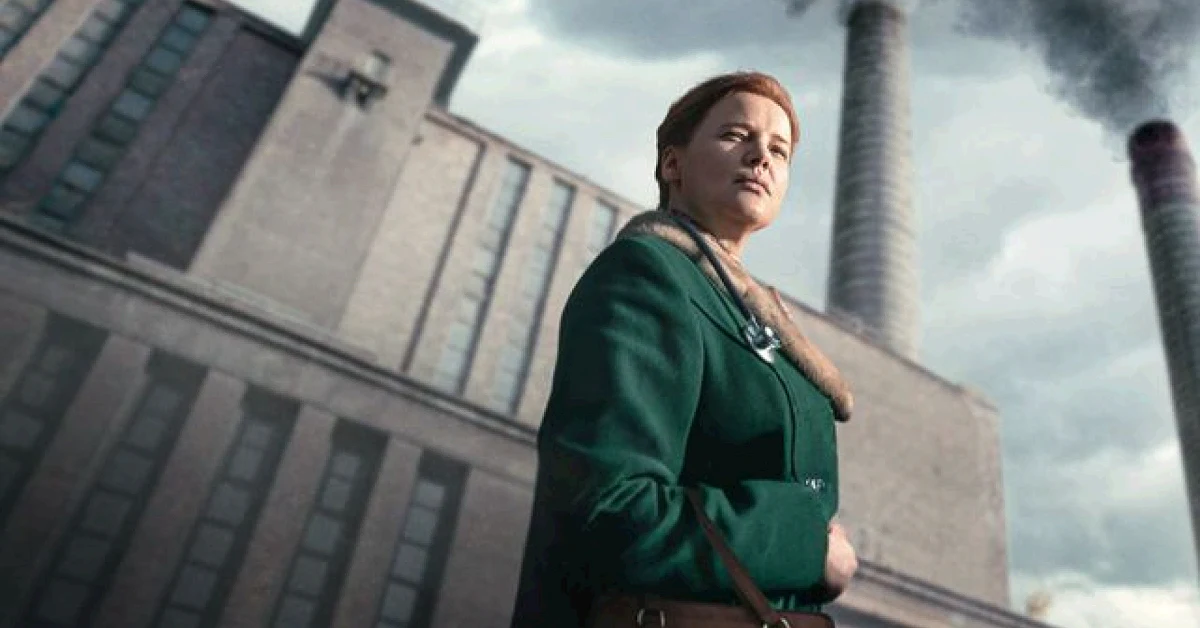
Netflix released all six episodes of its new Polish historical drama Lead Children on February 11, 2026, and viewers are already calling it the perfect replacement for HBO’s Chernobyl. The series, directed by Maciej Pieprzyca, brings to light a true story from 1970s Poland that very few people outside the country knew about until now.
It tells the story of Dr. Jolanta Wadowska-Król, a young physician in the Silesia region who discovered that thousands of children living near a state-run smelting plant were suffering from severe lead poisoning. When she tried to report her findings, the communist authorities silenced her, threatened her, and attempted to bury the entire scandal. The six-part drama follows her ten-year fight to force the government to admit the truth and treat the sick children.
With an 8.0 rating on IMDb already, the series is drawing in audiences who miss the slow-burn tension of investigative disaster dramas. Critics from Roger Ebert and Metro have pointed out strong visual and thematic similarities to Chernobyl, specifically the gray industrial landscapes, the bureaucratic resistance, and the image of a single determined person going up against a system that refuses to listen.
The Real Emergency: Lead Poisoning That Made Thousands of Children Sick
The health crisis at the center of Lead Children was not a single explosion or meltdown. It was a slow, quiet poisoning that went on for years. Children in the Szopienice district of Katowice played outside, drank water, and breathed air contaminated by a nearby lead smelter. They came down with what doctors initially called mysterious illnesses. Many were diagnosed with anemia. Babies were stillborn. Parents had no idea that their own workplace was making their families sick.
Dr. Jolanta Wadowska-Król was the first medical professional to connect the dots. She started testing children’s blood for lead levels and found that a staggering number of them had dangerous concentrations of heavy metals in their systems. She documented everything. But instead of receiving support, she was blocked by local party officials and factory managers who feared that shutting down the plant would cost people their jobs.
The series shows how the government tried to offer her a deal: eighty hospital beds for children in exchange for dropping her research. She refused. The pressure escalated to physical threats. In the opening minutes of the first episode, viewers see Dr. Wadowska-Król dragged to a junkyard and threatened at gunpoint by a state security officer. That scene is not fiction. It is based on what actually happened to her.
The Cast and Characters Who Bring This Polish Story to Life
Joanna Kulig, known internationally for her role in the Oscar-nominated film Cold War, plays Dr. Wadowska-Król. She spent months preparing for the role and read extensively about the doctor’s life and methods. Kulig described the character as someone with honesty, courage, and an uncompromising nature. She said the role forced her to ask herself whether she would have the same strength to stand alone against an entire system.
Sebastian Pawlak plays Zbigniew Król, the doctor’s husband, who works at the same hospital. Their marriage faces strain as Jolanta’s investigation puts both of their careers at risk. Agata Kulesza appears as Professor Krystyna Berger, an academic who initially refuses to support Jolanta’s thesis but later reveals she was bribed with resources for her pediatric wing. Michał Żurawski plays Hubert Niedziela, the state security officer assigned to suppress the growing scandal. Unlike a typical villain, his character tries a softer approach first, attempting to divide the affected families by spreading rumors that only a few will receive new apartments. Zbigniew Zamachowski plays Zdzisław Grudzień, the local governor who, at the end of the story, publicly takes full credit for solving the crisis he spent years trying to hide.
The production filmed on location in Katowice, Ruda Śląska, Świętochłowice, Zabrze, Gliwice, Bytom, and Warsaw. The creative team deliberately shot in the actual industrial areas where the events took place to maintain authenticity.
Why Viewers Are Comparing ‘Lead Children’ to ‘Chernobyl’ and ‘Toxic Town’
The comparison to HBO’s Chernobyl is everywhere in the early reviews. Clint Worthington of Roger Ebert wrote in his review that there are clear shades of Chernobyl in the setting’s grim, overcast cinematography and the downcast professionalism of the performances. The chimneys billowing black smoke, the muddy streets, the children playing in contaminated water—visually, the two series share the same沉重 atmosphere of a disaster that everyone can see but no one is allowed to name.
Lead Children is also being mentioned alongside Netflix’s Toxic Town, the 2025 limited series about the Corby poisonings in the United Kingdom, where mothers fought for over a decade after their children were born with birth defects caused by toxic waste. Both series are based on true environmental scandals that governments tried to cover up. Both center on ordinary citizens who refused to stop asking questions.
One viewer commented on the Lead Children trailer saying that this is Netflix’s response to HBO’s Chernobyl. Another wrote that the series is much needed because lead and its effects worldwide have been unimaginable, whether through paint, pipes, or pollution. A third person pointed out that Dr. Wadowska-Król is regarded as one of the most important figures in Polish social medicine, and that every citizen of the free world should watch her story.
The Book Behind the Series and the Real Dr. Wadowska-Król
Lead Children is based on the book of the same name by Michał Jędryka, who documented the full extent of the doctor’s investigation and the government’s attempts to discredit her. The book was published in Poland years ago but never received wide international attention until Netflix adapted it.
The real Dr. Jolanta Wadowska-Król was a pediatrician who worked at the Railway Health Center in Katowice. She began examining children in 1973 and continued her research for years despite constant obstruction. Her work eventually led to the demolition of homes closest to the smelter and the relocation of hundreds of families. She also secured proper diagnosis and treatment for thousands of poisoned children. In Poland, she is often called the Polish Erin Brockovich.
The series does not change the ending to make it more dramatic. It stays true to what happened. Zdzisław Grudzień, the local party official who spent years fighting against her, stood at a public meeting and announced that he personally identified the health hazard and ordered the relocation of residents out of concern for their safety. He took the credit. She received none at the time.
Related:






Streaming Information and Global Availability
Lead Children is available for streaming right now on Netflix. All six episodes dropped simultaneously on February 11, 2026.
Viewers in the United States can watch it with the original Polish audio and English subtitles. United Kingdom subscribers have access to the full series with both subtitles and dubbing options. Canada and Australia both received the series on the same global release date. In India, the series is available with English, Hindi, Tamil, and Telugu subtitle options. The show is also streaming across Europe, Latin America, and Asia as part of Netflix’s standard library.
The series runs approximately one hour per episode. Critics suggest watching it over several days rather than all at once, as the subject matter is emotionally draining. The pacing is deliberate and patient, similar to the documentary-style storytelling used in Chernobyl.
Stay informed about the best international dramas landing on streaming platforms each week, only on VvipTimes.






























































Leave a Reply