
The creative force behind the technically groundbreaking series “Adolescence“ has confirmed that a new project using the same demanding one-shot format is in the works. Matthew Lewis, the Emmy-winning cinematographer, revealed the plans but emphasized the team is taking a deliberate break to avoid oversaturating the market with the intense style.
The new series will follow the same single-take format but will tell a completely different story. “There won’t be something that is the same story, because that story is definitely finished,” Lewis explained during a panel at the WAVES Film Bazaar. He added, “We’re going to let it breathe… we don’t want to saturate the market with one-shot, because everyone’s going to get really bored of it eventually.”
The Groundbreaking Success of ‘Adolescence’
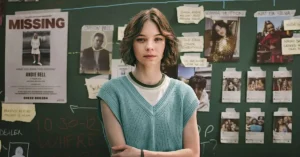
“Adolescence” is a four-part Netflix series that tells the story of a thirteen-year-old boy arrested for the murder of a schoolmate. It explores the subsequent impact on his family and the unsettling revelations that emerge. The show was a massive critical and awards success, winning a total of eight Emmy Awards in 2025.
The series distinguished itself through its unique production technique: each hour-long episode was filmed as a single, seamless take. This required immense coordination between the camera operators, actors, and lighting technicians to execute without interruptions. The technique was widely praised for making the viewing experience more immersive and gripping.
Matthew Lewis won the 2025 Primetime Emmy Award for Outstanding Cinematography for his work on the series. The show also earned Owen Cooper, then 15, a historic win as the youngest-ever male actor to win an Emmy, taking home the award for Best Supporting Actor.
The Technical Challenges of a One-Shot Film
Filming an entire hour-long episode in one continuous take presented significant hurdles. Lewis and his team initially considered cameras like the Sony Venice and Arri Alexa Mini but found them either unable to record for a full hour or too heavy for the required mobility.
The solution came from an unexpected suggestion. “My grip actually suggested to use the 4D from DJI, and we had a test day with it, and we fell in love with it,” Lewis shared. The lightweight DJI Ronin 4D, paired with Cooke SP3 lenses, allowed the camera to be passed between operators easily without being tethered to a single person.
The lighting was equally complex, programmed into a desk system with specific cues corresponding to every camera position. The first episode alone had between 50 to 60 different lighting cues. The blocking of scenes was a deeply collaborative process involving the director, actors, and even the writer, sometimes adding or removing dialogue to accommodate the camera’s path through real locations where walls could not be knocked down.
Camera operator Lee David Brown stressed that every movement had to feel natural. “The camera movements have to be motivated, and the lighting has to be motivated. I don’t think there is ever a point where the camera moved or did something that wasn’t dictated by something as small as a look or a slight movement.”
Despite meticulous planning, technical mishaps were inevitable during the long takes. Lewis recalled walking into a wall in one episode and backing into a fence in another. A boom microphone dipped into the frame 45 minutes into a take for episode four. Brown described the vehicle journey in that same episode as particularly tough, requiring constant remote adjustments to the camera as the car moved.
Also Read:



A Collaborative and Performance-Driven Set
The one-shot format demanded a unique “beautiful family” atmosphere on set, as described by series co-creator and star Stephen Graham. He highlighted that from the top executive producer to the person cleaning the toilets, everyone was treated as an equal, which he believes is how you get the best work from people.
The two main camera operators, Lewis and Brown, had never worked together before “Adolescence.” Their collaboration required incredible trust, especially during challenging moments like an actor jumping through a window at a handoff point where neither operator could see their monitor. “It was just a reactive moment where I think it helped to add energy to the section,” Brown said.
The decision to use the one-shot format originated from Lewis’s previous work with director Philip Barantini on the film “Boiling Point.” Following that project, they immediately began discussing where else they could take the format. For Lewis, the story was always the most important element. He wanted audiences to forget they were watching a one-shot piece and to simply be inside the story, despite the massive technical compromises the format requires.
He expressed immense pride in the final product, stating, “It’s definitely not the best way to make everything, there’s massive compromises everywhere, but it does teach you a lot about camera language and motivation. I’m more proud of this project than anything else I’ve done.”
Also Read: Apple TV Shifts Schedule: New ‘Pluribus’ Episode Arrives Early for Thanksgiving