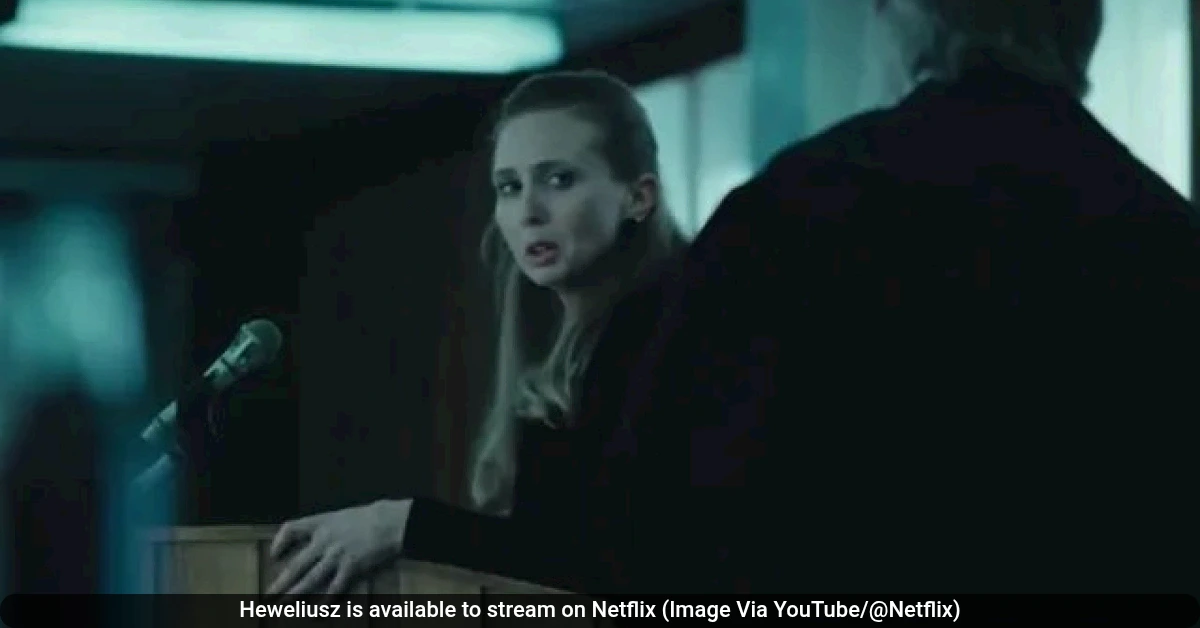
The new Netflix miniseries Heweliusz has gripped audiences with its dramatic retelling of one of Poland’s deadliest maritime disasters. The five-part series, which debuted on November 5, 2025, explores the 1993 sinking of the MS Jan Heweliusz ferry through multiple perspectives—the victims, the survivors, and the families fighting for justice. While the disaster itself claims the first episode, the series primarily focuses on the controversial investigation that followed, where finding the truth proved as dangerous as the storm that sank the ship.
The series follows off-duty captain Piotr Binter, who launches his own investigation after the ferry he once commanded capsizes in the Baltic Sea during a violent winter storm. With only nine survivors from the 64 people on board, a official Maritime Chamber is quickly established to determine responsibility. However, the investigation appears designed to pin the entire blame on the ship’s deceased captain, Andrzej Ułasiewicz, while ignoring evidence of larger systemic failures and potential conspiracies.
How the Ferry Sank: The Chain of Failure
The series reveals that the capsizing was not the result of a single mistake, but a cascade of failures. The MS Jan Heweliusz had a troubled history, nicknamed “the floating coffin” after more than 30 previous accidents. Following a major deck fire in 1986, repairs included adding 70 tons of concrete to the deck, which seriously compromised the vessel’s stability.
On January 13, 1993, the ferry departed despite warnings of a severe storm. The ship was also delayed by the late arrival of mysterious cargo from the Polish Armed Forces, estimated to be around 30 tons over the permissible weight limit. This delay placed the ferry directly in the path of the worst weather.
A critical turning point came when First Officer Witek Skirmuntt, temporarily in command while Captain Ułasiewicz rested, noticed the German vessel Kempen nearby. Witek made the fatal decision to halt the ferry in the middle of the storm. This loss of momentum, combined with the Kempen’s awkward positioning, forced the Heweliusz into a sharp turn that destabilized the already overloaded vessel. When the poorly secured trucks broke free, their shifting weight delivered the final blow, capsizing the ferry.
The Cover-Up and Binter’s Fate
The official investigation deliberately ignored these compounding factors. The Maritime Chamber, influenced by the state-owned ferry company Navica Ferries and military interests, focused solely on blaming Captain Ułasiewicz and his crew, even promoting false claims that they were drunk during the voyage.
Piotr Binter, serving as a lay judge on the investigation panel, worked with lawyer Ignacy Budzisz to uncover the truth. Binter’s crucial discovery was German radio transmission archives that confirmed the Kempen’s presence—a detail omitted from official files. This evidence connected the final pieces of the puzzle.
Tragically, Binter never presented his findings. The day after discovering the tapes, he died in a suspicious car accident. The series shows a truck forcing his car off the road, with the driver fleeing without offering help. Binter’s death, occurring at a highly convenient time for those wanting the investigation closed, is strongly suggested to be murder rather than an accident, eliminating the last major obstacle to a cover-up.
Witek’s Guilt and Final Choice
Witek Skirmuntt survived the disaster but struggled with severe psychological trauma. He carried immense guilt for his role in the tragedy, compounded by his inability to clear his captain’s name. In the final episode, overwhelmed by survivor’s guilt and despair, Witek jumps from a ship in an apparent suicide attempt. The series leaves his fate ambiguous, showing rescue efforts but not confirming whether he was saved. His arc concludes with the strong implication that he chose to reunite with his lost crewmates, unable to bear the burden of survival.
The Real-Life Tragedy and Production
The series is based on the actual sinking of the MS Jan Heweliusz on January 14, 1993, which killed 55 people and remains Poland’s deadliest peacetime maritime disaster. The wreck remains at the bottom of the Baltic Sea.
The Netflix production was a massive undertaking, filmed over nine months across 70 locations. Director Jan Holoubek and writer Kasper Bajon created what has been described as “one of the most ambitious projects in Europe” and potentially the biggest Polish production since 1989. The series features over 120 actors and 3,000 extras, blending disaster drama with thriller elements and a deep exploration of human tragedy.
Also Read: Maxton Hall Season 2 Release Time: Your Global Streaming Schedule