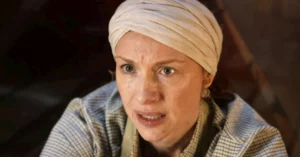

The first chapter of It: Welcome to Derry concluded with its biggest scare yet: record-breaking viewership. The Season 1 finale attracted 6.5 million U.S. viewers across HBO and HBO Max in its first three days, marking a series high and providing strong evidence that fans are eager to return to the town of Derry. While HBO has not officially announced a renewal for a second season, the show’s performance places it among the platform’s most successful new series, behind only major hits like The Last of Us and House of the Dragon. Executive producer and director Andy Muschietti has already laid out detailed plans for a three-season story, with the next chapter intended to travel back in time to 1935.
How Season 1 Performed
It: Welcome to Derry consistently built its audience throughout its eight-episode run. The penultimate episode previously held the season’s record with 5.8 million viewers, meaning the finale saw a 12% increase in viewership. Warner Bros. Discovery reports that the show’s first season is now averaging nearly 20 million viewers globally, with U.S.-only audiences averaging 11.5 million.
This steady growth is a key metric for streaming services. The show maintained its position as a top performer, joining an elite group of original series on HBO Max that have captured significant audience attention from their debut.
The Creators’ Plan for the Future of Derry
Long before the first season premiered, Andy Muschietti articulated a clear vision for the series. He intends to structure the story across three seasons, each exploring a different 27-year cycle in the creature’s predatory history.
“My intention with this was to create a story that is a little bit like an iceberg under the water all through seasons 1, 2 and 3. There will be an expansion in the mythology and more answers to the big questions. The second season will be in 1935. At the end of season 1, we are hinting at the reason why we are going to tell the story in two more seasons – and backwards,” Muschietti told Deadline.
According to this plan, a potential second season would move the story back 27 years from the 1962 setting of Season 1 to 1935. A theoretical third season would then go further back to 1908. This reverse chronological order is a deliberate creative choice, with the Season 1 finale providing hints about the narrative reason for moving backward in time.
What a Season 2 Story Could Explore
If the series continues, the plot for a second season has a clear historical anchor from Stephen King’s novel. Muschietti has stated that the season would revolve around the Bradley Gang Massacre, a violent historical event in Derry’s past that was directly referenced in the first season.
In King’s book, pharmacist Dr. Keene tells Mike Hanlon that shop owner Lal Machen, influenced by It, orchestrated an ambush of the notorious Bradley Gang at a three-way intersection in Derry. The gruesome outcome of this event was subtly glimpsed in the first season’s finale, connecting the show’s new mythology directly to the established lore.
This approach allows the show to flesh out “interludes” from King’s lengthy novel that were only briefly mentioned, giving them a full narrative treatment. A season set in 1935 would also presumably feature a completely new cast of human characters facing the ancient evil, as nearly three decades would have passed.
The Returning Element: Pennywise
While a new setting would mean new human heroes and victims, one character is certain to return: Bill Skarsgård as Pennywise. The finale of Season 1 introduced a significant twist to the creature’s mythology, suggesting that its final defeat in the future (as depicted in It Chapter Two) has given it a new, troubling awareness.
The episode reveals that Pennywise now knows the Losers Club will one day kill it. In a confrontation, it tells young Marge that she will have a son named Richie—Richie Tozier—who will be part of its future destruction. This implies the creature could attempt to change its fate by targeting the ancestors of its future enemies, adding a layer of personal stakes and potential time paradox to the prequel narrative.
Connections to the Wider Stephen King World
The first season finale also worked to connect It: Welcome to Derry more deeply to Stephen King’s shared literary universe, a move that could be expanded in future stories. The most direct link came through the character of Dick Hallorann, played by Chris Chalk.
As Hallorann prepares to leave Derry, he mentions he is traveling to London to work as a cook at a hotel owned by an old friend. When asked if he’ll be alright, he replies, “I think I’ll manage. How much trouble can a hotel be?” This line is a clear reference to his future role as the cook with psychic abilities at the haunted Overlook Hotel in The Shining.
The finale also reinforced the cosmic origins of It, referring to it as an “eater of worlds,” a title that links it to other powerful entities like the Crimson King in King’s The Dark Tower series. These connections establish the series as more than a simple prequel, positioning it as an integral chapter in a larger, interconnected mythology.
Also Read:


When Could a New Season Arrive?
There is no official production timeline for a second season, but the history of Season 1 provides some context. Filming for the first season began in May 2023 but was significantly disrupted by the Hollywood strikes, finally wrapping in August 2024. A potential second season would likely not face the same unprecedented delays, but premium television production is a lengthy process.
On December 11, Stephen King himself generated fan speculation by commenting on the finale on Threads. After stating the episode would “blow your mind,” he notably added “(this year)” after the word “episode”. While a surprise second season in 2026 seems highly optimistic, the author’s phrasing sparked discussion among dedicated fans about the potential speed of a return.
The series is executive produced by Andy Muschietti and Barbara Muschietti through their Double Dream production company, alongside Jason Fuchs and Brad Caleb Kane, who serve as co-showrunners.
Also Read: Avatar: Fire and Ash Ending Explained: The Eventual Fate of Varang and Quaritch Revealed