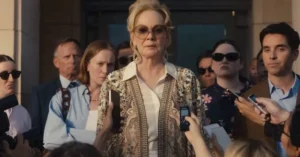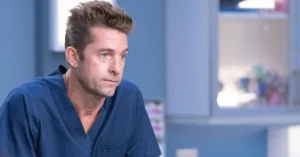

Noah Wyle says the key to the gripping realism of HBO Max’s hit medical drama The Pitt was finding actors willing to dive in completely. The show, which follows a single 15-hour emergency room shift in real-time, required a special approach to casting to make its high-pressure hospital setting believable.
The series returned for its second season on January 8, 2026, and was renewed for a third season just as the new episodes began streaming. Wyle, who stars as Dr. Michael “Robby” Robinavitch and serves as an executive producer, was deeply involved in selecting the ensemble. He wanted performers ready for a physically demanding and immersive experience, not just actors seeking the spotlight.
How The Show’s Unique Casting Process Built a Believable Hospital
The directive from producers was clear: show the truth of who works in a hospital. Casting directors Cathy Sandrich Gelfond and Erica Berger, who won an Emmy for their work on the show’s first season, were told they did not need to cast big “names”. Their mission was to find the best person for each role, even if they were newcomers.
We didn’t need ‘names.’ We had Noah. And that we could just go discover, Gelfond said. Best person wins and [it] doesn’t matter if they’ve never done anything. If they’ve got the goods, they’ve got the goods. Cause everybody has to have a first job.
This philosophy led to a wide search, with thousands of submissions for each part. The goal was to build a team with authentic chemistry, reflecting the real dynamics of a hospital where diverse professionals work side-by-side. The cast includes multiple South Asian doctors and Filipino nurses who sometimes speak Tagalog, challenging the old industry idea that there can only be one minority character in a story.
The Challenge of Keeping the Show’s “Controlled Chaos” Authentic
The Pitt is designed to be an immersive experience down to the smallest detail. The emergency room set is built so that every drawer contains exactly what would be there in a real hospital. Actors undergo a rigorous two-week medical boot camp to learn real procedures like CPR, suturing, and intubation so their movements look expert under the camera’s close watch.
An unexpected challenge arose in the second season: the cast and crew had become too skilled. After months of filming, the actors’ medical techniques looked polished, and the camera operators smoothly avoided obstacles. Producers had to remind them that the show’s raw energy relies on a sense of barely controlled chaos.
Our actors, they didn’t know what they were doing at the beginning – literally physically didn’t know what they were doing, executive producer John Wells explained. Then doing it for seven months, you get better at it, but the character is one or two hours farther along in their training, not seven months farther along.
New Faces and Evolving Stories for Season Two
The second season jumps forward 10 months from the traumatic events of the first season’s mass casualty incident. Dr. Robby is preparing for a three-month sabbatical, riding his motorcycle to work on the Fourth of July. His shift overlaps with the return of his protégé, Dr. Frank Langdon (Patrick Ball), who is back after rehab for substance abuse.
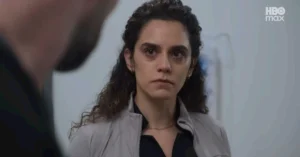
A major new character is also introduced. Sepideh Moafi joins the cast as Dr. Baran Al-Hashimi, the attending physician taking over Robby’s duties. Her different methodology and enthusiasm for using AI in diagnostics creates immediate friction with the skeptical Robby.
What her character represents for the show is pretty significant, Noah Wyle said of Moafi’s role. Dr. Al-Hashimi is very charming, intelligent, confident, and attractive, so it goes positive-negative between micro-flirtation and microaggression between the two of them.
The season continues to tackle urgent, real-world issues in healthcare, from violence against medical staff to the erosion of trust between patients and doctors. The writers consult constantly with healthcare experts to find stories that are both medically accurate and deeply human.
Also Read:




A Recognized Hit with More Story to Tell
The show’s unique formula—a season spanning one real-time day—has connected with audiences and critics. The Pitt won five Emmys for its first season, including Outstanding Drama Series. Noah Wyle also won the Emmy for Outstanding Lead Actor in a Drama Series, an award he was nominated for five times during his earlier run on ER.
The early renewal for a third season signals strong confidence from HBO Max. While Season 2 is set on the Fourth of July, Wyle suggested the next season will likely not feature a holiday and will have a shorter time jump than the 10-month gap between the first two seasons.
The show’s success, built on a foundation of authentic casting and relentless attention to detail, proves there is still a powerful appetite for character-driven drama that feels real. As the new shift begins at the Pittsburgh Trauma Medical Center, the doctors and nurses are ready for another 15 hours of life-and-death decisions.