Chapter 1: The Leftover Keys
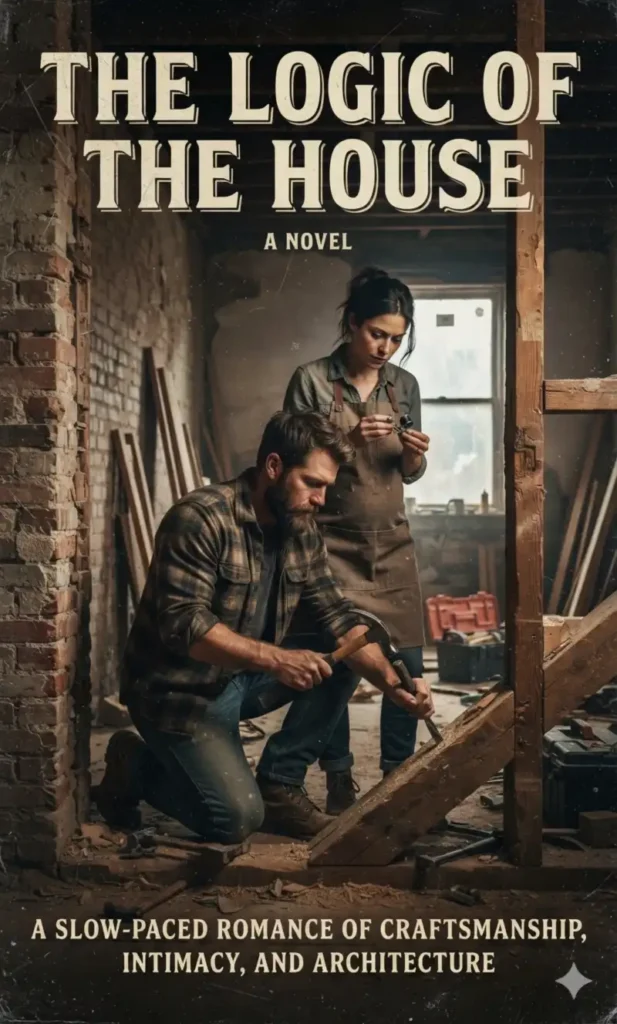
The key didn’t fit.
Luke Miller twisted the brass key until his thumb turned white, but the lock on apartment 4B wouldn’t budge. He dropped his heavy duffel bag onto the scuffed hallway floor and sighed. The hallway smelled like old carpets and someone else’s dinner. It was a cheap brick building on the edge of the city, the kind of place people moved to when their first choices fell through. Luke’s first choice had fallen through three days ago when his contractor partner cleared out their business bank account and boarded a flight to another country.
He tried the key one more time, pushing his shoulder against the chipped blue paint of the door.
The door swung inward before he could turn the wrist.
A woman stood on the other side. She held a heavy ceramic mug in both hands like a shield. Her dark hair was pulled back into a messy knot with a yellow plastic clip, and she wore an oversized grey sweatshirt with frayed cuffs. She didn’t look scared; she looked tired and deeply annoyed.
“You’re late,” she said. Her voice was flat. “And you’re trying to break my lock.”
Luke took a step back, looking down at the small slip of paper the real estate agent had given him. “This is 4B, right? I signed the lease this morning. Mr. Vance said the previous tenant left yesterday.”
The woman looked at the paper in his hand, then looked up at his face. She took a slow sip from her mug. “I’m the tenant. I didn’t leave. And Vance is a liar who owes me three months of plumbing repairs.”
Luke rubbed the back of his neck. He felt a headache blooming behind his eyes. He had sixty-four dollars left in his personal account, a truck with a leaking radiator, and a pile of debts he hadn’t created. “Look, I paid the deposit. I have the receipt right here.”
“I believe you,” she said, leaning against the doorframe. She didn’t move out of the way. “But I also paid a deposit two years ago, and I paid this month’s rent last week. Vance told me he was looking for a roommate to split the cost because he ‘accidentally’ listed the apartment under two different formats on the rental site. He didn’t mention he already took your money for the whole place.”
They stood in the dim hallway, staring at each other.
“I’m Nora,” she finally said, lowering the mug a fraction of an inch. “Nora Vance. No relation to the landlord, thankfully.”
“Luke,” he said. He reached down to pick up his duffel bag. “So what happens now? Where is Vance?”
“Probably at the track,” Nora said, turning around and walking back into the apartment, leaving the door open. “Come in. Close the door behind you. The draft makes the radiator hiss.”
Luke stepped inside. The apartment was small but neat. One wall was lined with tall wooden bookshelves packed with thick manuals, paperbacks, and stacks of blue grid paper. A drafting table sat near the window, covered in sketches of mechanical parts and small, intricate gears. The kitchen was just a counter and a two-burner stove in the corner.
“Vance isn’t going to give either of us our money back without a lawsuit,” Nora said, sitting down at the drafting table. She picked up a small metal file and started working on the edge of a tiny brass cog. “And neither of us can afford a lawyer if we’re living in a dump like this.”
Luke looked at the single bedroom door down the short hall. “Is there another room?”
“No,” Nora said without looking up from her work. The small scraping sound of the file filled the room. “Just that one. And the couch.”
Luke walked over to the window. The glass was covered in a thin layer of city grime. Down below, the streetlights were just turning on, casting a dull orange glow over the damp asphalt. He had spent the last forty-eight hours wondering how a man he had trusted for five years could just disappear with everything they built. Now he was standing in a stranger’s apartment, looking at a couch that was too short for his six-foot-two frame.
“I can pay half the rent,” Luke said. “Until I get the business sorted out. I have my tools in the truck. I can fix things.”
Nora stopped filing. She looked at his boots, which were scuffed from three years of job sites, and then at his broad shoulders. “Can you fix a radiator that sounds like a dying steam train at four in the morning?”
“Yes,” Luke said.
“Can you fix a kitchen sink that leaks from the pipe behind the drywall?”
“Easy,” Luke said. “I’m a carpenter, but I did two years of commercial plumbing before that.”
Nora set the file down. She looked at the small kitchen counter, then back at him. “The bedroom is mine. You take the couch. We split utilities down the middle, and you don’t touch my drafting table. Deal?”
“Deal,” Luke said.
The first week was loud.
Luke found out quickly that Nora didn’t just draw gears; she built them. She was a clockmaker—not the kind who fixed grandpappy’s grandfather clock, but a specialist who restored antique industrial timers and high-end mechanical watches for collectors. Her work required total silence, which was impossible because Luke spent his days on the phone with bank managers, debt collectors, and police detectives who kept telling him that his former partner had left the country legally with the funds.
“He had signing authority,” Luke muttered into the phone, pacing the narrow space between the couch and the kitchen counter. “I know he had authority, but he took the money meant for the lumber suppliers. That’s fraud.”
The detective on the other end gave a tired response about civil courts and jurisdiction before hanging up. Luke dropped the phone onto the kitchen counter with a loud thud.
Across the room, Nora’s hand slipped. The tiny tweezers she was holding clicked against a steel spring, sending the piece flying across the linoleum floor. It landed somewhere near Luke’s left boot.
Nora sat perfectly still for five seconds. Then she looked up, her eyes narrowing. “That took me three hours to calibrate.”
“I’m sorry,” Luke said, immediately dropping to his knees to look for the piece. “I didn’t mean to shout.”
“You weren’t shouting. You were pacing like a trapped dog,” Nora said, sliding off her stool. She got down on the floor opposite him, her knees clicking slightly against the hard floor. “Look near the stove. It’s about the size of a grain of rice.”
They crawled in the narrow gap between the counter and the wall. Luke’s shoulder brushed against hers, and he caught a faint scent of machine oil and lavender soap. He pulled back quickly, feeling awkward. He wasn’t used to being this close to anyone anymore. His life for the past few years had been late nights at job sites, quick greasy meals, and sleeping in his own quiet apartment.
“Found it,” Luke said, his thick fingers carefully pinching the tiny silver spring against the floorboards.
He held it out to her. His hand was calloused and lined with faint scars from old saw blades. Her hand was smaller, her fingers long and stained with dark smudges of graphite and grease. When she took the spring from his palm, her cool fingertips brushed his skin.
“Thanks,” she said, her tone softening just a bit. She stayed on the floor for a second, looking at his face. “You look like you haven’t slept since you got here.”
“I haven’t,” Luke admitted, sitting back against the lower kitchen cabinets. “Every time I close my eyes, I see the line items from the bank account. I owe forty thousand dollars to a lumber yard in Ohio. They’re going to sue me by the end of the month.”
Nora leaned her back against the cabinet next to him. The kitchen was tiny, and their knees were inches apart. “Why don’t you just declare bankruptcy? Walk away.”
“Because it’s my name on the sign,” Luke said simply. “Miller & Sons. My dad started it. He gave it to me before he died. I’m not putting his name through a bankruptcy court because I was stupid enough to trust the wrong guy.”
Nora looked down at her small spring, turning it over in her hand. “My dad had a shop too. A watch repair place downtown. He lost it when the big jewelry chains moved into the malls in the nineties. He didn’t declare bankruptcy either. He just worked until his hands shook too much to hold the tools, trying to pay off the landlord.”
“Did he?” Luke asked.
“No,” Nora said, her voice dropping. “He died three years ago. I’m still paying off the last of his medical bills. That’s why I’m stuck in this place with a landlord who runs a gambling ring out of a dry cleaner.”
Luke looked at her profile. She had a small, sharp nose and a slight dark smudge right along her jawline. She looked small against the backdrop of the crowded apartment, but there was a hardness in her jaw that he recognized. It was the look of someone who had been backed into a corner and decided to stay there until they cleared a path out.
“We’re a pair of idiots,” Luke said quietly.
A small, genuine smile broke across Nora’s face, the first one he had seen since he arrived. “Yeah. Probably.”
By the second week, they had a routine.
Luke woke up at five, before the sun came up. He would make a pot of black coffee, leaving half of it in the pot for Nora. He’d spend two hours checking online job boards for independent carpentry work—installing cabinets, fixing porch steps, anything that paid cash on delivery. By seven, Nora would emerge from the bedroom, her hair already tied back, wearing the same grey sweatshirt.
They didn’t talk much in the mornings. They moved around each other in the small kitchen like two people navigating a narrow hallway in the dark. Luke would step back to let her reach the fridge; she would tilt her head to thank him without stopping her walk toward the coffee pot.
On Wednesday evening, Luke came back late. His boots were damp from a rainy afternoon spent replacing rotting fascia boards on a garage three miles away. He had eighty dollars in cash in his pocket and a pint of milk he’d bought at the corner store.
When he opened the door, the apartment was warm and smelled like fried onions.
Nora was standing at the stove, stirring something in a small pot. The drafting table was dark, the green lamp turned off.
“You’re late,” she said, echoing her words from their first meeting, but this time her voice lacked the sharp edge. “The radiator started doing that clicking thing again an hour ago. I tried to hit it with a shoe like you showed me, but it didn’t work.”
Luke smiled, setting the milk in the fridge. “You have to hit the valve, not the pipe. I’ll take a look at it.”
“Eat first,” Nora said, nodding toward a plate on the small table. It had a pile of rice and some yellow lentils. “I made too much. If you don’t eat it, it’s going to sit in the fridge until it turns into a science project.”
Luke sat down. He hadn’t had a home-cooked meal in months. He picked up the fork, took a bite, and stopped. The lentils were spicy and rich, completely different from the bland takeout he usually bought.
“This is really good,” he said.
Nora sat down across from him with her own plate. She looked slightly embarrassed. “My mother was from India. She taught me how to make dal when I was ten. It’s cheap to make when you’re broke.”
They ate in silence for a few minutes. The sound of the rain tapping against the window pane was the only noise in the room, steady and rhythmic.
“I got a call today,” Nora said, breaking the silence. She was moving her fork through the rice, not looking at him. “A gallery downtown wants me to restore an eighteen-century clock. It belongs to some wealthy guy who lives up in the hills. The gears are ivory and gold leaf.”
“That sounds like a big job,” Luke said.
“It is. It pays enough to cover three months of rent,” she said. She looked up, her dark eyes steady. “But I need a workshop to do it. The gallery won’t let me bring the pieces here. They think this neighborhood is too risky for something that valuable. They want me to work out of a small studio space downtown, but the landlord wants a two-month deposit up front.”
Luke chewed slowly, thinking. He looked around the small apartment. “How much is the deposit?”
“Twelve hundred,” she said. “I have four hundred saved.”
Luke finished his plate and set the fork down. He reached into his pocket and pulled out the crumpled eighty dollars from his day’s work, placing it on the table. “It’s not much. But I have another job lined up for Friday. A deck repair. That’s another four hundred.”
Nora looked at the cash on the table, then at him. “Luke, we’re roommates because we’re broke. You don’t owe me anything. You have your own debts.”
“The lumber yard isn’t going to call off their lawyers for four hundred dollars,” Luke said, leaning forward. “But if you get this job, you can pay your bills, and you can keep paying your half of the rent here. If you don’t take it, you’re stuck fixing pocket watches for twenty bucks a pop. It’s an investment.”
Nora reached out, her fingers hovering over the green bills. She didn’t pick them up right away. “Why are you being nice to me? Most guys would have spent the last two weeks complaining about the couch.”
Luke looked down at his own rough hands. “Because you didn’t throw me out on the street the first night. You had every right to. You could have called the cops or Vance and made a scene. But you let me stay.”
Nora looked at him for a long time. The orange streetlight from the window caught the side of her face, highlighting the small curve of her lip. She picked up the cash, flattening the crumpled edges with her thumb.
“I’ll pay you back,” she said quietly. “With interest.”
“Just fix the clock,” Luke said, standing up to clear his plate. “And show me where that shoe is. I need to fix that radiator before it wakes me up.”
By the end of the month, the weather turned cold. The wind from the river cut through the old window frames of apartment 4B, making the curtains flutter even when the windows were shut tight. Luke spent a Saturday morning applying weather stripping to the frames while Nora worked at her table.
He was on the second step of a small aluminum stepladder, pressing the sticky foam into the seam of the wood, when his phone rang.
He pulled it out, expecting another collector. The number was local.
“Luke Miller?” a woman’s voice asked.
“Speaking.”
“This is Detective Harris with the fraud unit. We located Arthur Pendelton.”
Luke froze, his thumb still pressed against the window frame. “You found him?”
“He was picked up at a border crossing in Vermont,” Harris said, her voice sounding muffled over the speaker. “He tried to enter Canada with a falsified ID. We’ve recovered about fifteen thousand dollars in cash from his vehicle, along with the company records he took.”
Luke felt the air leave his lungs. He sat down on the top step of the ladder, the plastic cracking slightly under his weight. “Fifteen thousand? What about the rest?”
“It’s gone, Mr. Miller. Spent or moved to offshore accounts we can’t trace easily. But the fifteen thousand is being held as evidence. Once the court releases it, it will be returned to the business entity. And the state is filing formal charges.”
Luke closed his eyes. Fifteen thousand wasn’t forty thousand. It wouldn’t clear the lumber yard completely, but it was enough to keep them from filing a lawsuit. It was a lifeline.
“Thank you, Detective,” he said, his voice thick.
He hung up and sat there on the ladder, his head in his hands. He felt a sudden, massive weight lift from his chest, leaving him feeling hollow and exhausted.
A hand touched his knee.
He looked down. Nora was standing at the base of the ladder. She had her magnifier visor pushed up onto her forehead, her dark eyes looking up at him with concern.
“What happened?” she asked. “Is it the suppliers?”
“They caught him,” Luke said, his voice cracking slightly. “Arthur. They caught him in Vermont. They have some of the money.”
Nora’s face broke into a wide, bright smile. Without thinking, she reached up and grabbed his arm, squeezing his forearm tight. “Luke! That’s amazing! You’re not going to jail.”
“I was never going to jail,” Luke said, a low laugh escaping his throat. “But I’m not going to be ruined either.”
He stepped down from the ladder, and for a second, they were standing very close. Nora didn’t let go of his arm right away. Her grip was warm through his flannel shirt. Luke looked down at her, noticing the small flecks of amber in her dark eyes that he hadn’t seen before in the dim light of the apartment.
The silence between them changed. It wasn’t the silence of two strangers trying to avoid each other anymore. It was thick, heavy, and quiet in a way that made Luke’s heart beat a little faster against his ribs.
Nora seemed to notice it too. She let her hand drop, stepping back a half-pace. She cleared her throat, pulling her visor back down over her eyes.
“Well,” she said, her voice a little higher than usual. “That means you can buy the good coffee next week.”
“Yeah,” Luke said, looking at the window frame. “The good stuff.”
That night, the first snow of the year began to fall. It was a wet, heavy snow that turned the city streets quiet and white.
Luke lay on the couch, his feet sticking out from under the wool blanket. The apartment was cold despite the radiator’s steady thumping. He stared at the ceiling, listening to the soft sound of Nora’s breathing from the bedroom down the hall. The door was cracked open an inch, as it always was, to let the heat circulate.
He couldn’t sleep. The relief of the afternoon had worn off, replaced by a strange restlessness. He was thinking about the way Nora had looked at him on the ladder. He was thinking about the smell of lavender and machine oil.
He heard a soft rustle from the hallway.
Nora walked out, wrapped in a thick blue quilt. She looked small in the dim light, her feet bare on the cold linoleum. She walked over to the window and looked out at the snow falling through the beam of the streetlight.
“Can’t sleep?” Luke asked quietly.
Nora didn’t startle. She just turned her head toward the couch. “The gallery owner called late tonight. The antique clock arrived from the estate. I start tomorrow morning at the downtown studio.”
“That’s great, Nora. You’ve been working toward this for months.”
“I know,” she said, walking over to the edge of the couch. She sat down on the very edge, near his feet, wrapping the quilt tighter around herself. “But I’m terrified, Luke. If I scratch the ivory or damage the gold leaf, my career is over before it even starts. Nobody will trust me with an antique again.”
Luke sat up, pulling his blanket around his waist. He shifted his legs to give her more room, his knee lightly touching her thigh through the layers of fabric.
“You won’t ruin it,” he said. “I’ve watched you work for three weeks. You can hold a tiny spring with tweezers while a train goes by outside and your roommate is shouting on the phone. You have the steadiest hands I’ve ever seen.”
Nora looked down at her hands, which were tucked inside the quilt. “My dad used to say that the secret to fixing a clock isn’t the tools. It’s the rhythm. You have to match your breathing to the ticking until you’re part of the machine.”
“Sounds like good advice,” Luke said.
“He was full of advice,” she said, a sad edge to her voice. “Not much of it helped with the rent, though.”
Luke reached out, his hand hesitating for a second before he placed it on top of her quilted shoulder. He squeezed gently. “You’re doing better than he did. You’re taking care of it.”
Nora turned her face toward him. In the dark, her eyes looked massive. She leaned sideways, just an inch, until her shoulder rested against his chest. It wasn’t a hug; it was just a lean, a brief resting of her weight against him.
Luke held his breath. He didn’t move, afraid that if he shifted, she would pull away. He could feel the warmth of her body through the quilt, a steady, comforting heat against the chill of the room.
“Thanks, Luke,” she whispered.
They sat like that for a long time, watching the snow accumulate on the window sill outside, two people who had been broken by the city, finding a strange sort of balance in the middle of a rented room.

