
The ending of Monster: The Ed Gein Story leaves viewers with a haunting final line that sums up the series’ central theme. Director Max Winkler has revealed the meaning behind the last words spoken to Ed Gein and why they were chosen to conclude the Netflix series.
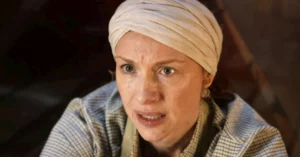
In the final scene, the series flashes back to Ed Gein sitting on a porch with his mother, Augusta. She looks at him and says, “Only a mother could love you.” This line had been used throughout the series, but its final delivery is different in tone, with Augusta smiling as she says it. Director Max Winkler explained that this line was intentionally used as the show’s conclusion, calling it Ed’s “Rosebud” – a reference to the classic film Citizen Kane that signifies the core memory or motivation that defines a character’s life.
Winkler stated that the creative team did not initially plan the porch scene. It was the last thing filmed for the entire series. He explained that he suddenly decided to shoot on the porch and knew that “Only a mother could love you” should be the final line. He described it as the key to understanding “why Ed did what he did in our version.”
The Final Scene and Ed’s Death
The finale, which takes place in 1984, follows an elderly and terminally ill Ed Gein in Central State Hospital. In his final moments, the show presents a series of visions that play in his mind. He is wheeled through the hospital in a dream-like sequence where he is celebrated by a crowd of nurses, doctors, and infamous serial killers like Charles Manson and Ed Kemper, who thank him for inspiring them.
In this fantasy, he sees his mother, Augusta, at the top of a staircase. She tells him, “You changed the whole world,” and that she has never been prouder. This leads into the final porch flashback. After this memory, Ed takes his last breath in his hospital bed. The scene suggests that his twisted relationship with his mother and her controlling, abusive love were the defining forces of his life and crimes.
The Show’s Exploration of a Monster
The series creators have stated that a key question for the season was whether monsters are born or made. The portrayal of Ed Gein’s life suggests it was a combination of both. Charlie Hunnam, who plays Ed Gein, unpacked this question, asking, “Who was the monster? This poor boy who was abused his whole life then left in total isolation, suffering from undiagnosed mental illness? Or the legion of people who sensationalized his life for entertainment?”
The series spends significant time exploring Gein’s oppressive upbringing under his fanatically religious mother, Augusta Gein, played by Laurie Metcalf. She taught him that all women outside their home were sinful and corrupt. This, combined with his isolation on the family farm, warped his understanding of relationships and sexuality. The show argues that his mind was deeply shaped by this trauma and solitude.
A Legacy in Horror Culture
The finale also underscores Ed Gein’s lasting impact on popular culture. His real-life crimes became the blueprint for some of horror cinema’s most iconic characters. The series includes storylines about the creation of these films:
- Psycho: The character of Norman Bates was directly inspired by Gein’s relationship with his mother.
- The Texas Chain Saw Massacre: The villain Leatherface was influenced by Gein’s use of human skin and body parts.
- The Silence of the Lambs: The killer Buffalo Bill has roots in Gein’s activities.
The final episode even features a scene where teenagers at a cemetery are chased by the fictional monsters Gein inspired: Norman Bates, Leatherface, and Buffalo Bill. This visually ties his real-life atrocities to the fictional horror genre he helped create.
Also Read: Did Ed Gein Really Kill His Brother? The Truth Behind Netflix’s ‘Monster’