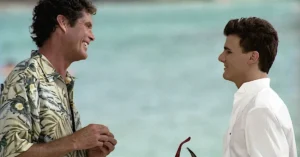
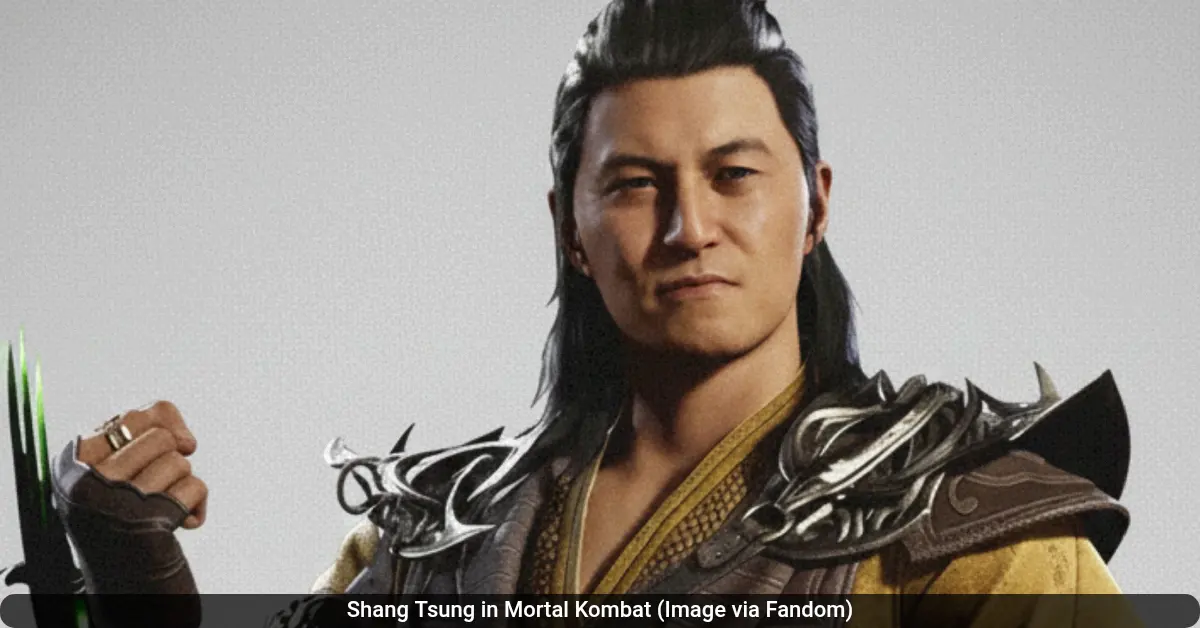
The villainous sorcerer Shang Tsung stands as one of the most famous faces in Mortal Kombat history. The character’s enduring popularity is deeply connected to the actor who first brought him to life, Cary-Hiroyuki Tagawa. Tagawa’s recent passing marks a significant moment for fans, as his portrayal in the 1995 film and the web series Mortal Kombat: Legacy became the definitive version of the soul-stealing villain for an entire generation.
Shang Tsung is a central antagonist in the fighting game franchise created by Ed Boon and John Tobias. He first appeared in the original 1992 arcade game as the final boss players had to defeat. The character is a powerful, ancient sorcerer cursed to consume the souls of his victims to maintain his youth and power. He is most often seen serving the tyrannical emperor Shao Kahn, acting as the host of the Mortal Kombat tournament in a bid to help Outworld conquer other realms.
From Game Screen to Movie Icon: Tagawa’s Defining Role
While Shang Tsung existed in games for years, Cary-Hiroyuki Tagawa’s performance transformed the character into a mainstream icon. Tagawa took on the role in New Line Cinema’s 1995 “Mortal Kombat” film adaptation. His portrayal, mixing graceful menace with a commanding presence, left a permanent impression. The film was a major success, grossing over $100 million on a modest budget.
Tagawa’s specific choices defined the sorcerer for many. He delivered the character’s famous line, “Your soul is mine,” with a chilling confidence that became instantly memorable. He reprised the role in archive footage for the 1997 sequel Mortal Kombat Annihilation and, most notably for this topic, returned to play Shang Tsung in the second season of the live-action web series “Mortal Kombat: Legacy” in 2013.
The actor’s connection to the role extended beyond live-action. In 2019, he returned to voice Shang Tsung and provide his physical likeness for the video game “Mortal Kombat 11,” a move that thrilled long-time fans. Game co-creator Ed Boon supported this decision, noting that many players visualized Tagawa when they thought of the character.
The Power and Cunning of Shang Tsung
Within the lore of Mortal Kombat, Shang Tsung is defined by his immense magical power and his deceitful intellect. Unlike the brute force of Shao Kahn, Shang Tsung represents a more cunning and sophisticated evil.
His two most feared abilities are the cornerstones of his power:
- Soul Absorption: Shang Tsung is cursed to steal the souls of those he defeats. This act sustains his life, restores his youth, and grants him the knowledge and fighting skills of his victims.
- Shapeshifting: The sorcerer can morph his form to perfectly mimic other warriors. This allows him to use their special abilities and launch unexpected attacks. This power was originally born from technical limitations in the first game’s development but became a key part of his character.
Beyond these, he commands a vast arsenal of magic. He can summon flaming skull projectiles, create portals, teleport, and perform powerful necromancy. He is also a master martial artist, skilled in styles like Snake and Crane kung fu.
Shang Tsung’s story is one of repeated ambition and betrayal. He was once the Grand Champion of the Mortal Kombat tournament centuries ago before being defeated by the Great Kung Lao. He later orchestrated Outworld’s winning streak through his champion, Goro, only to see it broken by the hero Liu Kang. This failure often puts him at odds with Shao Kahn, though he continuously devises new schemes, such as forming the “Deadly Alliance” with the sorcerer Quan Chi.
His role in Mortal Kombat: Legacy and other media consistently highlights this manipulative nature. He is not just a fighter but a master planner who manipulates events from behind the scenes.
A Legacy Beyond Outworld: Cary-Hiroyuki Tagawa’s Career
While forever linked to Shang Tsung, Cary-Hiroyuki Tagawa had a long and respected career spanning film, television, and video games. Born in Tokyo on September 27, 1950, he was the son of a Japanese Takarazuka actress and a Japanese-American soldier.
His breakthrough role came in Bernardo Bertolucci’s 1987 Best Picture winner, “The Last Emperor”. This opened the door to a prolific career where he was often cast as elegant, formidable villains. His notable film credits include Licence to Kill (1989), Rising Sun (1993), Memoirs of a Geisha (2005), and 47 Ronin (2013).
On television, he delivered one of his most acclaimed performances as Trade Minister Nobusuke Tagomi in Amazon’s The Man in the High Castle (2015-2018). He also appeared in series like Revenge, Lost in Space, and recently voiced a character in Netflix’s Blue Eye Samurai.
A lifelong martial artist, Tagawa studied kendo and Shotokan karate under masters in Japan and later developed his own philosophy called “Chun Shin”. He passed away on December 4, 2025, at his home in Santa Barbara, California, due to complications from a stroke.
“Cary was a rare soul: generous, thoughtful, and endlessly committed to his craft,” said his longtime manager, Margie Weiner.
Also Read:

Shang Tsung’s Enduring Presence in Mortal Kombat Media
Shang Tsung remains a pivotal figure in the Mortal Kombat universe. After Tagawa’s performance in Mortal Kombat 11, the character returned in the 2023 game Mortal Kombat 1 as a pre-order bonus character, this time voiced by Alan Lee. In this new timeline, his origin is altered, presenting him first as a deceitful snake oil salesman in Outworld before he regains his sinister power.
The character has been portrayed by several other actors across different projects. Chin Han played the role in the 2021 Mortal Kombat film reboot. In various animated films like Mortal Kombat Legends: Scorpion’s Revenge, his voice has been provided by Artt Butler. Other actors like Bruce Locke (Mortal Kombat: Conquest) and Johnson Phan (first season of Mortal Kombat: Legacy) have also taken on the role.
The connection between Shang Tsung and Cary-Hiroyuki Tagawa, however, is unique. Tagawa’s specific blend of charisma, theatricality, and physicality created a version of the sorcerer that continues to be the standard by which all other portrayals are measured. His work in the 1995 film and in Mortal Kombat: Legacy cemented a pop-culture legacy that continues to resonate with fans around the world.