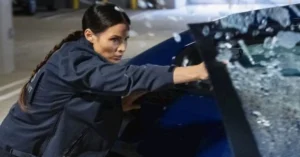


The new Japanese thriller “Human Specimens” on Prime Video ends with a shocking confession and a chilling revelation about the true cost of artistic obsession. The five-episode series, which debuted on December 18, 2025, concludes by exposing the real mastermind behind a horrific butterfly-themed installation made from human bodies.
The story begins with Professor Shiro Sakaki walking into a police station to confess to killing six young men—including his own son, Itaru—and transforming them into a macabre art display in the forest. As the series unfolds through shifting perspectives and conflicting testimonies, a more complex and tragic picture emerges, centered on a famed artist’s desperate bid for immortality.
How the Human Specimens Project Began
The chain of events starts with an invitation. Five talented boys—Ao, Sho, Hikaru, Toru, and Dai—are invited to a remote, refurbished villa for what they believe is an art competition. The host is the legendary painter Rumi Ichinose, and the prize is the chance to become her successor.
Rumi’s fame stems from a rare gift: tetrachromatic vision. This condition allows her to see millions of colors invisible to the average person, making her artwork uniquely breathtaking. Shiro and his son Itaru are also invited, as Shiro has a lifelong connection to Rumi. Their fathers were connected in the art world, and as children, Shiro once took a young, overwhelmed Rumi to a butterfly garden, an experience that forever linked butterflies, color, and perception in her mind.
However, the competition is a facade. The boys were not chosen for their talent but for a far more sinister purpose tied to Rumi’s declining health and fading eyesight.
Rumi Ichinose: The Dying Artist’s Final Plan
As the finale reveals, Rumi Ichinose was the true architect of the “Human Specimens” project. Facing the loss of her visionary gift and her own mortality, she became obsessed with leaving a lasting legacy. Her plan was her final, twisted masterpiece: to “immortalize” young artists she believed would never achieve greatness, by literally turning them into art.
She hatches a plan: the Human Specimens project, her warped magnum opus. In her head, those boys were future-potential artists doomed never to hit it big. So, why not “immortalize” them as literal art?
Rumi enlisted the help of her daughter, Anna, who has lived her entire life in her mother’s shadow, meticulously copying Rumi’s style but lacking her innate tetrachromatic vision. Anna was ordered to execute the project at the villa.
Anna’s Transformation and Itaru’s Fate
A central tragedy of the ending is Anna’s arc. As she carried out her mother’s orders, a horrific change occurred: the act of killing and creating the installation triggered her own latent tetrachromatic vision to awaken. She achieved the “gift” she always desired through monstrous acts, finally enabling her to complete the project’s backdrop that the now-blind Rumi could not finish.
Itaru’s role is equally tragic. A skilled photographer who felt inadequate compared to his painter father and grandfather, he was not originally intended to be a specimen. He assisted Anna at the villa. However, in a pivotal moment, he painted for the first time, successfully capturing the “butterfly vision” his father Shiro had long sought. He then made the choice to include himself as the sixth and final specimen, leaving clues for his father to find.
Shiro discovered the installation and, in a state of profound shock and grief, finished the work on his son’s body. It remains ambiguous whether he was honoring Itaru’s wishes or was simply unable to process the horror before him.
The Final Confession and Who Bears the Blame
In the end, Shiro confesses to all six murders. His confession, however, is an act of protection and tragic resignation. He takes full responsibility to shield Itaru’s memory—ensuring his son is remembered as a victim—and to absolve Anna, whom he sees as another casualty of Rumi’s obsession.
The true puppet master, Rumi, escapes earthly justice by dying peacefully in her sleep. Anna visits Shiro in prison, revealing her mother’s complete manipulation. Shiro, understanding the depth of the tragedy, does not blame her and maintains his confession, allowing her to go free.
You May Also Like:




The series leaves viewers with the bitter irony that the “Human Specimens” installation, created at such a horrific cost, achieved nothing. It was dismantled as evidence, the bodies were removed, and the art was erased, leaving behind only loss and shattered lives.
Also Read: Can This Love Be Translated? K-Drama: Complete Release Schedule, Cast, and Global Streaming Details