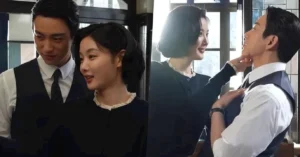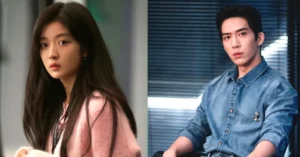


The MBC drama Moon River has finished its 14-episode run, leaving many viewers with questions about its dramatic conclusion. Starring Kang Tae-oh and Kim Se-jeong, the historical fantasy ended with major character sacrifices, a miraculous turn of events, and a hopeful look into the future. The finale provided answers about the main couple’s fate while resolving the political intrigue that surrounded them.
The series follows Crown Prince Lee Gang, who lives a life of sorrow after losing his crown princess. His world changes when he meets Park Dal-i, a peddler who looks exactly like his late wife but has no memory of her. Their story involves a mystical body swap, a quest for identity, and a fight against a powerful traitor within the royal court.
The Final Confrontation with Kim Han-chul
The finale episode, titled A Fleeting Memory, begins with high tension. The villain Kim Han-chul has kidnapped Dal-i. Meanwhile, Lee Gang is finally able to prove Han-chul’s crimes to the king, accusing him of the murders of the former king and queen dowager, as well as treasonous acts like raising a private army and counterfeiting coins. Despite this, Han-chul escapes custody with the help of his men.
Han-chul’s motivations are deeply personal, not just political. It is revealed that he and Queen Dowager Jang-jeong were once lovers. His actions, including his rebellion, were driven by a warped sense of love and a desire to protect or reclaim her. He uses the kidnapped Dal-i as leverage, demanding the queen be brought to him in exchange for Dal-i’s life.
“Your Majesty, the killer of the former King, the Crown Prince, as well as Queen Dowager, is the traitor Kim Han-chul.”
This demand sets up a direct clash. Queen Jang-jeong returns to the palace and has a powerful reunion with her son, Lee Un. When the Queen Dowager attempts to apologize for the past suffering, Jang-jeong firmly states that she cannot forgive her, establishing that understanding someone’s pain does not require excusing their actions.
Lee Gang’s Ultimate Sacrifice for Dal-i
In a desperate move, Han-chul stabs Dal-i, giving Lee Gang just fifteen minutes to meet his demands before she dies. Faced with losing her forever, Lee Gang makes a critical choice. He understands the rules of their soul-swapping connection: their souls exchange places when their blood mixes with water at the same moment.
Using this knowledge, Lee Gang intentionally cuts himself. His blood mixes with rainwater, performing the swap ritual and sending his soul into Dal-i’s dying body. This act is a pure sacrifice, knowingly trading his life for hers. The scene shifts to show Dal-i’s consciousness now inside Lee Gang’s body, forced to hold her own lifeless form—a haunting image of love and loss.
Han-chul meets his end during the ensuing chaos. As royal forces attack, he is struck by arrows. In his final moments, he looks at Queen Jang-jeong and dies clutching a hairpin that belonged to her, a symbol of their past love. His death is portrayed with a sense of tragedy for the man he once was, rather than a heroic victory.
The Miracle Resurrection and How It Happened
With Dal-i’s body declared dead by royal physicians, hope seems lost. Dal-i, in Lee Gang’s body, refuses to accept this fate. Overwhelmed with grief, her tears fall onto their bloodied hands. This emotional catalyst triggers an unexpected miracle. Their souls swap once more, returning to their original bodies. Dal-i’s fatal wounds miraculously heal, and both she and Lee Gang regain consciousness.
The drama offers a mystical explanation for this reversal. Lee Gang’s consciousness is shown in a sort of afterlife, a magical forest where he meets a wise figure or god of destiny. This entity explains that in the final minutes before his death, Lee Gang relived all his cherished memories with Dal-i. His greatest wish was simply to have more time with her.
Their unwavering love and his selfless sacrifice revived the “fate’s flower” that connected them. This is tied to the red thread of fate, a concept in East Asian mythology symbolizing an invisible bond between two people destined to be together. The show suggests their love was so powerful it literally rewrote the destiny that seemed set for them.
What Happened to All the Characters in the End
The finale provides closure for the supporting characters with a time jump showing their futures. Kim Woo-hee, Han-chul’s daughter, is arrested for her father’s crimes. Her lover, Lee Un (also known as Je-woon), tries to plead for her, but she courageously stops him. Woo-hee believes accepting her punishment is the right path, ensuring that any future with Lee Un is built on dignity, not guilt.
You May Also Like:








Years later, after serving her sentence, Woo-hee and Lee Un are finally reunited and marry. The main couple, Lee Gang and Dal-i, live openly and happily together. Dal-i gives birth to a son, who grows up to become the Crown Prince, ensuring the legacy of their love and securing the royal lineage.
The ending emphasizes that happiness was earned through difficult choices and enduring pain, not simply granted. Characters like Woo-hee and Jang-jeong choose paths of responsibility and honest confrontation over easy forgiveness or escape. The series concludes on a note of hard-won peace and hopeful continuity.
Also Read: Innate Netflix Thriller: Global Release Date, Cast, and Story Details Revealed