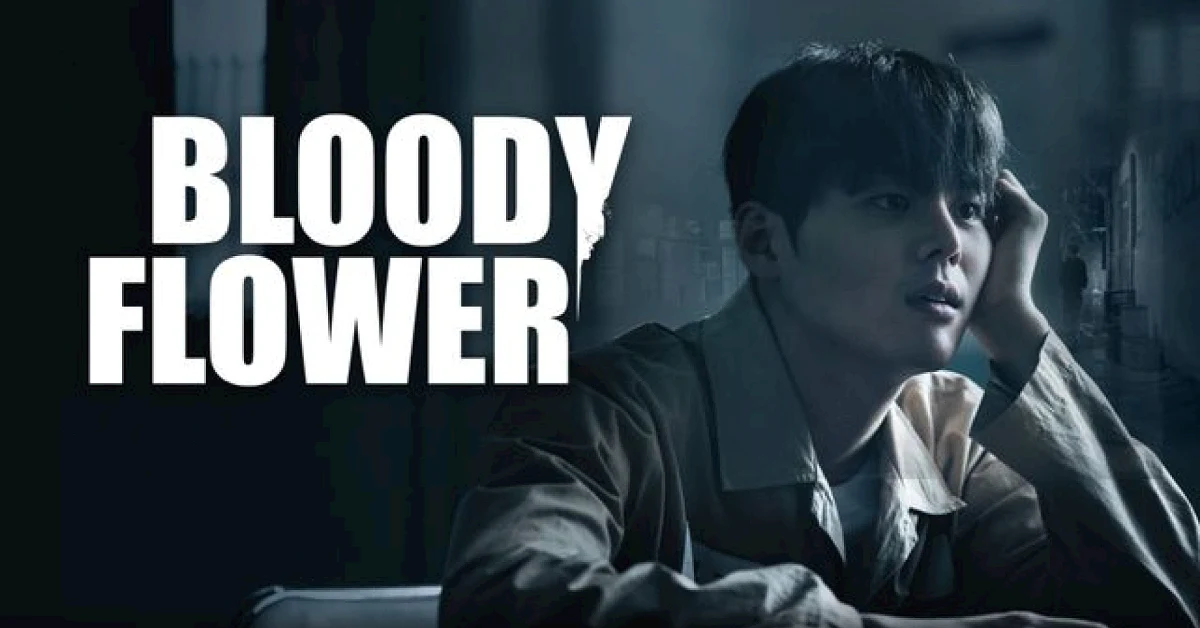
The Disney+ original K-drama Bloody Flower dropped its final two episodes on February 25, 2026, bringing an intense close to the story of Lee Woo Gyeom, a medical genius who admitted to killing 17 people . The series, based on the novel Death’s Flower by Lee Dong Gun, kept viewers on the edge of their seats until the very last minute . The big question on everyone’s mind was whether this serial killer, who also possessed the miraculous ability to cure incurable diseases, would finally face the death penalty or find a way to evade traditional justice.
The finale, consisting of Episodes 7 and 8, did not shy away from the complex moral questions the show raised from the beginning. It forced the audience to decide for themselves: Is Woo Gyeom a monster who deserved to die, or was he a necessary evil who pushed the boundaries of science for the greater good? The ending provided a definitive answer, but it was probably not the simple verdict anyone expected.
The Final Confrontation: Woo Gyeom vs. Chairman Chae
One of the most critical threads in the finale was the direct showdown between Lee Woo Gyeom (Ryeoun) and Chairman Chae of Chaeum Medical Center (Kwon Soo Hyun) . Throughout the series, Chaeum Medical Center was portrayed as a powerful institution eager to get its hands on Woo Gyeom’s blood to develop a universal cure. However, the finale revealed that their interest was far from purely scientific.
Chairman Chae had a deep, personal connection to Woo Gyeom’s past. It was exposed that Chaeum Medical Center, under the guise of research, had been involved in illegal human experiments years ago. Woo Gyeom himself was a victim of these experiments, which is what gave him his unique blood composition . The “miracle” that made him a savior was born from the same corrupt system that treated him as a lab subject.
In their final confrontation, Woo Gyeom did not just physically confront Chairman Chae; he outmaneuvered him psychologically. The power dynamics shifted completely. Woo Gyeom, who was supposedly under the center’s control, revealed he knew the truth about the past and the real reasons behind the center’s desperation to keep him close. This was not a simple partnership; it was a battle for control, and Woo Gyeom emerged as the one holding all the cards .
The Escape: Was It Real or Part of the Plan?
A major highlight of the final episodes was Woo Gyeom’s escape attempt from the detention facility . After remaining mostly silent and compliant during his imprisonment, his sudden move to break free accelerated the plot dramatically. Viewers saw Attorney Park Han Joon (Sung Dong Il), the man forced to defend Woo Gyeom to save his dying daughter, potentially aiding in this escape .
This raised the tension significantly. Was Woo Gyeom simply trying to flee justice, proving he was just a criminal after all? Or was this escape a calculated step in a much larger plan? The finale confirmed it was the latter. The escape was not about running away; it was a strategic move to gain the freedom needed to expose the truth about Chaeum Medical Center and to finalize his life’s work without interference from corrupt powers who wanted to exploit it for profit .
The Fate of Park Min Seo: A Bittersweet Resolution
The emotional core of Bloody Flower always rested on Park Han Joon and his daughter, Park Min Seo (Yoon Chae Na), who was suffering from the incurable Batten disease . Han Joon agreed to defend a serial killer because Woo Gyeom promised a cure. However, a cruel twist in the penultimate episodes saw Min Seo deliberately excluded from the list of patients selected for treatment at Chaeum Medical Center . This left Han Joon and the audience devastated and confused.
The finale finally answered why. It turned out that Woo Gyeom had his own reasons for not treating her immediately. He knew that the “treatments” offered at Chaeum Medical Center were not a permanent solution and were part of a larger, corrupt system. By waiting and executing his own plan, Woo Gyeom ensured that Min Seo would receive a genuine cure, not just a temporary fix controlled by Chairman Chae. In the end, Min Seo’s life was saved, but it came at the cost of Han Joon having to fully trust and align with a killer, blurring the lines of his own morality completely .
Cha Yi Yeon’s Quest for Justice
Prosecutor Cha Yi Yeon (Keum Sae Rok) represented the unwavering arm of the law throughout the series. She was determined to secure the death penalty for Woo Gyeom, viewing him purely as a criminal who murdered 17 people . After losing the initial trial, she felt immense frustration, sensing that the system was being manipulated and that powerful people were hiding the truth .
In the finale, Yi Yeon finally uncovered the full extent of the conspiracy involving Chaeum Medical Center and the illegal experiments from the past, including what happened to Woo Gyeom’s mother . Her investigation revealed that the death of Woo Gyeom’s mother years ago, which was ruled as a simple heart attack, was suspiciously closed without proper inquiry, likely to cover up the center’s tracks.
While Yi Yeon did not get her death penalty, she succeeded in exposing the truth. She was instrumental in bringing the corrupt officials and the truth about Chaeum Medical Center to light. Although her personal goal of seeing Woo Gyeom executed was not met, she achieved a different kind of justice by dismantling the system that created the monster in the first place.
Also Read:





So, Did Woo Gyeom Escape Justice or Redefine It?
The ending of Bloody Flower shows that Lee Woo Gyeom did not escape justice in the physical sense of running away. Instead, he successfully argued—and proved—that the conventional justice system was not equipped to handle a case like his. He did not receive the death penalty. He was not set free to live a normal life either.
In the final verdict, the court recognized his crimes but also acknowledged the unprecedented value of his medical discoveries. Woo Gyeom was placed under a form of supervised medical supervision, essentially allowed to continue his research and treat patients, but under strict government oversight. This was the outcome he had been meticulously planning from the moment he got himself arrested .
He redefined justice by forcing society to weigh his 17 murders against the countless lives his cure would save. He positioned himself not as a criminal who needed to be punished, but as a resource that needed to be managed. By exposing the corruption of Chaeum Medical Center and proving his method worked, he made himself indispensable.
The final scene shows Woo Gyeom in a sterile, secure laboratory, continuing his work. He is neither free nor in a prison cell. He is exactly where he wanted to be: in a position where he can keep doing what he believes is right, albeit as a prisoner of his own genius and past. Attorney Park Han Joon visits him, their relationship forever changed, but bound by the life saved and the truths uncovered .
In the end, Bloody Flower concluded that for someone like Lee Woo Gyeom, justice could not be simply about retribution. It had to be about accountability and, most controversially, utility. He did not escape; he transcended the conventional definition of justice, leaving viewers to ponder the uncomfortable question of whether the end truly can justify the means.
Also Read: Is Apple TV’s ‘For All Mankind’ Connected to ‘The Expanse’? The Timeline Explained
Stay tuned to VvipTimes for the latest insights and explanations on your favorite Korean dramas and movies.