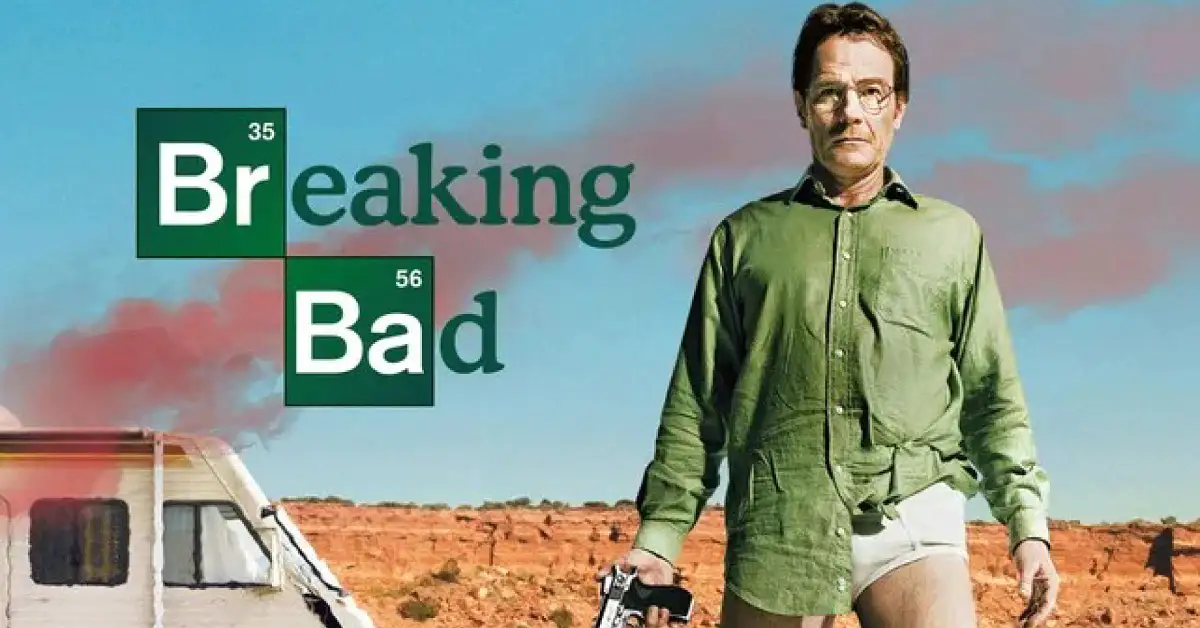
Today’s date is January 3, 2026. More than a decade after its finale, fans are still discovering new layers in Breaking Bad. While the major plot points of Walter White’s journey from a meek teacher to the drug kingpin Heisenberg are well-known, there is a crucial, consistent aspect of his personality that forms the backbone of his entire story. This element is not a single hidden Easter egg or a visual trick, but a pervasive psychological driver confirmed by the show’s creator: Walter White is a man who lies most effectively to himself.
This self-deception is the invisible engine of the series. It explains his choices, his justifications, and his devastating transformation. Creator Vince Gilligan stated that Walt “is a man who lies to his family, lies to his friends, lies to the world about who he truly is. But what I think makes him a standout liar is that first and foremost he is lying to himself”. Understanding this is key to understanding the true tragedy of Breaking Bad.
The Foundation of the Lie: “I’m Doing This For My Family”
From the very first episode, Walt constructs a noble excuse for his criminal actions. Facing a terminal cancer diagnosis and financial ruin, he tells himself and his partner Jesse Pinkman that manufacturing meth is a desperate act of love. He calculates he needs $737,000 to secure his family’s future after he’s gone.
This rationale allows him to step into the criminal world while still seeing himself as a good man, a provider. After his first dangerous encounter, he feels invigorated and “awake” for the first time in years. He uses the family excuse to mask the thrill and satisfaction he begins to feel from exerting power and utilizing his chemistry skills for recognition, not just remuneration.
When Actions Betray the True Motivation
As the series progresses, Walt’s decisions increasingly contradict his stated goal of providing for his family, revealing his deeper drives. One of the clearest examples occurs in Season 3. Walt is forced to choose between being present at the birth of his daughter, Holly, and completing a major drug deal for Gus Fring. He chooses the drug deal. By this point, he had already made more than enough money to cover his cancer treatment and his family’s needs, proving that accumulating more wealth had become the priority.
His pride and ego consistently override the family’s safety and well-being. He refuses financial help from his wealthy former partners, Gretchen and Elliot, who offer to pay for his treatment. He is furious when his son, Walt Jr., starts a donation website for him, seeing it as a portrayal of weakness. He is driven to buy the car wash where he was once humiliated, not because it’s the best laundering option, but to spite the former owner. These choices are about ego, not family security.
The Descent Into “Heisenberg” and the Erosion of Empathy
Walt’s self-deception allows him to morally justify increasingly terrible acts. He evolves from a man who struggles to kill in self-defense into someone who coldly manipulates and poisons others. His most shocking act of manipulation is poisoning a child, Brock, to turn Jesse against Gus Fring. To maintain his self-image, he cannot admit the truth, even to himself. He shifts blame, once suggesting a government radar malfunction was at fault for a plane crash caused by his own actions.
Actor Bryan Cranston noted that by the show’s later seasons, Walt had “shed basic empathy” and become a sociopath in both his personal and professional life. The lie of being a family man insulated him from the reality of what he was becoming: a power-hungry kingpin in the “empire business”.
Also Read:





The Final Admission and the End of the Lie
The facade finally crumbles in the series finale. In a raw conversation with Skyler, Walter White admits the truth he has been running from for years.
“I did it for me. I liked it. I was good at it. And I was really… I was alive.”
This confession is the culmination of his entire character arc. It confirms that the story of Breaking Bad is not about a man turning to crime for his family, but about a man discovering and embracing his darkest self, using his family as a cover story until he no longer could. The show’s creator, Vince Gilligan, described his goal as “turning Mr. Chips into Scarface,” deliberately making Walt less sympathetic over time.
The iconic final song choice, “Baby Blue” by Badfinger, serves as a final nod to Walt’s true love: his blue meth, his greatest creation. Even in death, his final moments are tied to the empire he built for his own pride and satisfaction, not the family he claimed to serve.
Also Read: ‘The Summer I Turned Pretty’ Season 4 Not Happening: Creator Jenny Han Explains Three-Season Plan