
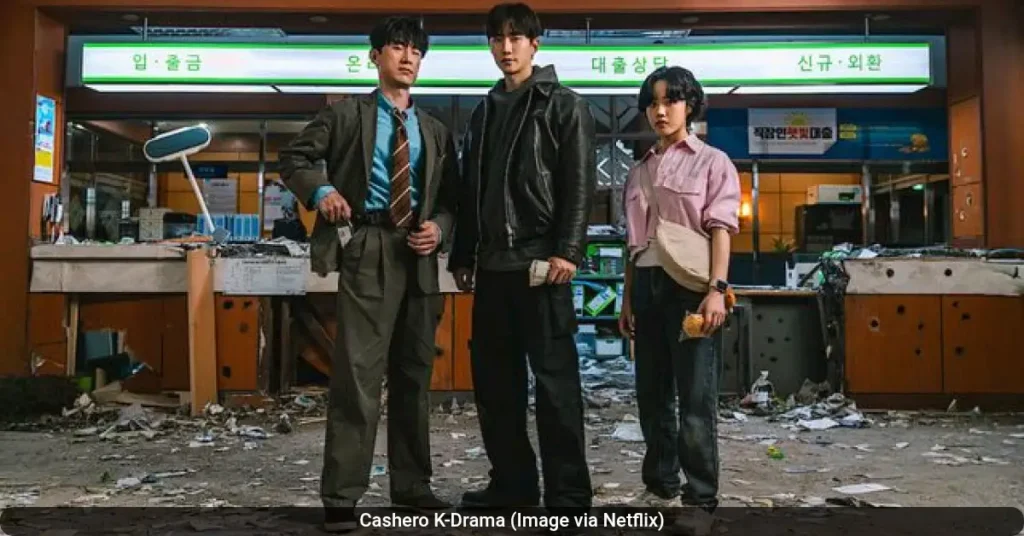
The finale of Netflix’s superhero K-drama Cashero delivered an unexpected twist: the hero’s ultimate power source wasn’t his wallet, but his community. In the climactic battle, civil servant Kang Sang-ung, whose super strength drains his cash, finds true strength when ordinary people choose to support him. This moment redefines the series’ core premise, proving that human connection outweighs financial power.
The Final Confrontation: A Hero Bankrupt and Broken
The last episode places Sang-ung in an impossible situation. The villain, Jo Nathan, having injected himself with a dangerous cocktail of stolen superpowers, attacks residents in their own apartment building. Fires rage and chaos erupts as Sang-ung pushes his abilities to the limit to protect everyone. True to his power’s costly nature, every leap and punch physically burns through the money in his pockets until he is completely drained.
Exhausted and financially broke, Sang-ung collapses. With the hero defeated and Nathan triumphant, the situation seems hopeless. This moment strips away the series’ central gimmick—the literal price of power—and forces a fundamental question: what is left when the money is gone?
The True Power Source: Community Over Capital
The answer comes not from a secret vault or a last-minute inheritance, but from the terrified residents themselves. Watching Sang-ung fall, they understand the direct link between his strength and their collective safety. In a pivotal scene, they begin throwing their own money toward him, urging neighbors to do the same.
This act transforms the narrative. The falling coins and bills are no longer just a representation of personal loss but become symbols of shared investment and collective will. Fueled by this communal contribution, Sang-ung finds the strength to rise. He confronts Nathan not just with renewed physical power, but with the ideological truth Nathan ignored: that pursuing an ordinary, connected life is more powerful than hoarding stolen might for exploitation.
Lee Jun-ho, who plays Sang-ung, highlighted this thematic shift, noting that the series explores what happens when a regular person is forced to weigh his personal dreams against the cost of helping others.
A Return to the Ordinary: The Fates of Heroes and Villains
With Nathan defeated, the series concludes by giving its characters the simple lives they fought to protect.
- Sang-ung and Min-suk: The couple finally achieves their long-held dream. They move into a new home, leaving the chaos behind. In a closing scene, Min-suk reveals she is pregnant, bringing Sang-ung joy and cementing their future as a family.
- The Supporting Heroes: Attorney Byeon Ho-in reconnects with his young daughter, who has inherited his alcohol-linked abilities. Bang Eun-mi visits a former superhuman who chose to live quietly, suggesting a path of peace over constant heroics.
- The Fall of the Jo Family: Justice is served through both force and law. Jo Anna meets a tragic end during the sibling conflict. Their father, Jo Won-do, faces accountability for his financial crimes in court, his illicit slush funds seized.
Thematic Payoff: What the Ending Means
Cashero began with a relatable, modern anxiety: the draining weight of financial responsibility. Sang-ung’s initial struggle resonated because every act of heroism directly jeopardized his savings, his wedding, and his dream home.
Also Read:






The ending argues that while individual resources are finite, collective support is not. Sang-ung’s victory had nothing to do with amassing more personal wealth, but everything to do with earning the trust of the community. The series ultimately suggests that the greatest strength isn’t found in limitless power or money, but in the choice to protect everyday life and, in turn, be protected by it.
The final image is not of a triumphant superhero, but of a man entering a new apartment with his partner, looking toward a normal, peaceful future. After all the supernatural battles and financial strain, the prize is an ordinary life, finally within reach.
Also Read: Idol I Episode 2 Recap: Lawyer Maeng Se Na Faces Off Against Prosecutor Kwak Byung-gyun in Court