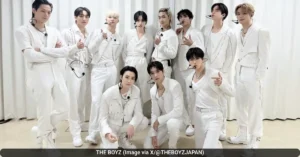

A Christmas video from K-pop group CORTIS has created a big discussion online, with some fans and critics saying the group used real gang symbols. The video, shared on December 24, shows the members in streetwear while a holiday song plays. Many people online pointed to a hand gesture made by leader Martin, saying it looked like signs linked to the American street gang Crips. This has led to a larger conversation about cultural appropriation in K-pop, with some directly comparing the situation to recent controversy surrounding another group, KISS OF LIFE.
The boy group, which debuted in August 2025 under Big Hit Music, is known for a hip-hop style and members who help create their own music. Their company has described them as a “young creator crew” to show they are involved in their own work. While the group is ending a successful first year, this incident shows the ongoing challenges K-pop faces when using elements from Black American culture.
The group posted the clip on TikTok as a fun, Christmas-themed post. In it, the five members wear baggy streetwear like hoodies and loose pants. The song playing is “It’s Beginning to Look a Lot Like Christmas” by Michael Bublé. The problem for many viewers started near the beginning. Group leader Martin is seen making specific motions with his hands.
Very quickly, people on social media said these hand movements were not just random. They claimed the gestures were actual gang signs connected to the Crips. The Crips are a well-known and often violent street gang in the United States. People criticizing the video said using these signs without understanding their serious real-world meaning is disrespectful. It takes something linked to community violence and turns it into a casual part of a fashion video.
“You really just have to debut in hybe to get away with everything cus this is no different to the kiss of life live that ruined their careers…” one user on X commented.
This comparison to girl group KISS OF LIFE is a key part of the current debate. That group faced major criticism earlier in 2025 for a live stream where members wore stereotypical hip-hop clothing and were accused of using a “blaccent,” or imitating Black American speech. KISS OF LIFE issued a handwritten apology after that incident. For many, the CORTIS video feels like a repeat of the same problem.
The online reaction has split into two clear sides. One group of critics is accusing CORTIS of what they call “Black cosplay.” This term means using elements of Black culture, like fashion, slang, or gestures, as a temporary costume or aesthetic without any real understanding or respect for the people who created that culture.
“They were trained and force fed a ‘hip-hop’ image for their debut ,it’s not their real personality at all… Cultural appropriation, street cosplay,” argued one netizen on X.
Other critical comments pointed out what they see as a pattern in K-pop, where Black culture is borrowed for its cool image while ignoring the struggles of Black people. They feel that when idols use things like gang signs, which are tied to serious issues like violence and poverty, it shows a deep lack of awareness.
However, many fans have rushed to defend CORTIS. They argue that the members, who are mostly teenagers, were just being playful and following an online trend. They say the hand gestures are common among young people on apps like TikTok and were not meant to reference anything specific.
“These are teens acting like any other teens on the Internet why are we coming this to what kof did???” asked one defender.
Other supporters questioned if the gesture was really a gang sign at all, suggesting critics were looking for a problem where none existed. This defense highlights a common clash in these situations: the difference between intent and impact. The members may not have intended to cause harm, but for many viewers, especially Black fans, the impact is still hurtful and frustrating.
This incident with CORTIS is not an isolated one. It fits into a long history of cultural appropriation controversies in the K-pop industry. For years, fans have called out idols for wearing hairstyles like cornrows and dreadlocks, using racial slurs in songs, and acting out Black stereotypes for comedy.
As K-pop has grown globally, its connection to Black American music—like hip-hop, R&B, and rap—has become stronger. Many popular K-pop songs are written by Black songwriters or use beats and styles created by Black artists. The problem arises when the culture is taken, but the history and people are not respected.
“I just don’t feel heard or seen, and the blatant disrespect is tiring,” shared a Black K-pop fan in a Teen Vogue article about leaving the fandom. She described the constant cycle of appropriation and weak apologies as exhausting.
Many Black fans express a feeling of being used. They support the music and the industry, but repeatedly see their culture reduced to a fashion accessory. The recent KISS OF LIFE controversy and now the CORTIS video make some feel that, despite years of discussion, the industry is not truly learning.
To understand the context, it helps to know who CORTIS is. The five-member group (Martin, James, Juhoon, Seonghyeon, and Keonho) is the first new boy group from Big Hit Music in six years, following global superstars BTS and TXT. They debuted on August 18, 2025, with the song “What You Want” from their EP ‘COLOR OUTSIDE THE LINES.’ Their group name comes from that phrase, meaning to think freely.
From the start, their company has marketed them differently. Instead of calling them typical “idols,” Big Hit introduced them as a “creator crew”. This means the members are actively involved in producing their music, choreographing their dances, and even helping design their music videos. Leader Martin, for example, helped produce songs for other popular HYBE artists like TXT and ILLIT before his own debut.
Their musical style leans heavily into hip-hop, which is central to this controversy. In interviews, members have cited artists like Tyler, the Creator and Mac Miller as influences. Their goal has been to present a more raw and self-made image compared to the highly polished style of some older K-pop groups.
The group has had a very successful first few months. Their debut EP reached high spots on charts in Korea, Japan, and the United States. They have already performed at major year-end festivals and are scheduled to perform at the NBA Crossover concert during the 2026 NBA All-Star Weekend in Los Angeles. This rapid global rise makes understanding cultural sensitivity even more important for their career.
As of now, Big Hit Music, the label behind CORTIS, has not made an official public statement about the Christmas video or the criticism. There has been no apology from the group or the company. The video remains posted on their official TikTok account.
The situation puts the agency in a difficult spot. On one hand, they have a hot new group ending the year on a high note. On the other, they face growing anger from parts of the international fanbase who are tired of seeing the same mistakes. How the company responds, or if it responds at all, will be closely watched. The handling of the KISS OF LIFE apology earlier in the year was seen as a test case, and many feel the reaction to CORTIS will show if any real lessons were learned.
For CORTIS themselves, this controversy hits at the core of their chosen image. As a “creator crew” that values authenticity and freedom, being accused of “cosplay” or copying a culture they claim to be inspired by is a serious critique. It challenges the sincerity of their artistic identity.
Also Read:
The debate also highlights a key question for the global K-pop industry: Can it continue to build its success on Black American musical foundations while repeatedly failing to engage with that culture in a respectful and educated way? For a growing number of fans, the answer is becoming “no.”
“After nearly two decades, the joy the music brings me isn’t enough to keep me in the fandom anymore,” wrote a long-time Black K-pop fan, explaining her decision to step away.
As CORTIS prepares for a busy 2026 with planned international activities, this incident serves as an early and significant challenge. Their ability to navigate this criticism may influence their reputation with global audiences moving forward.
Also Read: Landman Season 2: Charlie Newsom Turns Rebecca Falcone’s World Upside Down
Sources: 1