The hit series Heated Rivalry took viewers from hotel rooms to hockey rinks with a visual style that feels expensive. What fans might not know is the show was made on a budget so small, the cinematographer calls it “probably the lowest-budget thing I’ve ever shot.” The crew had a strict rule: nothing on screen could look or feel cheap. By embracing clever camera tricks, smart lighting, and a clear artistic vision, the team built a rich, cinematic world that hides every financial constraint.
Creative Planning Around Natural Light and Fast Cameras
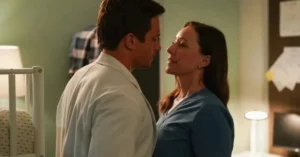
With a tight schedule and limited funds, the show’s visual strategy started with a simple plan: work with the environment, not against it. Cinematographer Jackson Parrell and director Jacob Tierney chose to design scenes around natural light sources. They used daylight from windows for indoor scenes and practical lights like table lamps and candles to create atmosphere. This approach is a common but effective strategy in low-budget filmmaking. As cinematographer Oren Soffer noted on another project, leaning into natural light available at a good location means you don’t have to spend as much time or money creating a look artificially.
Technology played a key supporting role. The show was shot with Arri Alexa 35 cameras, which are particularly good at capturing clean images in low light. This technical capability meant the crew could often use fewer physical lights on set. They paired these cameras with very fast lenses, which let in a maximum amount of light. This combination allowed them to shoot moody, intimate scenes lit by just a single candle flame, turning a limitation into a distinctive stylistic strength.
Using Camera Tricks to Simulate Big Hockey Scenes
One of the biggest challenges was depicting professional hockey, a sport known for massive, crowded arenas. The production simply could not afford to hire hundreds of background actors to fill stadium seats. The solution was a clever shift in perspective. Instead of trying to show the whole arena, they filmed the hockey action in a purposefully televised style.
They used large zoom lenses and a higher camera frame rate to make the gameplay look like it was being broadcast live on sports TV. This style kept the focus tightly on the actors and the puck, cleverly keeping empty stands out of the shot. On screen, these hockey moments appear inside a smaller box within the wider frame, visually telling the audience they are watching “TV within the show”. This creative decision made a necessity feel like an intentional artistic choice.
Building Faraway Cities Inside a Canadian Studio
The story jumps across the globe to locations like Moscow, Sochi, and Las Vegas. Traveling was out of the question, so the team built these cities digitally. They used a large, curved LED screen called a VFX wall, which displayed pre-made backgrounds created with video game software. For a scene set in a Vegas penthouse, the glittering city skyline outside the window is actually this high-tech screen.
This technology can risk looking fake, so the crew got creative to add realism. For a beach scene, they couldn’t get the digital ocean to look right. Their fix was to build a small mound of real sand in front of the screen and have the actors sit on it. This simple piece of the real world in the foreground helped blend the actor with the digital backdrop, tricking the viewer’s eye.
The Power of a Simple Close-Up
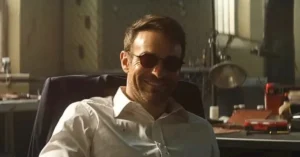
Some of the show’s most memorable moments are also its simplest. Parrell emphasizes the importance of the “eye light” – the tiny reflection of light in an actor’s eyes. He used special camera filters to remove shine from the actors’ skin, which made their eyes the brightest, most compelling part of the frame. In a tense bathroom confrontation, this technique helped the audience feel intimately connected to the characters’ unspoken emotions.
“It sounds ridiculous,” Parrell says, “but I feel like you can see the soul through that little light. For me, it’s almost a path to empathy with the character.”
This focus on subtle human detail proves that emotional impact doesn’t come from a big budget, but from where you choose to point the camera.
Also Read:


Turning Limitations Into a Visual Story
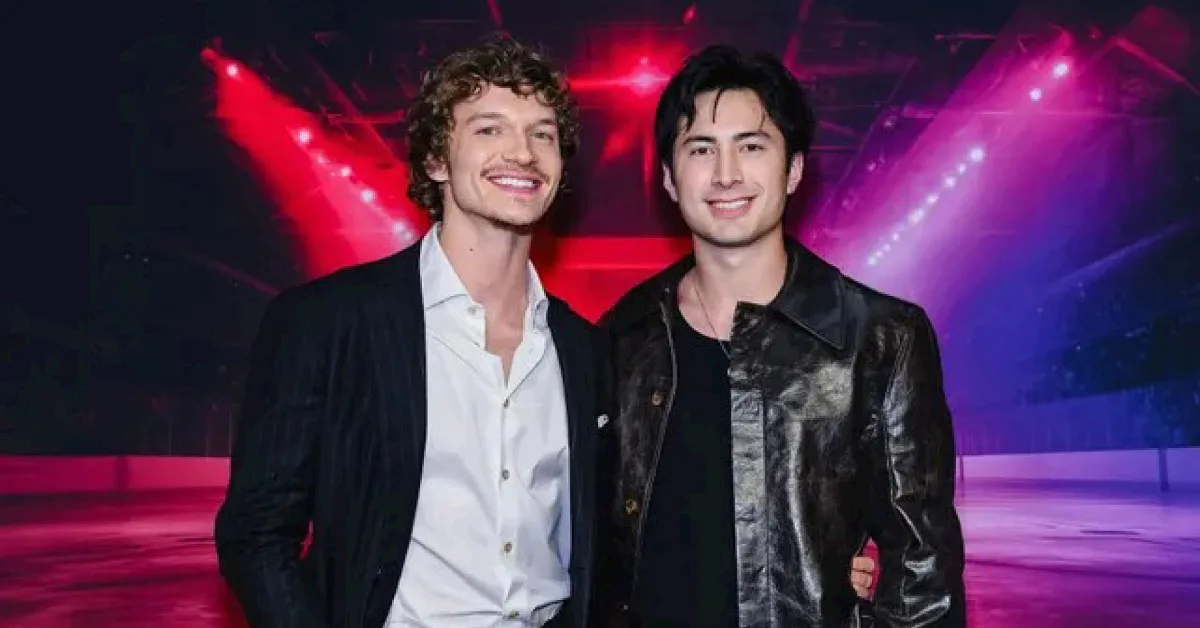
The show’s color palette was carefully designed to mirror the emotional journey of the story. The romance begins in shadowy, private spaces and gradually moves into warmer, brighter, and more colorful environments as the relationship develops. Each location has its own “color fingerprint”. Scenes with Shane’s girlfriend, for example, are bathed in golden tones, while a pivotal club scene uses vibrant pink, purple, and blue lighting.
This thoughtful use of color is a textbook example of how micro-budget filmmaking can thrive. The guiding principle is to design a story that fits your resources, not to mimic what big-budget productions do. By accepting their constraints and making bold, consistent creative choices, the Heated Rivalry team created a look that is uniquely theirs. Their work shows that limitations often force the most inventive solutions, resulting in a final product that feels cohesive, intentional, and powerful.
The success of Heated Rivalry, which launched in November and has since become a global hit, demonstrates that a compelling story and a strong visual idea can resonate far more than sheer production cost. The series was filmed in Ontario, Canada over just one month, a testament to what a dedicated crew can achieve with creativity as their primary resource.
Also Read: The ‘Burbs Season 2: Will The Peacock Mystery Get Another Chapter?
Want more behind-the-scenes secrets about your favorite shows? Stay tuned to VvipTimes for the latest deep-dives from the world of entertainment.