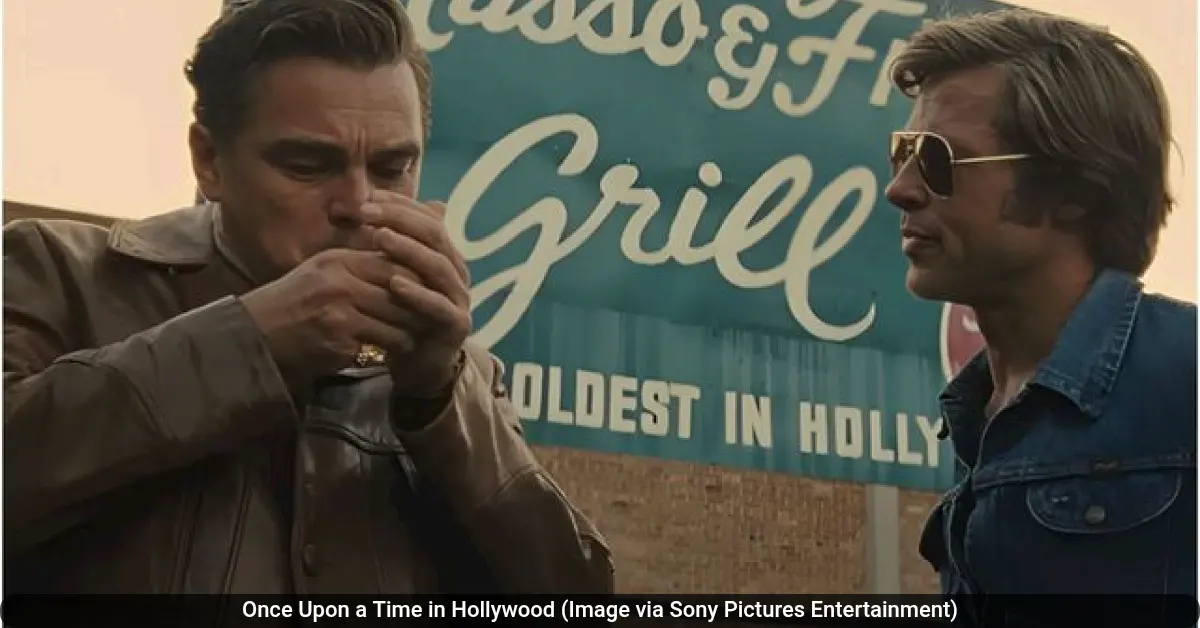
With its famous stars and a famous director, Quentin Tarantino’s Once Upon a Time in Hollywood looks like a fun trip to the past. However, parents should look closer before deciding if it’s right for their older teens. The movie is rated R for very strong reasons, including extreme graphic violence, constant strong language, and adult themes. This guide breaks down the specific content so you can make an informed choice.
What Is This Movie Really About?
The film is set in Los Angeles in 1969. It follows a fading TV actor, Rick Dalton (Leonardo DiCaprio), and his longtime stunt double, Cliff Booth (Brad Pitt), as they try to find their place in a changing movie industry. Living next door to Rick is rising actress Sharon Tate (Margot Robbie).
The story weaves together the lives of these fictional characters with real people and events. Most importantly, the plot builds toward the night of August 8, 1969, when followers of cult leader Charles Manson committed infamous murders. In real life, Sharon Tate and four others were killed that night. The movie creates an alternate version of history centered on this event.
Because it deals with this real-life tragedy, the film has a looming sense of dread. Understanding this historical context is key to the movie’s story.
A Detailed Look at Violence and Gore
The violence is the movie’s most intense content. For most of its nearly three-hour runtime, the film is a slow-paced character study. However, the final act features a sudden, extremely graphic sequence of violence that is shocking in its detail.
This scene involves three members of the Manson family breaking into a home. The violence that follows includes:
- A vicious dog attack where a man is bitten on the arm, leg, and crotch, with blood shown.
- A woman’s face being smashed into a wall, telephone, and fireplace mantel repeatedly. Her gory, disfigured face is shown clearly.
- Another woman is set on fire with a flamethrower. The movie shows her charred body.
- A man is stabbed in the hip, with the knife shown sticking out.
The film’s co-stunt coordinator said the scene was designed to show Cliff is a “formidable fighter” who can handle the violent ending.
Other violent moments include a bloody fistfight where a man’s nose is broken, and a stylized fight between Cliff Booth and a fictionalized version of Bruce Lee. The movie also features violent clips from the fictional TV shows and movies that Rick Dalton stars in.
Frequent Strong Language and Profanity
The language throughout the film is constant and very strong. According to detailed content reviews, the movie contains over 100 uses of the f-word. Other frequent profanities include “s–t,” “a–hole,” “c–k,” “p—y,” “pr–k,” “bitch,” and “motherf—-r”.
The words “Jesus Christ” and “God damn” are used as exclamations many times. The script also includes a racial slur.
Sex, Romance, and Nudity
Sexual content is mostly talk and suggestion, with some revealing costumes. Key moments include:
- A scene at the Playboy Mansion with women dressed in revealing bunny costumes.
- A teenage girl hitchhiking offers an older man oral sex; he declines because of her age.
- Several scenes show women in short skirts, halter tops, and bikinis revealing cleavage, bare midriffs, and upper thighs.
- There is some kissing and sexually suggestive dialogue.
Drinking, Drugs, and Smoking
Characters are shown drinking and smoking almost constantly, reflecting the era.
- Drinking: Social drinking is frequent. One character gets drunk in multiple scenes and has lost his driver’s license due to DUIs. He wonders out loud if he is an alcoholic.
- Smoking: Cigarette smoking is near-constant.
- Drugs: A major plot point involves a cigarette laced with LSD. A character smokes it and experiences a drug trip, though the effects are shown only through his reactions.
Controversies and Discussion Points
The film sparked several public debates that families might discuss. First, the portrayal of martial arts legend Bruce Lee upset his daughter, Shannon Lee. She felt the movie made her father look like an “arrogant, egotistical punching bag” to make Brad Pitt’s character look tough.
Second, some critics questioned the role of Sharon Tate, played by Margot Robbie. She has very few lines of dialogue in the film. At a press conference, a reporter asked Tarantino about this choice. The director rejected the question, while Robbie defended her performance, saying she wanted to honor Tate’s innocence.
Margot Robbie said about her role, “I think the moments I was on screen gave a moment to honor Sharon. I think the tragedy was the loss of innocence”.
Finally, the movie’s extreme ending, where the violent attackers are brutally killed, has been analyzed for its message. Some see it as a fantasy of righteous revenge, while others find its graphic nature, particularly against female characters, troubling.
Also Read:


Is It Okay for Teenagers?
Most official reviews suggest the film is appropriate only for mature viewers aged 17 and up. The combination of historically based terror, graphic cruelty, and pervasive adult content makes it a poor choice for most teenagers.
If an older teen does watch it, parents should be prepared to talk about the real history of the Manson murders, the film’s alteration of that history, and its very graphic depiction of violence. Discussing why the movie might have portrayed Bruce Lee or Sharon Tate the way it did can also lead to meaningful conversations about how movies tell stories.
The movie is not just a buddy comedy about old Hollywood. It is a violent, profane, and complex film that rewrites a dark chapter of American history.
Also Read: Brandi Carlile Set to Perform at Super Bowl 2026: Meet the Singer’s Wife and Family