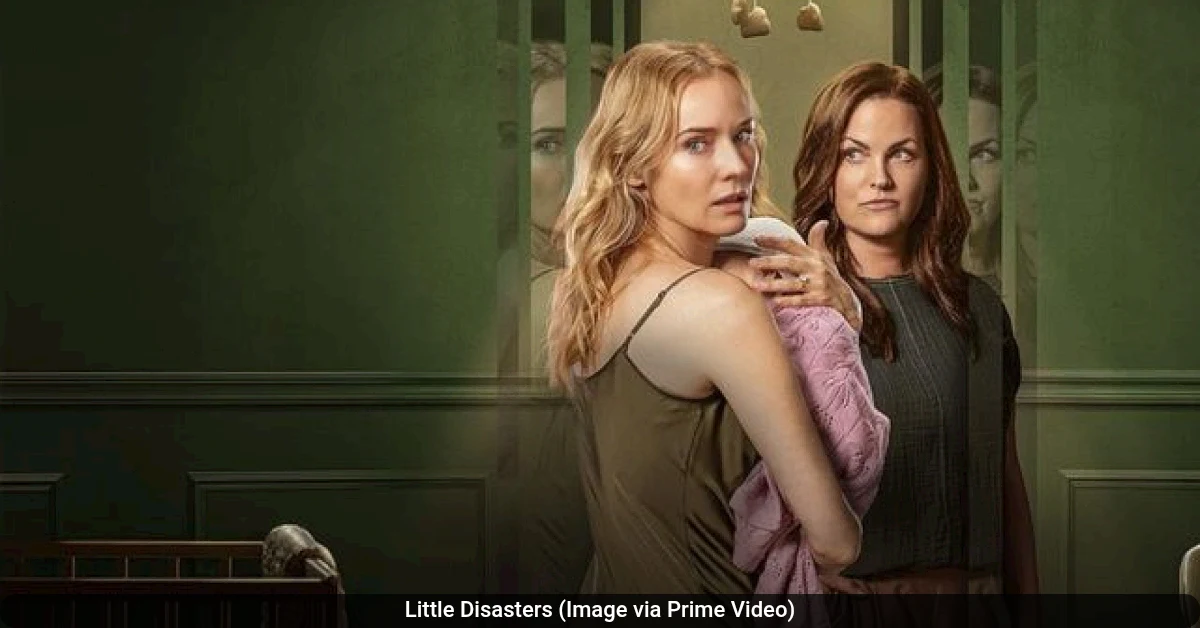
The ending of the new thriller series Little Disasters took many viewers by surprise, especially those who read the original book. In a major change, the person responsible for the baby’s injury is a different character entirely. The show’s author has now explained this significant switch, pointing to a key concern about what a television audience would find believable.
The series, now streaming on Paramount+, follows a group of friends whose lives unravel after a baby named Betsy is brought to the hospital with a mysterious head injury. Her mother, Jess, played by Diane Kruger, becomes the main suspect, investigated by her own friend and doctor, Liz (Jo Joyner). The six-episode mystery builds to a finale that reveals the truth, but it’s a truth that differs from the one in Sarah Vaughan’s 2020 novel.
The Big Change: From Book to Screen
In the Paramount+ adaptation, the culprit is Rob (Stephen Campbell Moore), the husband of Jess’s friend Mel. The show reveals that Rob was at Jess’s home looking for a business investment when baby Betsy fell. He then threatened Jess’s young son, Frankie, to keep the accident a secret.
However, in Sarah Vaughan’s book, a very different character is to blame. The accident is caused by another friend in the group, Charlotte. Motivated by jealousy over Jess’s seemingly perfect life and her own struggles with infertility, Charlotte drops the baby and then pins the blame on Frankie.
This change was one of the first decisions made by the production team. Author Sarah Vaughan, who served as an executive producer on the show, agreed with the shift. She explained that the team felt a modern audience might not accept a woman acting in such a monstrous way.
“We felt that was something that we couldn’t accept from a woman,” Vaughan said, discussing the choice to make Rob the responsible party instead of Charlotte.
Why the Character of Rob Made Sense for TV
The decision to change the villain from Charlotte to Rob was not taken lightly. The show’s writers and producers felt it created a more complex and, ironically, more believable villain for the screen.
On the show, Rob is portrayed as a financially struggling man who is constantly trying to get his more successful friends to invest in his schemes. This established his motivations as rooted in desperation and envy, rather than the deeply personal jealousy that drove Charlotte in the book.
Amanda Duke, the show’s co-writer, explained that Rob’s everyday flaws helped disguise his true nature. “We all have friends who take things too far, and he’s that kind of a-hole everyone knows,” Duke said. “But what’s brilliant is that’s actually a foil, a camouflage for him being so monstrously awful”.
The adaptation also allowed the writers to expand Rob’s role significantly. In the book, he is a minor character, but the six-episode series format gave room to develop his backstory and show the mounting pressure he was under, which made his terrible decision in a moment of panic more layered.
Giving Charlotte a More Sympathetic Role
Another major reason for the change was the desire to develop the character of Charlotte, played by Shelley Conn, into a more well-rounded and sympathetic person. In the book, Charlotte is described as less attractive and is hinted to have feelings for Jess’s husband.
The TV version transformed Charlotte. She is portrayed as a successful, stylish, and confident woman. The producers felt that if they kept her book storyline—where she causes the accident and coldly covers it up—after fleshing her out so positively, she would become an outright monster. This would have been at odds with the show’s goal of presenting nuanced, realistic women.
Vaughan noted that Charlotte is also the only woman of color among the four central friends in the series, which added another layer of consideration to the decision. The change allowed Charlotte to remain a flawed but supportive friend within the group’s dynamic.
Other Key Changes From the Book
The switch in villain was not the only difference between the book and the TV show. The writers made several other adjustments to streamline the story for television:
- Removing Liz’s Dark Backstory: The book includes a lengthy subplot about Liz’s childhood, involving a neglectful alcoholic mother and a family tragedy. The show’s writers removed this entirely. Vaughan herself had considered cutting it from the novel, feeling it was “too dark.” For the series, they focused instead on the present-day relationships between the four women.
- The Interview Style: A distinctive feature of the show is the use of direct-to-camera interviews where the characters speak about each other and the events. The finale reveals these are statements given to a social worker. Vaughan said this was an effective way to translate the characters’ inner thoughts from the book and to convey the theme of judgment.
- Focus on Perinatal OCD: A crucial element that both the book and show keep central is Jess’s struggle with perinatal obsessive-compulsive disorder (OCD). Vaughan, who drew from her own experiences, emphasized that it was vital the show did not sensationalize this mental health condition. The series uses the interview device to let Jess explain her intrusive thoughts and fears directly to the audience.
The Final Act and What It Means
In the series finale, the truth comes out during a summer fair. Jess’s son Frankie, overwhelmed with guilt and fear, finally breaks down and reveals that Rob was the one present when Betsy fell.
For Jess, this revelation brings a powerful mix of anger, relief, and guilt. Diane Kruger, who plays Jess, explained her character’s complex feelings: “There’s also a heavy sense of guilt over what her son Frankie has experienced… but while Jess is processing that, there’s also this relief that she’s going to get her life back”.
The ending comes full circle in a key way. Liz, who made the difficult initial call to social services that started the entire ordeal, is also the one who calls the police to report Rob after Frankie’s confession. Show writer Amanda Duke highlighted this intentional moment: “It’s a deliberate choice that Liz is the one who makes the call… It was important to me that we capture that bookending for her”.
The series concludes one year later, with the friends reunited at a picnic. While Jess has her children and life back, a final voiceover hints that the trauma has left a permanent mark, with an awareness that life can change in an instant.
For the actors, the core message of the story was about empathy. Jo Joyner (Liz) hoped viewers would take away “a little bit more kindness for themselves and for other mothers” and a better understanding of the immense pressures they face.
Also Read: The Studio Season 2: Kathryn Hahn Talks Potential Locations and Maya’s Outdated Trends