Lead Children, the new Polish period drama now streaming on Netflix, has viewers across the globe asking one question: Did this really happen?
The six-part series, which landed on the platform on February 11, 2026, tells the gripping story of a young doctor in 1970s Poland who discovers that children in her industrial town are being slowly poisoned by lead from a local smelter. What follows is a tense battle against an authoritarian government that wants the truth buried.
Unlike many historical dramas that mix fact with fiction, Lead Children is firmly rooted in one of Poland’s most significant public health victories. The woman at the center of this story, Dr. Jolanta Wadowska-Król, was a real physician whose determination saved thousands of young lives.
The True Story Behind Netflix’s Polish Drama ‘Lead Children’
Yes, Lead Children is based on a true story. The series draws directly from the life and work of Dr. Jolanta Wadowska-Król, a paediatrician who practiced in the Szopienice district of Katowice, Poland, during the 1970s. It also adapts the book of the same name by Polish author Michał Jędryka, who experienced the contamination firsthand while growing up in the Silesia region .
The show’s director, Maciej Pieprzyca, and writer, Jakub Korolczuk, built the screenplay using historical records, medical documents, and Jędryka’s personal account of life in a lead-poisoned neighborhood. This layered approach gives the series both factual weight and emotional depth .
Who Was Dr. Jolanta Wadowska-Król? The ‘Polish Erin Brockovich’
Long before the Netflix cameras rolled, Dr. Jolanta Wadowska-Król was a working mother and paediatrician at the District Clinic in Szopienice. In the early 1970s, she began noticing something deeply wrong. Children in her community were arriving with the same troubling symptoms: neurological damage, stunted growth, severe anemia, and developmental delays. Some babies were even stillborn .
Dr. Wadowska-Król connected the dots. The Szopienice Nonferrous Metals Smelter, which dominated the town and employed hundreds of families, was pumping massive amounts of lead and other heavy metals into the air and soil. Children playing outside, drinking water, and simply breathing were absorbing toxic levels of poison daily.
She took her findings to Professor Bożena Hager-Małecka, a respected paediatrician who also held political influence. Together, they began testing children across the region. What they uncovered was shocking. Soil samples near housing estates showed lead concentrations between 8,000 and 12,000 mg/kg. The average in other Polish regions was just 18 mg/kg .
Blood tests on 211 children in Katowice later recorded lead levels nearly four times higher than the safety threshold for healthy mental development .
In her home country, Dr. Wadowska-Król is now called the “Polish Erin Brockovich” — a fitting comparison to the American activist who took on a powerful corporation polluting a community’s water supply .
How the Communist Government Tried to Silence the Truth
Lead Children does not soften the reality of what Dr. Wadowska-Król faced. The series shows her being followed, threatened, and professionally blocked. This was not drama added for television. It really happened.
The communist authorities running Poland’s industrial sector viewed her findings as a threat. The smelter was a symbol of economic progress. Acknowledging that it was poisoning children would damage the government’s image and potentially shut down a major employer .
According to Polish media reports, officials rejected Dr. Wadowska-Król’s doctoral thesis at the Medical University of Silesia. The decision was widely seen as an attempt to bury her research and silence her credibility .
Despite the intimidation, she never stopped. She continued examining children, documenting cases, and pushing for action. Her work became a quiet but persistent force that authorities could not ignore forever.
Did ‘Lead Children’ Actually Create Real Change?
The short answer is yes. And the results were not small.
By 1974, public pressure—fueled largely by Dr. Wadowska-Król’s relentless documentation—forced the government to act. More than 140 children from the most contaminated zones were sent to mountain sanatoriums, known as prewentoriums, for six months of recovery and treatment .
In 1975, authorities finally ordered the demolition of the most heavily polluted housing areas, including a marketplace district called Targowisko. Families were relocated to safer neighborhoods. The smelter was eventually forced to reduce emissions .
Thousands of children received diagnoses and treatment because one doctor refused to back down.
Joanna Kulig on Playing a Real-Life Hero
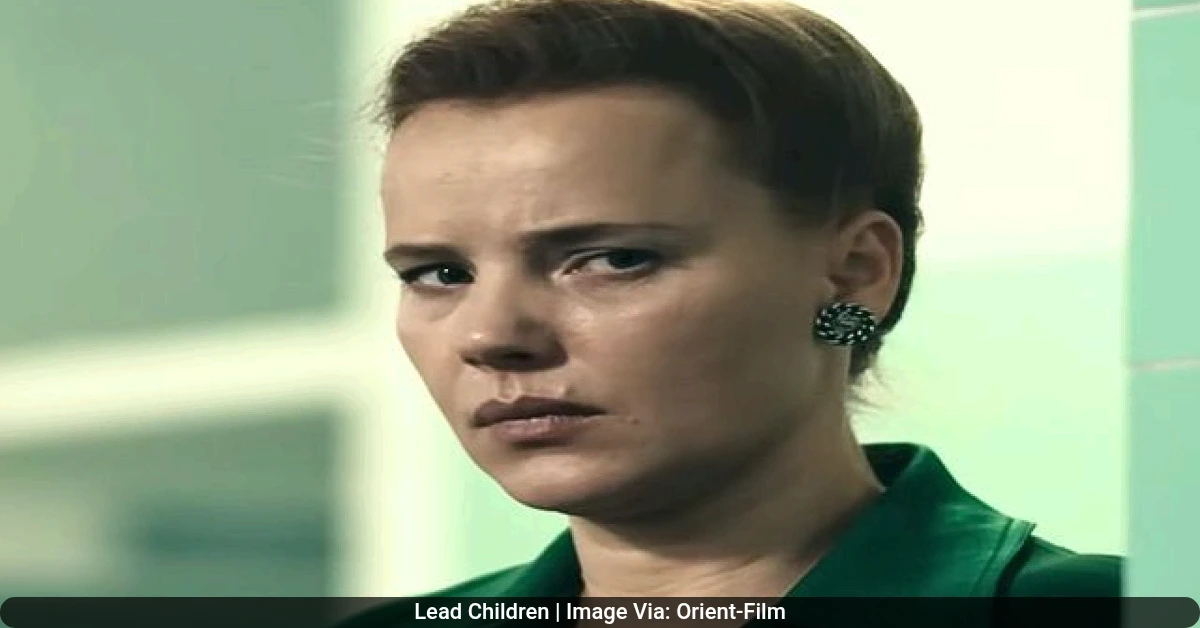
Polish actress Joanna Kulig, known internationally for her roles in Cold War and The Power of the Dog, takes on the role of Dr. Wadowska-Król. In interviews with Netflix, Kulig described the weight of portraying a living legend.
“Lead Children shows resistance to change and the strength one must find within oneself to oppose it. In the character of Jola Wadowska-Król, I saw above all honesty, extraordinary courage, persistence, and uncompromising nature. Her life story poses the question of whether we, in her place, would find enough strength in ourselves to stand alone against the system.”
She added: “It was a fascinating, intense, and exhausting job, but precisely because of that, a true one.”
Kulig spent time understanding the real woman behind the role. She wanted to honor not just the facts, but the quiet, everyday determination of a mother and doctor who simply refused to look away.
Where Was ‘Lead Children’ Filmed?
To capture the grim, gray atmosphere of 1970s Silesia, the production team filmed across multiple Polish cities, including Katowice, Ruda Śląska, Świętochłowice, Zabrze, Gliwice, Bytom, and Warsaw. These locations still carry traces of the industrial past, making them authentic backdrops for the story .
Why Viewers Are Comparing ‘Lead Children’ to HBO’s ‘Chernobyl’
Even before the series dropped, viewers noticed similarities to HBO’s acclaimed 2019 miniseries Chernobyl. Both shows center on systemic failure, government denial, and individuals who risk everything to expose the truth.
Comments on the official Netflix trailer reflect this comparison:
“This looks like a much needed movie. Lead and it’s effects worldwide has been unimaginable (paint, pipes, etc).”
“Netflix’s response to HBO’S Chernobyl.”
“This reminds me very much of Chernobyl.”
One viewer familiar with Polish history added context:
“She worked in Katowice and was one of the first to draw public attention to environmental pollution in an industrial region. Her actions led to the treatment of thousands of children and changes in public health policy. She is regarded as one of the most important figures in Polish social medicine.”
‘Lead Children’ Cast and Characters
The series features a strong ensemble of Polish actors.
- Joanna Kulig as Dr. Jolanta Wadowska-Król
- Sebastian Pawlak as Zbyszek Król, her husband
- Michał Żurawski as Hubert Niedziela, a state security officer
- Zbigniew Zamachowski as Zdzisław Grudzień, a local governor
- Agata Kulesza and Kinga Preis in supporting roles
- Marian Dziędziel as Jerzy Ziętek
The six episodes each run approximately 60 minutes and are available in full with subtitles and dubbing options for global audiences .
How to Watch ‘Lead Children’ Around the World
Lead Children premiered globally on February 11, 2026 and is available exclusively on Netflix.
- United States, United Kingdom, Canada, Australia: All six episodes are streaming now with English subtitles and English dubbing.
- India: Available with English subtitles and multiple regional language subtitle options.
- Other regions: Netflix members worldwide can access the series with local subtitle support.
Viewers searching for the show can find it directly on Netflix using the title Lead Children or the original Polish title Ołowiane Dzieci.
Also Read:



What Viewers Should Know Before Watching
Lead Children is a heavy watch. It deals with sick children, institutional cover-ups, and the physical and emotional toll of fighting a system alone. However, it is not without hope. The series is ultimately about the difference one person can make.
Critics have noted that the pacing is deliberate. RogerEbert.com described it as a “contamination drama” in the tradition of Erin Brockovich, Dark Waters, and Chernobyl. The review stated:
“It’s harrowing to see a town, and a people, and a government, do nothing to stop poisoning itself simply to save face, or protect their livelihood, or just allow themselves to pretend everything is fine. In an age where this happens with great regularity even in our country, it’s important to see people like Jola standing up for what’s right, even when it’s inconvenient.”
The review also noted that the series is best enjoyed over several sittings rather than in one binge, given the emotional weight of the subject matter.
Catch more global entertainment stories and streaming recommendations only on VvipTimes, where we bring you the facts behind the fiction.