

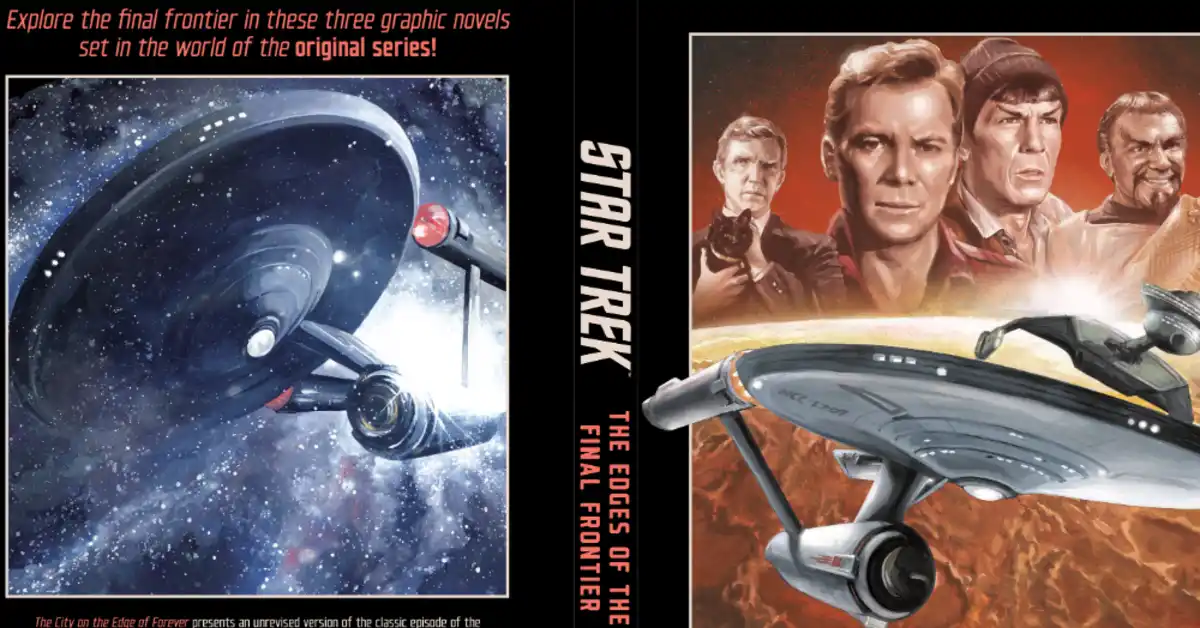
Ronald D. Moore joined Star Trek: The Next Generation in season 3 as a young writer who knew the show’s lore better than most. When showrunner Michael Piller asked him to write a simple memo explaining the difference between Klingons and Romulans, Moore turned that assignment into a cultural blueprint that changed the franchise forever. Decades later, fans still call him the “true father of Klingons,” and his step-by-step method for evolving the warrior race remains the gold standard for how to expand a fictional culture without breaking it.
A Simple Memo That Built Klingon Society
The story begins with a practical problem. Michael Piller was new to Star Trek when he took over as showrunner for TNG season 3 in 1989. He did not know the difference between the two most famous alien rivals in the franchise. Moore was the fan in the writers’ room, so Piller handed him the task of explaining it all in writing.
“I just started making it up, for the most part, because there wasn’t a lot in the canon at that point that gave you a lot between those two cultures. The Klingons were more interesting to me.”
That memo became the foundation for TNG season 3’s “Sins of the Father,” an episode that introduced Worf’s family history, the Klingon High Council, and the concept of discommendation. Moore has since referred to himself as the “Margaret Mead of the Klingon Empire,” a title he says he owns with pride.
How One Idea Led to Another
Moore’s approach was not about reinventing the Klingons from scratch. It was about asking what the existing details implied. A single scene in the TNG season 2 episode “Heart of Glory” showed Klingons yelling when one of their own died. For Moore, that one moment was enough to suggest an entire culture.
“The idea that there is ritual in this culture was step one. Okay, well that implies there’s other rituals. That implies there’s a certain spirituality. That implies they think about sending a soul, a spirit some part of themselves to some other place.”
From there, Moore reasoned that a warrior-forward society with rituals would naturally center its beliefs around battle and honor. That line of thinking led him to two clear cultural reference points: the Japanese samurai and the Vikings .
Why Vikings and Samurai Made Sense Together
Moore’s memo described the Klingons as “sort of like the Vikings combined with the Samurai.” The samurai side explained the rituals, the swords, and the serious approach to honor. The Viking side explained the larger-than-life personalities, the parties, the raiding, and the willingness to fight anyone at any time.
“Let’s combine those two as I approach their society. What does it say about the society? How is it probably structured? They’re probably not electing presidents, that’s probably not their thing. I could see how that implies the Great Houses.”
That single insight produced the Great Houses, the House of Mogh, and the political structure that drove stories for years. Moore then asked how those houses would be represented in government. The answer was a council that brought together leaders from each important family. The Klingon High Council was born from that logical chain of thought.
Bringing Worf Into the Center
Worf, played by Michael Dorn, became the lens through which audiences experienced Klingon culture. Moore’s writing put Worf at the center of stories about honor, family, and politics. The success of “Sins of the Father” made Moore the natural choice to keep writing Klingon episodes, and he became known around the TNG offices as “The Klingon Guy.”
When Moore moved to Star Trek: Deep Space Nine, Worf followed one season later. That move allowed Moore to continue exploring Klingon society from a fresh angle, now within a different series and a different set of storytelling rules.
The Episodes That Defined a Culture
Moore’s Klingon work on TNG included some of the show’s most memorable hours. “Sins of the Father” introduced the political intrigue of the Klingon Empire. “Redemption, Parts I and II” served as the TNG season 4 finale and season 5 premiere, turning Klingon politics into a full-scale civil war. Moore also wrote “Yesterday’s Enterprise,” “Family,” “Relics,” “Chain of Command,” and “Tapestry,” and co-wrote the series finale “All Good Things…” with Brannon Braga.
The Klingons that fans know today, driven by honor, family loyalty, ritual, and a love of both battle and celebration, come directly from the ideas Moore put into that first memo.
You May Also Like:

Why His Changes Still Matter
Star Trek: The Next Generation marks its 40th anniversary in 2027, and the Klingon culture Moore built is still the version most fans think of when they hear the word “Klingon.” Every later attempt to change the Klingons, from J.J. Abrams’ Star Trek Into Darkness to Star Trek: Discovery’s controversial redesign, has only reinforced how well Moore’s approach worked. His Klingons had depth because their culture grew logically from what came before. They had rituals, politics, families, and contradictions. They could be bloodthirsty and also capable of deep loyalty.
Moore’s Klingon episodes are available to stream on Paramount+ , where all of his Star Trek work can be found. His sci-fi drama For All Mankind is currently airing on Apple TV+ .
Also Read: Star Trek New Horizons Mod Turns Stellaris Into The Ultimate Trek RPG After 10 Years
Stay tuned to VvipTimes for more deep dives into the stories behind your favorite sci-fi universes.


Leave a Reply