

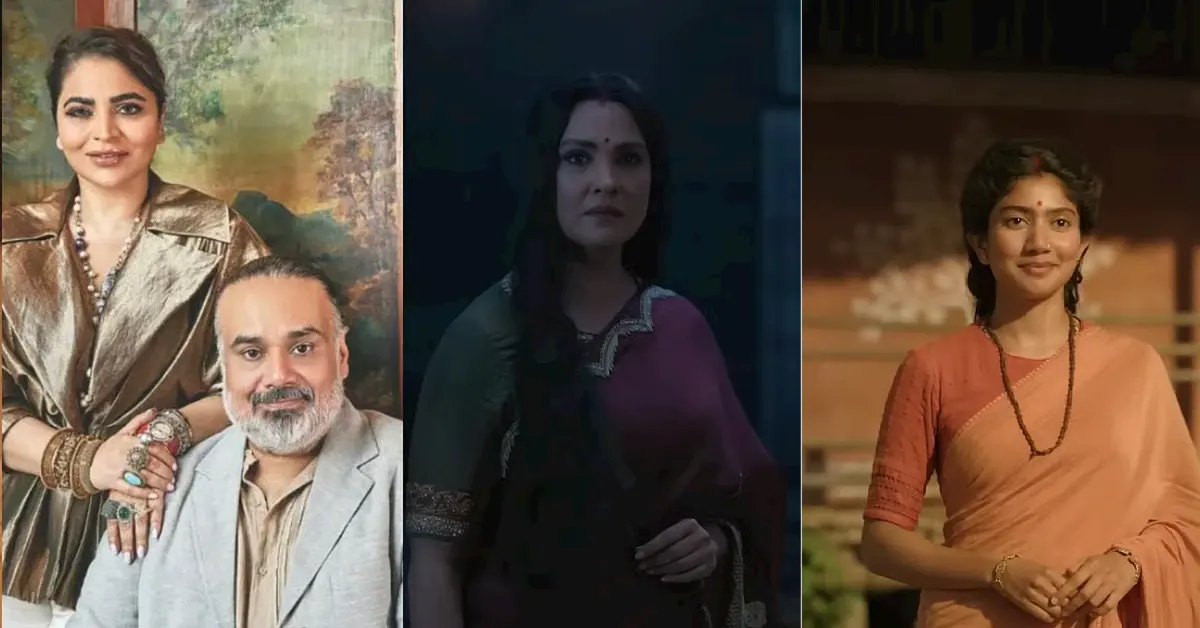
The trailer for Nitesh Tiwari’s Ramayana created a massive buzz when it dropped on July 30. The film features a star-studded cast including Ranbir Kapoor as Lord Rama, Sai Pallavi as Goddess Sita, Yash as Ravana, and Sunny Deol as Lord Hanuman. While many praised the grand visuals, VFX, and scale, a section of social media users raised questions about the costume choices. The debate centered on Sai Pallavi’s blouses as Sita and Lara Dutta’s styling as Queen Kaikeyi. Some viewers felt the looks appeared too modern for a period epic.
Now, the film’s costume designers, Rimple and Harpreet Narulah, have responded to the criticism. They defended their creative decisions and asked audiences to watch the full film before forming opinions.
Designers Expected Strong Reactions From Audiences
Rimple and Harpreet Narulah, known for their work on films like Padmaavat and Heeramandi: The Diamond Bazaar, said they always knew the film would spark discussion. They explained that Ramayana holds a deep place in people’s hearts, and opinions about casting, costumes, and visual effects were bound to arise.
“An epic like Ramayana has lived in our collective consciousness for generations. There will always be opinions about the casting, costumes, visual effects and what people believe is right or wrong. We were prepared for that. What has kept us grounded is our honesty towards our craft.”
The designers admitted they expected comparisons and debates. However, they did not anticipate the level of negativity that followed the trailer release.
Why Sai Pallavi’s Sita Look Was Designed a Certain Way
One of the major points of criticism was Sai Pallavi’s blouse designs as Sita. Some social media users questioned why the character was shown wearing stitched blouses, arguing that such garments did not exist during the Treta Yuga period.
Rimple Narulah responded to this criticism by explaining that her design choices were driven by personal faith rather than historical accuracy.
“When I close my eyes and think of Goddess Sita, I don’t think about archaeological authenticity. I wanted my Goddess, the one sitting in my mandir, to look like the image that has lived in my consciousness. That was a deliberate choice.”
She also pointed out that there are no preserved garments from the Treta Yuga that could serve as direct references. The designers drew inspiration from calendar art, miniature paintings, temple imagery, and Raja Ravi Varma’s interpretations that people have grown up seeing.
“There aren’t preserved garments from that period that we can simply recreate. We’ve all grown up seeing calendar art, miniature paintings, temple imagery and Raja Ravi Varma’s interpretations. Ramayana itself has been interpreted differently across cultures and countries. This is our interpretation.”
Symbolism Behind Lara Dutta’s Kaikeyi Costume
Lara Dutta’s appearance as Queen Kaikeyi also became a talking point. Some viewers compared her look to characters from popular television mythological serials. Others questioned her saree, border work, and blouse designs.
Harpreet Narulah addressed this criticism by explaining the symbolic meaning behind every element of Kaikeyi’s costume. He said the colors were carefully chosen to reflect her emotional state and inner conflict.
“The green in her costume represents motherhood, while the deep maroon reflects the emotional strength and darkness of the decision she has to make. She is torn between her own son and Ram. Every colour was chosen with intention.”
He added that people sometimes react too quickly without understanding the creative thought behind the designs.
Designers Urge Audiences to Watch the Film First
Both designers emphasized that the costumes should be judged only after experiencing the complete film. They said the project was their attempt to make an ancient epic visually appealing to a new generation.
“This is our attempt to make an ancient epic speak visually to a new generation. There’s thought behind every thread. We want to appeal to viewers – don’t decide before you see it. Watch it, experience it and then form your opinion.”
Harpreet explained that research forms the foundation of costume design, but interpretation is what makes it art. He urged the audience not to pass judgment prematurely.
Co-Star Surabhi Das Also Defends the Styling
Surabhi Das, who plays Sita’s cousin Shrutakirti in the film, also came out in support of the costume choices. In an interview with Zoom, she said that people will always have opinions regardless of what the makers do.
“I feel people will always have something to say. If we didn’t make Sita wear a blouse, people would have questioned that too. When we did make her wear a blouse, there is still a problem.”
She urged audiences to watch the movie before judging the styling choices.
The History Behind the Blouse Debate
The controversy over stitched blouses in a period setting has historical context. Stitched blouses as we know them today entered Indian wardrobes only a few hundred years ago, during the colonial era. The combination of a neatly pleated saree with a stitched blouse and petticoat is a relatively recent development.
This transformation is often credited to Jnanadanandini Devi, who popularized a new way of wearing the saree in late 19th-century Bengal by blending Indian drapes with Victorian modesty standards. In earlier times, women across the subcontinent wore garments like the antariya, uttariya, and stanapatta, with regional styles varying significantly.
Despite this historical fact, the designers maintained that their interpretation was based on the visual imagery that has existed in public consciousness for generations, rather than strict archaeological reconstruction.
You May Also Like:

![Battle Spirits [Re] Zekkai No Ku Episode 1 Worldwide Release: Exact Streaming Times for USA, UK, India, Australia, and More](https://vviptimes.com/wp-content/uploads/2026/10/image-48.webp "image 48")
What We Know About the Film
Ramayana: Part 1 is produced by Prime Focus Studios and Monster Mind Creations. The film features an ensemble cast including Ranbir Kapoor (Lord Rama and Lord Parshurama), Sai Pallavi (Goddess Sita), Yash (Ravana), Sunny Deol (Lord Hanuman), Ravi Dubey (Lakshman), Lara Dutta (Queen Kaikeyi), Arun Govil (King Dasharath), Kajal Aggarwal (Mandodari), Rakul Preet Singh (Shurpanakha), and Vivek Oberoi.
The film is scheduled for a special Diwali release. The trailer, which dropped on July 30, generated widespread discussion not only about the costumes but also about the casting and visual effects.
The designers acknowledged that comparisons and opinions were inevitable given the Ramayana’s place in India’s collective consciousness. However, they remained confident in their creative vision and asked audiences to experience the film in its entirety before forming opinions about the costume choices.
For more entertainment news and updates, keep visiting VvipTimes for the latest stories from the world of cinema, television, and pop culture.


Leave a Reply