

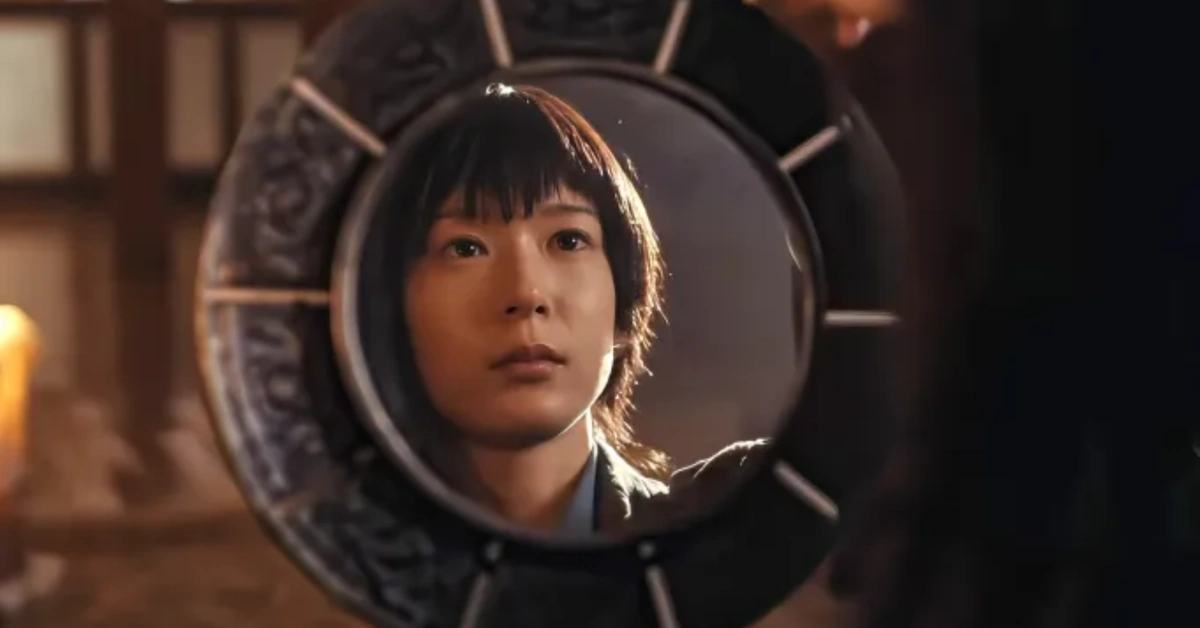
Never After Dark is not your typical horror movie. The Japanese-language ghost story from writer-director Dave Boyle opens in theaters across the United States on September 25, 2026, via Magnolia Pictures and Magnet Releasing, and it arrives with a rare 100% score on Rotten Tomatoes and praise from none other than Stephen King. But what really makes this film stand out is how it actively avoids the tired tricks that horror fans have seen a hundred times before.
A Horror Movie That Does Not Hide in the Dark
Most horror films rely on shadows, dimly lit hallways, and jump scares in near-total darkness. Boyle went the opposite direction. A large portion of Never After Dark takes place during the day or in bright interiors.
“There’s something very tactile and direct, and a lot of it takes place during the day or at least fairly bright interiors. We talked a lot about evoking darkness instead of just living in the darkness. Sometimes modern movies can be so extremely dark that there’s something that feels less satisfying about that. I’m not as interested in realistic-looking light as I am in light that’s evocative and dramatic.”
That approach gives the film a different kind of tension. Instead of waiting for something to jump out of the black, viewers are watching every corner of a well-lit room, wondering where the danger is hiding. Cinematographer Patrick Ouziel worked closely with Boyle to create a visual style inspired by classic psychological horror films like The Changeling. They used practical techniques including zooms, harder lighting, and small mirrors placed throughout the set.
Breaking the Usual Story Structure
Boyle has said that his main motivation for making Never After Dark was a frustration with how ghost stories usually end.
“The genesis came from my love of ghost stories and haunted house tales, but a nagging feeling that they often end the same way, or one of three or four ways. I wanted to come up with something that felt like a comforting retreat of the genre at first, but could end in a different way than they usually do.”
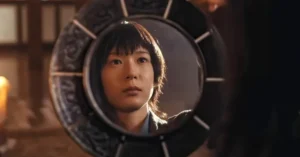
The film follows Airi, played by Moeka Hoshi from the FX series Shōgun, a wandering medium who helps lost souls move on to the afterlife. She is called to an isolated country house to deal with a spirit, but what she finds there is far more complicated than a simple haunting. The story starts like a familiar procedural — a medium arrives, gets a walk-through, and sets up her tools — but Boyle deliberately uses that familiarity to set a trap.
“When do you pull the rug out from under people? We’ve all seen a medium arriving at a house that’s haunted and getting the walk-through and sitting down to work. But I felt the specifics of the character and her process were going to be interesting enough to carry you through the more familiar parts of the story, until the turn comes at a point where you’ve been lowered into the warm bath for long enough that a splash of cold water in the face is going to hit all the harder.”
A Different Kind of Ghost
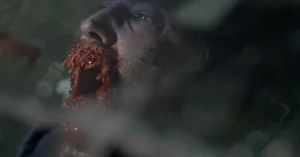
Traditional Japanese ghost stories, known as kaidan, often center on a vengeful female spirit who was wronged in life. Boyle flips that pattern. The ghost in Never After Dark is called the Slit-Mouth Man, a figure from a long-running Japanese children’s story, similar to how Western audiences might know La Llorona.
“Right away, for Japanese audiences, there’s a signal that we are going in sort of the opposite direction. We’re trying to take the structure of a traditional ghost story in a different direction.”
The film also avoids dragging out the question of whether the supernatural is real. Something that many horror movies save for a big third-act reveal is addressed in the first few minutes.
“I felt like the usual pattern was to sort of drag out the is-this-real-is-this-not-real question in the audience’s mind, and I felt like there was more to be mined from giving the answer right away.”
Festival Wins and Critical Praise
Never After Dark first premiered at SXSW in March 2026, where it won the Midnighter Audience Award. It then picked up the Grand Jury Prize for Feature Film at the Overlook Film Festival and the Golden Raven at the Brussels International Fantastic Film Festival.
Stephen King called the film “amazing and haunting.” Scott Derrickson, director of The Black Phone and Sinister, said it was “intelligent, unpredictable and bone-chilling” and “one of the best of the year.”
The film holds a 100% critics score on Rotten Tomatoes based on early reviews.
You May Also Like:





A Cross-Cultural Collaboration
Boyle, an American filmmaker who grew up Mormon in Tucson, learned Japanese while serving a mission in Sydney, Australia. He later created the Netflix series House of Ninjas, which led to his partnership with actor and producer Kento Kaku. The two formed a production company called Signal181 and made Never After Dark as their first feature together.
Kaku also stars in the film as Gunji, the skeptical son of the house’s owner. The cast includes Moeka Hoshi as Airi, Kurumi Inagaki as Airi’s dead sister Miku, Tae Kimura as the homeowner Teiko, and Mutsuo Yoshioka as a mysterious visitor.
Never After Dark is now playing in theaters across the United States in Japanese with English subtitles. The film runs 1 hour and 45 minutes and is rated Not Rated.
For more updates on the latest horror releases and festival favorites, keep exploring VvipTimes.














































































Leave a Reply