

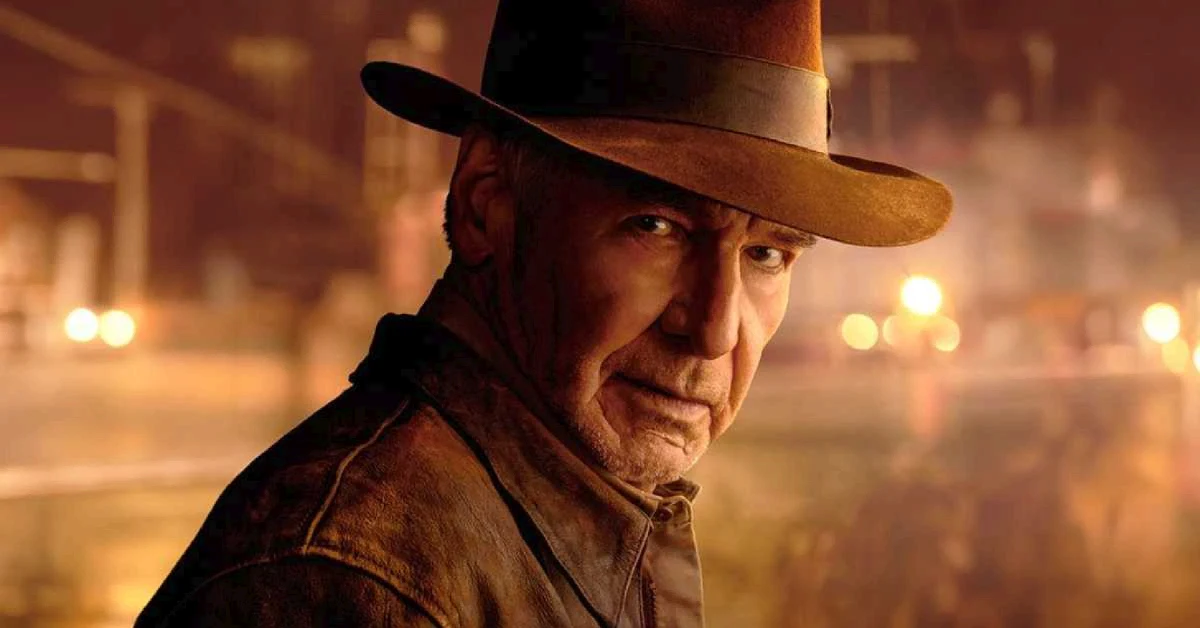
Indiana Jones and the Dial of Destiny has quietly become one of the most debated films in the franchise since its 2023 release. The fifth installment, directed by James Mangold and starring Harrison Ford in his final turn as the iconic archaeologist, earned $383.96 million worldwide against a budget reported between $300-400 million—making it the lowest-grossing entry in the series. Critics were split, with a 70% Rotten Tomatoes rating, the lowest in the franchise’s history. Yet something keeps pulling viewers back. A second or third viewing reveals layers that a first watch often misses. Here are the biggest takeaways from rewatching Indiana Jones and the Dial of Destiny.
The Film Is About Grief, Not Adventure
At its core, Dial of Destiny is not trying to recreate the thrill rides of Raiders of the Lost Ark or The Last Crusade. The film opens with Indy in 1944, full of life and purpose. By 1969, he is a lonely, retired professor whose marriage to Marion Ravenwood (Karen Allen) has fallen apart after the death of their son Mutt Williams. The adventure plot exists, but the emotional engine is a man reckoning with loss, irrelevance, and the temptation to escape into the past—literally. ScreenCrush noted that the film is “the most thoughtful film in the Indiana Jones series” because it emphasizes “an aging star’s strengths and weaknesses” rather than pretending he is still the same hero from 1981.
Helena Shaw Is Not a Replacement—She Is a Mirror
Phoebe Waller-Bridge‘s Helena Shaw initially comes across as a greedy, fast-talking opportunist. On rewatch, her role becomes clearer: she represents the version of Indiana Jones who cared more about fortune and glory than preserving history. SlashFilm observed that Helena is “closer to the Indy of Temple of Doom,” possessing “the vigor of youth” and a “cocksure and arrogant” attitude that mirrors young Indy’s worst instincts. The film never positions her as a simple successor. Instead, she and Indy need each other—she needs a father figure, and he needs someone to pull him back into the present.
The De-Aging Technology Is Impressive but Uneven
The 1944 opening sequence features a digitally de-aged Harrison Ford fighting Nazis on a train. The effect is far more advanced than similar attempts in The Irishman, but rewatching exposes the seams. Ford’s movements are noticeably stiffer than his younger self’s, and his voice carries the weight of decades even when his face does not. The sequence is thrilling, but it also serves as a subtle reminder that this is a performance of youth, not a true return to it.
Voller’s Plan Makes More Sense the Second Time
Mads Mikkelsen‘s Jürgen Voller wants to use the Antikythera to travel back to 1939 and assassinate Adolf Hitler, installing a more competent leader who could win World War II for Germany. On first watch, this seems like standard villain megalomania. On rewatch, the film’s time-travel logic becomes clearer: Voller believes he can bend the dial to his will, but the device was always designed to send its user to one specific destination—the Siege of Syracuse in 212 BC. His failure is inevitable, not accidental.
The Dial Was Never Meant to Be Controlled
A key scene on the boat early in the film foreshadows the entire third act. Helena performs a card trick where she forces Indy to pick the card she wants. Later, Reddit users noted that the Dial of Destiny works the same way: “No matter what you put in, you will always get the Battle of Syracuse“. Archimedes built the dial not as a tool for conquest, but as a signal for future help against Roman invaders. Voller‘s belief that he could rewrite history was always a delusion.
Indy’s Refusal to Leave the Past Is the Emotional Peak
The film’s most affecting moment comes when Indy, gravely injured in 212 BC, asks Helena to let him stay with Archimedes. He wants to die in a time that still values him, rather than return to a world where he feels obsolete. James Mangold explained that letting Indy stay would have been “self-destruction by obsession with the past”. Helena knocking him out and dragging him back is not a betrayal—it is an act of love that forces him to confront the life he still has.
The Marion Reunion Earns Its Place
Karen Allen‘s return as Marion Ravenwood lasts only a few minutes, but it lands with surprising force. The two share a wordless moment holding hands, a callback to the ending of Raiders of the Lost Ark. The scene works because the film spent two hours showing Indy at his lowest. His reconciliation with Marion is not a neat bow—it is a small, believable step toward healing.
You May Also Like:





The Easter Eggs Reward Franchise Fans
A rewatch reveals a steady stream of callbacks. The Wilhelm Scream appears during the 1944 train sequence. The Lance of Longinus, the spear that pierced Christ’s side, serves as the fake-out artifact in the opening. Indy mutters “It belongs in a museum” more than once, a line that has followed the character since 1989. These details do not change the plot, but they confirm that Mangold and his team understood the franchise’s texture.
The Pacing Problems Are Real
Rewatching exposes the film’s biggest weakness: it is long. At 2 hours and 34 minutes, Dial of Destiny has several sequences that outstay their welcome. A Morocco tuk-tuk chase is energetic but overextended. The underwater diving sequence adds tension but slows the middle act. Critics and fans alike have pointed out that “every scene in this movie goes on a little longer than it should”. The film’s ambition is admirable, but tighter editing would have strengthened its emotional beats.
The Villain’s Downfall Is Anti-Climactic by Design
Voller dies in a plane crash after the dial sends them to 212 BC. There is no grand confrontation with Indy. On rewatch, this choice feels deliberate rather than lazy. Voller is undone by his own arrogance—he believed he could control history, and history simply did not cooperate. His death is not heroic; it is almost pitiful. The film denies him the dignity of a final showdown, which fits its larger theme that obsession with the past leads nowhere good.
The Film Works Better as an Epilogue Than a Blockbuster
Dial of Destiny was marketed as a grand final adventure, and by that measure, it disappointed many. Rewatching it as an epilogue—a quiet, melancholic meditation on what happens after the adventure ends—makes it far more satisfying. Harrison Ford‘s performance is restrained and weary, but it carries the weight of four decades of history. The film does not try to make Indiana Jones young again. It lets him be old, tired, and still worthy of love. That is a braver choice than any chase sequence.
Indiana Jones and the Dial of Destiny is streaming on Disney+ for viewers in the United States, United Kingdom, Canada, Australia, India, and most global markets. The film is also available on 4K Blu-ray and DVD in select regions.
For more entertainment news, reviews, and streaming updates, keep reading VvipTimes—where every story gets the context it deserves.


Leave a Reply