


Lee Chang-dong’s Possible Love arrives on Netflix today, November 6, 2026, after a limited theatrical run that began in late September. The film marks the director’s first feature in eight years, following 2018’s Burning, and it won the Grand Jury Prize (Silver Lion) at the 2026 Venice Film Festival. At its center are two married couples from opposite ends of South Korea’s economic ladder, brought together by a documentary project that slowly pulls their hidden desires and class resentments into the open.
The Two Couples at the Heart of the Story
Ho-seok (Sul Kyung-gu) is a skilled welder who once worked at SP Heavy Industries, an automaker with a plant where he was respected for his craft. When the company announces mass layoffs, the metalworkers’ union rejects the cuts and barricades itself on the factory roofs. Police commandos end the strike with a helicopter raid, and several of Ho-seok’s friends die in the crackdown. Ho-seok survives the raid but is fired along with the other strikers. In the aftermath, the survivors begin calling themselves “the dead” and those who kept their jobs “the living”. Two years later, Ho-seok is still carrying the weight of that trauma when he attends a funeral for a former colleague who has taken his own life.
Mi-ok (Jeon Do-yeon) is Ho-seok’s wife. She works at a mask factory and has spent the years since the layoff holding the family together while her husband drifts through anger and silence. Their young son, Cheol, is a quiet presence throughout the film, watching the adults with the kind of attention that children often develop in tense households.
Ye-ji (Cho Yeo-jeong) is a documentary filmmaker with ambition and a camera she is not afraid to point at uncomfortable moments. Her husband, Sang-woo (Zo In-sung), is a wealthy businessman with a calm, easy manner and the kind of confidence that comes from never having been told no by an institution. Ye-ji is drawn to Ho-seok’s story after seeing him at the funeral, and she decides to make him and Mi-ok the subjects of her next project.
How a Funeral Brings Four Strangers Together
The film’s opening encounter happens at the funeral for Ho-seok’s former colleague. Ho-seok is drinking, and Mi-ok tries to stop him. Ye-ji, there with her camera, begins filming their argument. Ho-seok notices the lens and erupts, shouting at Ye-ji for intruding on a private moment of grief. Mi-ok, embarrassed, steps outside and accidentally drops her loose wedding ring. Sang-woo, who has been waiting in the background, helps her find it. He moves his car so she can search the ground more easily, and the small gesture lands with a weight that Mi-ok does not expect.
That brief, almost incidental kindness becomes the seed of everything that follows. Ye-ji sees something in Ho-seok’s face that she believes only a camera can capture. She tells Sang-woo that Ho-seok has “a sad face that only one person can have in the country” and sets out to convince the couple to participate in her documentary. Ho-seok refuses. Mi-ok, more open to the idea, begins meeting with Ye-ji. Over coffee and conversation, Mi-ok shares stories from her life, including a childhood memory of playing with a hose at her mother’s car wash job, hoping to catch a glimpse of a rainbow. Her mother snatched the hose away, afraid that Mi-ok would grow up to work in the same lowly position. Ye-ji recognizes the power of the story immediately and asks Mi-ok to repeat it on camera.
The Seaside House and the Limits of Empathy
To overcome Ho-seok’s resistance, Ye-ji invites Mi-ok, Ho-seok and Cheol to spend a weekend at Sang-woo’s lavish seaside estate on the west coast of Korea. The house is the kind of place Mi-ok describes as “a house that appears in a novel,” a line Ho-seok meets with the flat reply that she does not read novels. The contrast between the two families is sharp but never cartoonish. Sang-woo is not a villain; he is gracious and almost painfully accommodating. Ye-ji is not a predator; she is a filmmaker who believes she is serving a larger truth.
Ho-seok eventually agrees to sit for an interview, but he insists that Mi-ok leave the room. Alone with Ye-ji’s camera, he suffers a panic attack. He vents years of bottled-up rage, telling the lens that the slogans his union chanted—“solidarity, struggle, and workers’ rights”—were “all bullshit.” The betrayal he feels is not only toward the company that fired him but toward the cause that asked him to risk everything.
While Ho-seok is being interviewed, Mi-ok and Sang-woo walk along the beach. Their conversation is light, flirtatious, and charged with the unspoken possibility of something else. The two eventually go skinny-dipping, but when Sang-woo makes repeated advances, Mi-ok stops him. She does not cross the line. The moment is less about temptation than about what Mi-ok glimpses in Sang-woo’s life: ease, freedom, and the absence of the grinding worry that has defined her marriage.
Cheol, meanwhile, has found the groundskeeper’s shed and the estate’s closed-circuit television monitors. He watches the adults through the cameras, silent and unseen. The surveillance motif runs through the film: Ye-ji’s documentary camera, the security monitors, and eventually the moon itself, which in the final shot resembles a camera’s eye looking down on everyone equally.
The Documentary’s Cost and the Break That Follows
Mi-ok’s trust in Ye-ji begins to fray when she follows Ho-seok into the forest one morning. Ho-seok is on the ground, screaming and writhing, overwhelmed by memories of the strike. Mi-ok turns around and finds Ye-ji behind her, camera already rolling. The documentary has stopped being a collaboration. Ye-ji is no longer filming a story about workers; she is filming a man coming apart, and Mi-ok realizes that her husband’s pain has become material.
The breaking point comes when Mi-ok returns to the estate to find Ye-ji conducting another emotionally charged interview with Ho-seok. Mi-ok demands that the filming stop and tells Ho-seok that the family must leave. The weekend ends not with a dramatic confrontation but with a quiet departure. The friendship between the two women, if it was ever a friendship, does not survive the cost of the film.
What the Moon Means at the End
The final scene is one of the film’s most discussed sequences. Ho-seok and Mi-ok sit together in the moonlight, sharing soju, as they once did when they were courting. The camera holds on the full moon, and the film ends without telling the audience what happens next. Sul Kyung-gu, who plays Ho-seok, has said the scene moved him deeply during the Venice premiere. He recalled thinking, “Is there really hope for us, too?” and described the moon as the image that brought him to tears.
Lee Chang-dong has offered his own reading of the ending. At a Busan International Film Festival event, he said: “That moon shines equally on everyone.” He added that whatever the ending means, he thought it might be “a decisive scene in the life we live”. The moon does not resolve the class divide, the trauma of the layoff, or the question of whether the two couples could ever truly understand each other. It simply shines on all of them, and on Mi-ok and Ho-seok as they sit together, still married, still carrying everything that happened.
The Real Labor History Behind the Story
Lee has said the film’s background draws from a real-life labor protest that was met with a government crackdown that shocked South Korea. The specifics of the strike in Possible Love—the rooftop barricades, the helicopter raid, the deaths, the mass firings—are fictionalized, but they echo the language and imagery of South Korea’s labor conflicts. The film does not name a real company or a real union, but it does not need to. The dynamics are recognizable to anyone who has watched a factory close or a workforce be told that their jobs are no longer viable.
Lee has also spoken about his own relationship to poverty and class. “Our family was struggling quite a lot, and we were very poor compared to others,” he said in an interview. “So when it comes to being poor and poverty, I do think that I know quite a lot about it and have first-hand experience”. That experience informs the film’s refusal to turn Ho-seok into a symbol or Mi-ok into a saint. They are people, not representatives.
The Ensemble and the Critical Reception
Jeon Do-yeon and Sul Kyung-gu are reuniting with Lee after previous collaborations. Jeon won the Cannes Best Actress prize for her role in Lee’s Secret Sunshine (2007), and Sul starred in Lee’s Peppermint Candy (1999). Cho Yeo-jeong, known globally for Bong Joon-ho’s Parasite, plays Ye-ji with a mix of curiosity and calculation that keeps the audience guessing about her motives until the final act. Zo In-sung brings a quiet, unsettling charm to Sang-woo, a man whose kindness is real but whose life is built on a system that has left Ho-seok behind.
The film has drawn strong reviews from major outlets. Variety called it “a beautifully mature, quietly colossal relationship drama”. IndieWire’s David Ehrlich gave it an “A” grade and called it “a heart-stopping stunner from Lee Chang-dong”. The Hollywood Reporter’s David Canfield described it as “the film of the year”. Empire called it “exceptionally good” and “another sumptuous, slow-burn stunner from a true master of the form”. The Los Angeles Times wrote that the film is “astonishingly acted, intricately written, with nary a shot out of place” and “easily among the year’s best films”.
The film has also entered the awards conversation. It earned three nominations at the 2026 Gotham Awards: Best International Feature, Outstanding Lead Performance for Jeon Do-yeon, and Best Screenplay for Lee Chang-dong and Oh Jung-mi. It is South Korea’s submission for the Academy Awards, and its Netflix release places it in front of global voters just as the season begins.
Related Stories

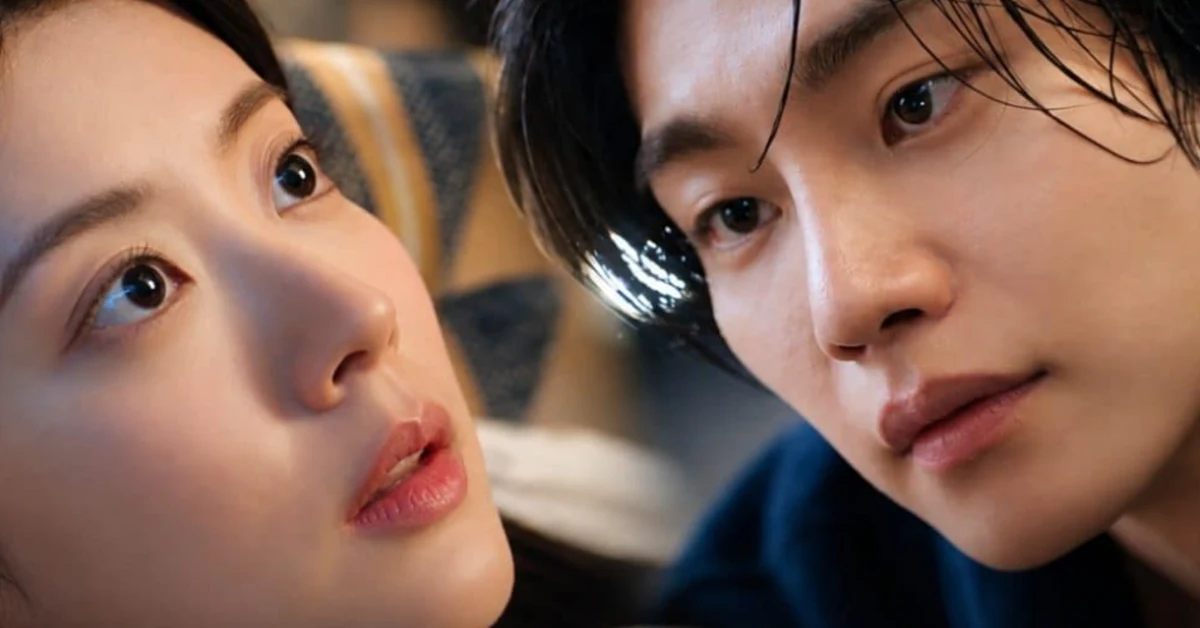



Where to Watch Possible Love
Netflix began streaming Possible Love globally on November 6, 2026. The film had its world premiere at the Venice Film Festival in September 2026, where it won the Silver Lion, and it also screened at the BFI London Film Festival in October. A limited theatrical release in select markets preceded the Netflix launch. The running time is 164 minutes.
Also Read: Montclair Film Festival 2026 Winners: Possible Love and Wild Horse Nine Take Top Prizes
For more film breakdowns, streaming guides and awards-season coverage, keep reading VvipTimes.

























Leave a Reply