
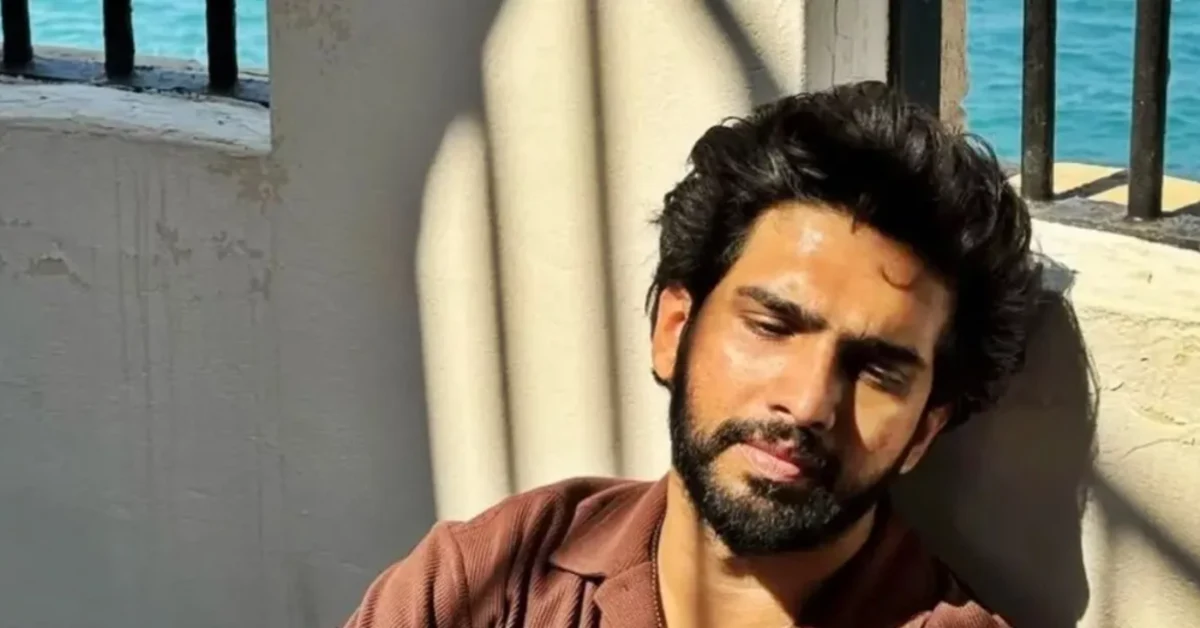

Music composer Amaal Mallik has entered the heated debate over screen violence with a sharp question. He says if films like Animal and Kabir Singh are blamed for real-world crime, then popular item songs with suggestive lyrics must face the same scrutiny. Mallik even named two of his own hits in the list, turning the mirror on the music industry itself.
The debate began after a shocking chainsaw attack at a school in Andhra Pradesh’s Anantapur district in late October 2026. A 21-year-old man, identified as Hemanth, forced his way into a classroom at the Zilla Parishad High School in Raptadu and attacked a Class 10 girl with an electric chainsaw. The victim, Mudaga Gopika, suffered serious injuries and is recovering at a hospital in Bengaluru. The accused was later shot by police during an encounter and his right leg had to be amputated.
The horrific incident quickly sparked a nationwide conversation about violence in cinema. Several social media users pointed fingers at recent A-rated films filled with bloodshed and gore, questioning whether they normalise violent behaviour. Filmmaker Sandeep Reddy Vanga, known for films like Animal, faced direct criticism. Vanga hit back strongly, calling the blame game a “dirty excuse to settle personal scores”.
Amaal Mallik Condemns the Attack, But Refuses to Blame Cinema Alone
Singer and composer Amaal Mallik joined the discussion on November 4, 2026, with a detailed post on X (formerly Twitter). He first reshared Vanga’s tweet and then shared his own thoughts. Mallik made his position on the crime very clear.
“I would never support anyone going into a school, college or any other place to kill someone with a chainsaw. It is horrifying and completely wrong,” he wrote.
However, Mallik pushed back against the idea that one film or one filmmaker is responsible for such actions. He listed several other factors that shape a person’s behaviour.
“Family values, upbringing, the political climate in different states, and the way each person thinks and reacts all matter. People’s experiences and trauma can affect them too,” he explained.
He also admitted that he has watched and enjoyed films like Animal, Kabir Singh, Dhurandhar, and KGF, even though some scenes in them bothered him. For Mallik, the line between fiction and reality is clear.
“If you are getting so influenced by a film, you’re the fool,” he stated bluntly.
The Question That Turned the Spotlight on Hit Songs
Mallik’s most talked-about point was about double standards. He asked why films face intense criticism for violent or problematic content, while popular songs with questionable lyrics continue to be celebrated everywhere.
“Let’s talk about songs too. If we criticise films, we should be fair and look at songs too,” he wrote.
Then came the list that grabbed headlines. Mallik named several chart-topping tracks, including two of his own compositions.
“Ban songs like Kar Gayi Chull, Rom Rom Romantic (both my songs), Beedi Jalaile, Pink Lips, Chikni Chameli, Munni Badnaam. Why are they celebrated and used on reality shows?” he asked.
His decision to include his own hit songs made the statement stand out. It showed he was not just pointing fingers at others but also holding his own work to the same standard. The songs he mentioned are staples at weddings, on dance reality shows, and at parties across India. Beedi Jalaile from Omkara, Chikni Chameli from Agneepath, and Munni Badnaam from Dabangg are massively popular tracks that have been played for years.
Beyond Films: Rap Music and Parental Responsibility
Mallik’s argument did not stop at Bollywood. He also pointed to content outside the film industry that often escapes scrutiny. He mentioned rap music and other material on YouTube and Instagram, especially from the northern belt of India, that revolves around themes of murder, power, and aggression.
“Some songs call women ‘items’ or talk about picking up girls. Parents play these songs around their children and encourage them to dance to them,” he noted.
This brought another key point into the conversation: the role of parents. Mallik stressed that creators are not the only ones responsible for what children consume. Parents who allow access to age-inappropriate content also share the responsibility.
He specifically called for age ratings to be respected. Mallik said that infants and young children should not be taken to screenings of films rated ‘A’. His larger point was that the conversation around violence and influence needs to be wider and more honest, not just a one-sided attack on cinema.
Sandeep Reddy Vanga’s Sharp Reply Set the Stage
Amaal Mallik’s post came shortly after Sandeep Reddy Vanga responded to critics who linked his films to the Andhra Pradesh attack. Vanga’s statement was direct and angry.
“When someone commits a heinous crime, the first response should be empathy and an attempt to understand the larger problem. Not finding a convenient scapegoat in cinema,” Vanga wrote on X.
He further said that the outrage was not really about the victims.
“It is becoming increasingly clear that your concern is not for the victims or their families, but that you’re using a horrific tragedy as a dirty excuse to settle your personal scores”.
Mallik reshared Vanga’s post before adding his own perspective, signalling agreement with the filmmaker’s stance against making cinema the sole villain.
You May Also Like

Who Is Amaal Mallik?
Amaal Mallik is a well-known music composer and singer in the Hindi film industry. He is the son of composer Daboo Malik and the nephew of veteran music director Anu Malik. He made his Bollywood debut as a composer with Salman Khan’s Jai Ho in 2014. He gained wide recognition with the song “Sooraj Dooba Hai” from the film Roy in 2015.
His portfolio includes music for films like Hero, Airlift, Kapoor & Sons, MS Dhoni: The Untold Story, Kabir Singh, and Vedaa. In August 2026, Mallik announced a break from film music for a year to focus on his health and well-being, stating he would not take on new film projects until 2027.
His entry into the violence-in-cinema debate brings a music industry voice to a conversation that has largely focused on directors and actors.
The discussion around screen violence and its real-world impact is far from settled. Mallik’s list of songs has opened a new front in that argument, one that questions the selective outrage that often skips over the music that plays at every celebration.
For more updates on entertainment news and industry debates, keep reading VvipTimes.






















Leave a Reply