

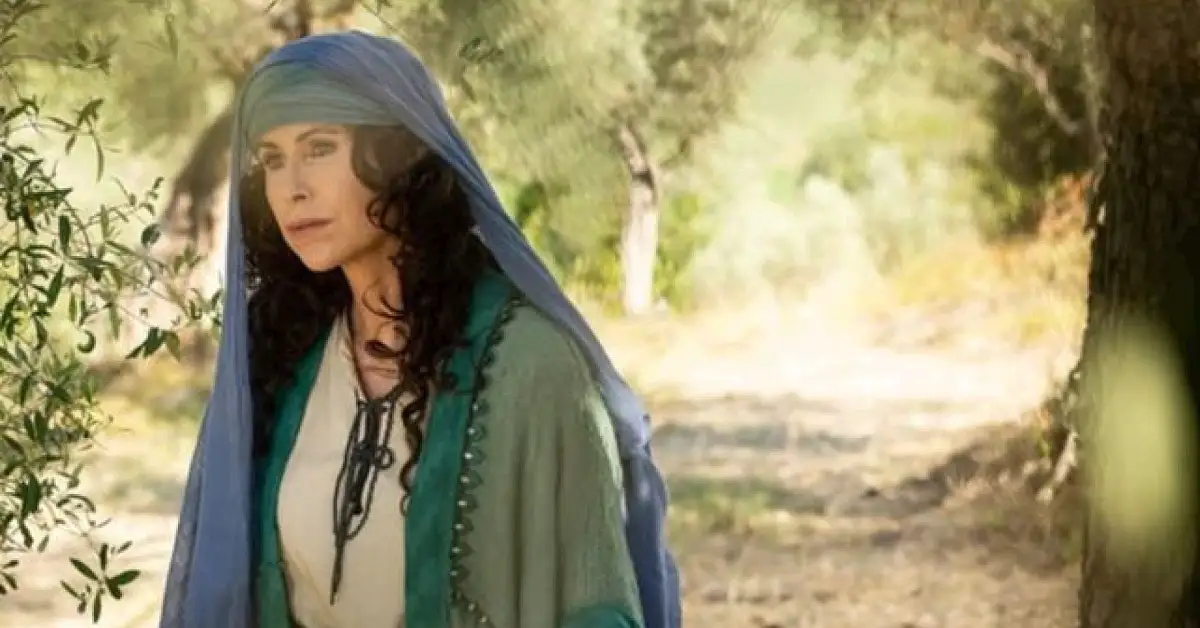
FOX’s new drama series “The Faithful: Women Of The Bible” puts five women from the book of Genesis at the center of the story. The three-part event series, which premiered March 22, 2026, looks at the lives of Sarah, Hagar, Rebekah, Leah and Rachel not as background figures but as the main characters shaping their families and faith.
Instead of telling the familiar stories of Abraham, Isaac and Jacob from the men’s point of view, the show’s executive producers chose to focus on the women who lived through these events. The series airs weekly on FOX with two-hour episodes, wrapping up on Easter Sunday, April 5, 2026. Each episode becomes available for streaming on Hulu the next day.
Why the Producers Decided to Focus on Biblical Women
Executive producer Carol Mendelsohn, known for her work on “CSI: Crime Scene Investigation,” first noticed how rarely the women of the Bible got attention in TV and movies. She brought the idea to René Echevarria, a veteran writer with credits on “Star Trek” and “Carnival Row,” who initially wondered if focusing only on women might be too limiting.
Echevarria changed his mind once he started working on the project.
“I came to learn … how it just opened up scripture in a way that I never could have imagined,” Echevarria told TheWrap .
The producers chose to narrow their focus to the matriarchs because these stories feel historically grounded in real people facing extraordinary situations. They structured the show around a family tree, showing how decisions made by one generation of women affected the next.
Julie Weitz, another executive producer, explained that the idea had been forming for years.
“We kind of had this epiphany that there’s a point of view that has not been really looked at, which were the women and how they were essential to the stories that most people know about—Abraham, Isaac, Jacob, etc,” Weitz told Woman’s World .
Bringing Ancient Stories to Life with Real Human Emotion
The creative team wanted to show these biblical women as real people who made mistakes, doubted, struggled and kept going. Mendelsohn gave Echevarria one key piece of advice before he wrote the first draft.
“Write them like they don’t know they’re Bible characters,” Echevarria recalled Mendelsohn telling him. He shared that advice with the other writers and actors. “That became a thing … to play this like you don’t know you’re a Bible character” .
Minnie Driver plays Sarah, a woman who wants a child but faces years of infertility. Driver spoke about understanding Sarah as a human being first.
“Who knows what Sarah was like? We don’t know. She doubted and, to some people, she thwarted God, but actually to me, she was just a woman who wanted to have a baby, loved her husband very much and was very strong” .
The show treats Sarah’s pain over not having children as a real human crisis, not just a religious detail. Natacha Karam plays Hagar, Sarah’s servant, and the series shows both women’s sides of their complicated relationship.
Staying True to Scripture While Filling in the Gaps
The producers set clear rules for how they would handle the biblical text. They decided that any scene described in the Bible would be shown exactly as written, including dialogue when available. When the Bible is silent on certain details, they did research to understand what life was like during that time period.
Echevarria said the team consulted with both Christian and Jewish scholars, including Rabbi Wendy Zierler from Hebrew Union College and theologian Russell Moore.
“Our guiding principle was that if we were going to dramatize some part of the story, a scene, let’s call it, that’s described in the Bible, then we’re going to dramatize it the way it’s described and including dialogue if there is some,” Echevarria told EWTN News .
One Jewish scholar told Echevarria that what they were doing was called midrash, an ancient Jewish tradition of reading between the lines of scripture to explore deeper meanings.
The research uncovered interesting historical facts. Echevarria learned that the arrangement where Sarah gave Hagar to Abraham was actually common practice at the time. Clay tablets from Mesopotamia from that period show specific marriage contracts with similar terms for dealing with infertility.
“So this arrangement wasn’t something Sarah just concocted,” Echevarria explained. “It was an answer to the problem of infertility. God had a different answer for Sarah” .
Making the Stories Relatable for Modern Audiences
The show explores themes that still matter to people today. Infertility, jealousy, marriage pressure, family power struggles, sister rivalry and the weight of expectations appear throughout the three episodes.
Echevarria shared a personal connection to Sarah’s story. He and his wife struggled with infertility for several years before they had three children.
Jeffrey Donovan plays Abraham alongside Driver. The first episode follows Sarah and Hagar’s story, showing how Sarah’s plan to have Abraham father a child with Hagar led to jealousy and tension between the two women.
The second episode, airing March 29, 2026 (Palm Sunday) , focuses on Alexa Davalos as Rebekah. Her story goes beyond prophecy to show what happens when a mother becomes so fixed on one future that she risks breaking her family to make it happen.
Weitz described Rebekah’s story clearly.
“The story becomes about how she almost destroys her family because she’s been told that this is the way, this is the destiny” .
The third and final episode, airing April 5, 2026 (Easter Sunday) , centers on sisters Leah (Millie Brady) and Rachel (Blu Hunt) , who both marry Jacob. Echevarria called this episode “a little more scandalous but certainly contemporary” . Weitz added that it becomes “a story about sister rivalry for the love of the same man” .
Filming and Production Details
The series was filmed on location in Rome and Matera, Italy, using the historic settings to create an authentic feel. The production team paid attention to details like costumes, livestock and music to ground the show in the time period.
Composer Ben Wallfisch used ancient instrumentation to create a score that reflects the era. The producers wanted viewers to feel immersed in the biblical world without making it feel overly stylized.
Also Read:



Where to Watch
“The Faithful: Women Of The Bible” airs Sundays at 8 p.m. ET/PT on FOX. The schedule includes:
- Episode 1 (Sarah and Hagar): March 22, 2026
- Episode 2 (Rebekah): March 29, 2026
- Episode 3 (Leah and Rachel): April 5, 2026
Each episode becomes available on Hulu the day after it airs. Viewers can also watch on FOX ONE.
The show’s release during the Easter and Passover season adds meaning for many viewers. Echevarria reflected on the timing.
“We’re coming out of a time for many of us, a time of fasting, a time of reflection. We all love Christmas but Easter is the heart of our faith, isn’t it? So to be able to present these stories, which are the beginning of the Easter story in a sense, the beginning of God’s unfolding story, and his love for his children, and how he set it all in motion 4,000 years ago through Sarah and Abraham” .
Want more stories about new TV shows and what to watch? VvipTimes brings you the latest updates on series premieres, casting news and behind-the-scenes details from your favorite shows.


























































































Leave a Reply