

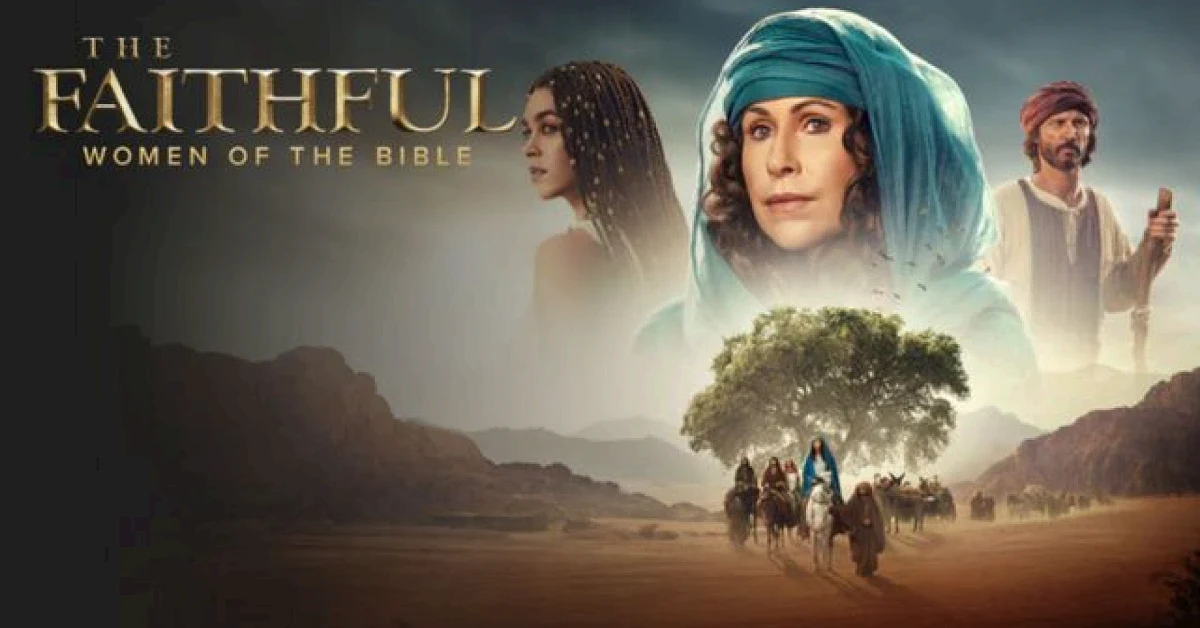
Fox’s three-part event series The Faithful: Women of the Bible premiered on March 22, 2026, bringing the Book of Genesis to television with a focus on five women whose stories shaped history. The series, which runs through Easter Sunday on April 5, features Oscar nominee Minnie Driver, Jeffrey Donovan, and Natacha Karam in the first installment. But does this retelling of ancient stories through a female lens deliver something worth watching, or does it fall flat?
What The Faithful: Women of the Bible Is About
The series tells the stories of five women from the Old Testament: Sarah and her servant Hagar, Sarah’s great-niece Rebekah, and sisters Leah and Rachel. Instead of treating these women as side characters in stories about Abraham, Isaac, and Jacob, the show puts them at the center.
The first episode focuses on Sarah (Minnie Driver) and Hagar (Natacha Karam). Sarah, married to Abraham (Jeffrey Donovan), struggles with infertility for decades. When God promises Abraham he will be the father of many nations, Sarah takes matters into her own hands. She asks her Egyptian servant Hagar to bear a child with Abraham, a decision that creates lasting tension between the two women.
The second episode follows Rebekah (Alexa Davalos), Sarah’s great-niece, who plays favorites between her twin sons Jacob and Esau. Her actions spark a sibling rivalry that affects generations. The final episode, airing on Easter Sunday, tells the story of sisters Leah (Millie Brady) and Rachel (Blu Hunt), who become rivals for the love of the same man, Jacob.
Where to Watch and When
The Faithful: Women of the Bible airs Sundays at 8:00 PM ET/PT on Fox. The three-episode event premiered March 22, continues with a new episode on March 29, and ends with the finale on April 5, 2026.
If you miss the live broadcast, episodes become available to stream on Hulu the next day. The show was filmed on location in Rome and Matera, Italy, and runs for two hours per episode, including commercial breaks.
What Works: Strong Performances and Relatable Themes
Minnie Driver brings emotional depth to Sarah. Speaking at the London premiere, Driver said Sarah’s journey required “all three kinds of faith” she has explored in her career: “romantic, spiritual, and moral, all simultaneously.” Critics agree that Driver handles the complex emotions of a woman waiting decades for a child while watching her husband father a child with another woman.
Natacha Karam, known for 9-1-1: Lone Star, stands out as Hagar. Her scenes with Driver form the emotional core of the first episode. The show explores the relationship between the two women as it swings between friendship, jealousy, and a complicated bond neither can fully escape.
Showrunner René Echevarria, who dealt with infertility in his own marriage, connected personally to Sarah’s story.
“These are flawed women, and they make mistakes — at times they’re quite noble and heroic, at times they stumble. But God makes good of all of it.”
The series touches on themes that remain relevant today. The situation between Sarah and Hagar echoes modern conversations around surrogacy. Rebekah’s story deals with a mother who nearly destroys her family trying to control her children’s futures. The final chapter about Leah and Rachel shows what happens when two sisters love the same man.
Echevarria explained the creative approach: “Write them like they don’t know they’re Bible characters.” The goal was to make these ancient figures feel like real people with real problems.
What Doesn’t Work: Missed Opportunities and Production Choices
The Hollywood Reporter’s review notes that the series treats its characters “like paper dolls to be pushed around at the whims of a narrative set in stone millennia ago.” The show sticks closely to the biblical text but rushes through emotional moments that deserve more attention.
Critics point out that the series does not always explore the difficult questions a truly feminine retelling of the Bible would ask. For example, viewers see Hagar giving birth but not Sarah, who was far past the normal childbearing age when she finally conceived.
The production values also draw criticism. The costumes and wigs have been described as distracting, with one review saying the show’s aesthetic feels more like “your local nativity play” than a big-budget biblical epic. The voice-of-God effect is simply a voiceover, which some viewers may find underwhelming.
Jeffrey Donovan as Abraham has received mixed reactions. While likeable, some critics feel he does not capture the authority expected from the patriarch of three major world religions.
What Critics Are Saying Overall
Reviews for The Faithful: Women of the Bible are mixed but lean toward the show being best suited for audiences specifically looking for faith-based content.
The Hollywood Reporter suggests the show may work well “in Bible study classes, or as unobjectionably religious-but-not-too content around which to gather with the family over holidays.”
RogerEbert.com’s review notes that “for people of faith who just want to see Bible stories on screen, Fox’s ‘The Faithful: Women of the Bible’ will work.” However, the review adds that the show does not offer enough to attract viewers who are not already interested in biblical content.
The Upcoming gave the series a more positive assessment, calling it a “visually impressive feat with excellent female leads” that “blends scriptural storytelling with contemporary feminism for a compelling viewing experience.”
Executive producer Carol Mendelsohn called the project a “passion project” for her and her partners. The creative team included both Christian and Jewish scholars to help with interpretation. Echevarria noted that their Jewish scholar described their approach as “midrash,” an ancient Jewish tradition of reading between the lines of biblical stories.
You May Also Like:









What Viewers Should Know Before Watching
If you are looking for a faithful retelling of Bible stories with a focus on female characters, The Faithful: Women of the Bible delivers that. The show stays close to the text and gives space to women who are often treated as background figures.
If you are looking for rich world-building and deep character exploration, the series may leave you wanting more. The production values do not match the scale of the stories being told, and the show rushes past emotional moments that could have added real weight.
The series runs throughout the Easter and Passover season, making it holiday programming by design. The final episode airs on Easter Sunday, April 5, 2026.
For more updates on new TV series and streaming releases, keep checking VvipTimes for complete coverage of the latest entertainment news.



























































































Leave a Reply