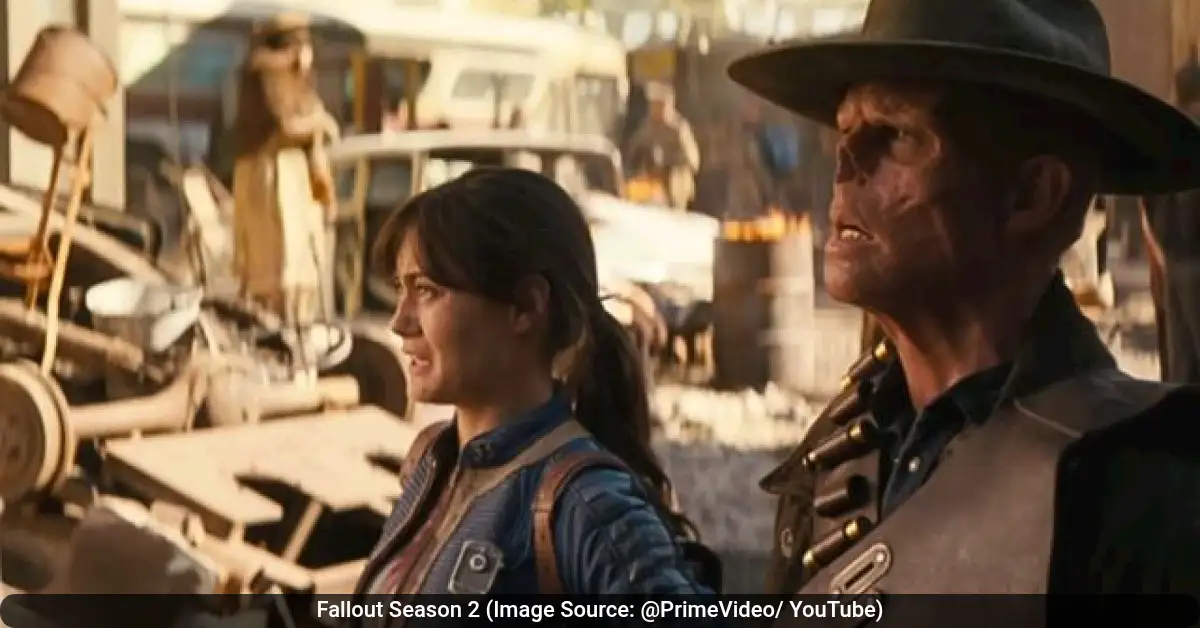
The second season of Prime Video’s Fallout show takes the characters deep into the Mojave Wasteland, centering on the city of New Vegas. With this new setting, the show introduces several powerful factions, including the Roman-inspired Caesar’s Legion, the democratic New California Republic (NCR), and the secretive Mr. House. While these groups are not direct recreations of real historical events or societies, they are deeply inspired by real-world history, politics, and ideologies. This use of historical concepts helps ground the show’s fictional world and adds depth to its exploration of power and survival.
Caesar’s Legion: Stylistic Roman Inspiration
One of the most visually striking factions is Caesar’s Legion. In both the show and the Fallout: New Vegas game, this faction models its culture, military structure, and even its armor on the ancient Roman Empire. It was founded by a man named Edward “Caesar” Sallow, who built a slaver society centered on strict hierarchy, conquest, and control.
Their inspiration is stylistic but not literal. While Rome integrated conquered people through citizenship and infrastructure, the Legion walks the path of violence and force.
The show’s trailer for season two confirms the Legion is still a major presence in the Mojave, shown preparing for war. Their aesthetic uses Roman-style helmets and armor, but their brutal methods are an exaggerated take on imperial militarism rather than a faithful historical reenactment.
The New California Republic: A Fragile Democracy
The New California Republic (NCR) represents a different kind of power. This faction is inspired by pre-war American democracy and republics. It grew from a collection of settlements into a structured government with laws, bureaucracy, and a goal of expansion.
In the post-apocalyptic world, the NCR struggles with the same issues real-world democracies face: corruption, inefficiency, and vulnerability. The faction shows how the series uses historical models of governance to explore the tension between noble ideals and the harsh demands of survival in a broken world. Unlike the Legion’s rule by force, the NCR tries to operate on codified rules and shared responsibility.
Mr. House and the Control of New Vegas
A key power player in Season 2 is Mr. Robert House, played by Justin Theroux. He is the enigmatic ruler of New Vegas, a man who predicted the nuclear war and used his technology to protect the city from the worst of the destruction. In the show, his role is expanded, suggesting he was deeply involved with Vault-Tec’s plans.
Mr. House’s character draws inspiration from real-world tech moguls and futurists. He represents a form of autocratic, technocratic control where a single visionary—or monopolist—holds absolute power over society and its resources. His iconic securitron robots, like the cowboy-faced Victor, patrol the streets, enforcing his will.
The Brotherhood of Steel: Technocratic Knights
The Brotherhood of Steel returns with even greater presence. The trailer shows not one, but four Brotherhood airships flying over the Mojave. Season 2 reveals the Brotherhood is not a single unified force but is split into different chapters, the most powerful being The Commonwealth chapter based in the former Boston area.
This chapter is so dominant that its name becomes synonymous with power within the Brotherhood. One character notes that even all the other chapters combined would likely lose a fight against The Commonwealth. Their ideology is a form of techno-religious zeal, hoarding pre-war technology to control the wasteland, which echoes historical monastic or knightly orders dedicated to preserving knowledge.
Minor Factions and Historical Echoes
Beyond the major powers, the wasteland is filled with smaller groups that reflect historical archetypes:
- The Kings: A gang in New Vegas that dresses like Elvis Presley. The show presents them as ghouls, adding a darkly humorous twist to their imitation of 1950s Americana.
- Raider Gangs: Various lawless groups that operate on brute force and terror, reminiscent of warlord bands or extremist groups throughout history.
- Vault-Tec: While not a wasteland faction, the corporation’s cold, capitalist experiments on humanity in sealed vaults critique unethical scientific ventures and corporate overreach.
Also Read:


How the Show Uses History
The factions in Fallout are not based on specific real events but on historical ideas and patterns. The show’s creators borrow motifs from past societies to make the fictional world feel complex and recognizable. This allows the story to explore themes like how societies rebuild, the corruption of ideals, and the different forms power can take—democratic, autocratic, or technocratic.
This connection to real concepts is being celebrated in a unique way. The National Atomic Testing Museum in Las Vegas has opened a “World of Fallout” exhibit. It places iconic items from the game and show next to real historical artifacts from the Atomic Age, showing visitors how closely the game’s fiction is tied to real 20th-century history and fears.
Fallout Season 2 premiered its first episode on December 16, 2025. New episodes are released weekly on Prime Video.
Also Read: Dear X, Study Group and More: The 5 Best Webtoon Adaptations of 2025