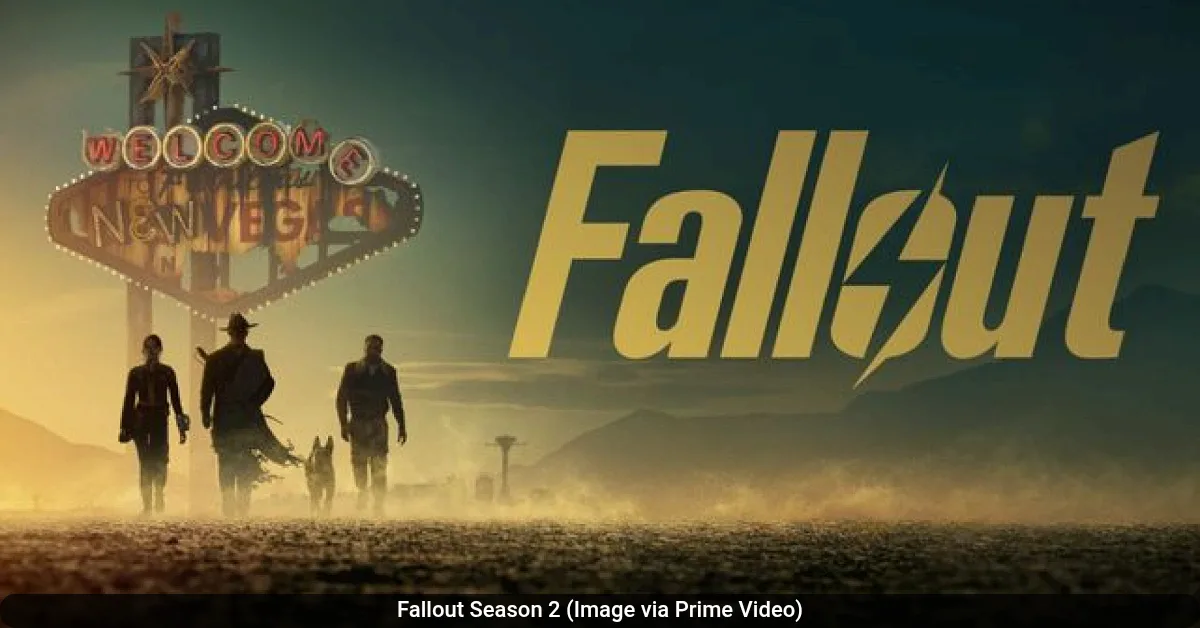
Amazon’s Fallout series is moving in its own direction for Season 2. While the first season was praised for its faithful recreation of the game’s universe, the new episodes set in the Mojave Wasteland are making bigger changes to established lore. These shifts involve major factions, the fate of New Vegas, and the origins of iconic creatures, sparking discussion among fans about the show’s creative path.
The story follows Lucy MacLean, her brother Norm, the Ghoul, and Maximus as their journeys converge on the decaying city of New Vegas. The changes are not just cosmetic but affect the core history and power dynamics of the post-apocalyptic world.
A Different Mojave Wasteland Awaits
The shift to the Mojave Desert was expected, but the state of the region has surprised many. When Lucy and the Ghoul finally reach the gates of New Vegas, they find a city in ruin. The once-bustling Strip is silent and empty, a stark contrast to its portrayal in Fallout: New Vegas.
Fan-favorite groups like The Kings are seen as feral ghouls wandering outside the city. This has led to frustration for some players, as the game’s multiple endings often allowed players to bring peace and prosperity to New Vegas. The show presents a version where that peace did not last.
The show is set roughly 15 years after the events of Fallout: New Vegas. This time jump allows for significant change. One view shared by some fans is that security in the Mojave was always fragile. Even with securitron guards, the constant threats from factions, creatures, and internal power struggles could have dismantled any stability.
“It’s said Fallout Season 2 is set around 15 years after Fallout: New Vegas, which doesn’t sound like a lot but that’s a huge amount of time in the world of Fallout.” – A fan discussing the timeline on social media.
Major factions from the games are also in new states. The New California Republic (NCR), a major power in the games, appears to be nearly extinct. Caesar’s Legion has fractured into competing groups following the death of its leader. The Great Khans have a presence, having moved into the town of Novac, which is depicted with its iconic dinosaur statue.
A Major Change to Super Mutant and Enclave Lore
One of the most significant departures from the games involves the origin of Super Mutants. In Season 2, Episode 6, a Super Mutant reveals that the Enclave was responsible for creating them and the Forced Evolutionary Virus (FEV).
This is a major change from the games. In the original lore, the FEV was developed by a company called West Tek. The Enclave was a separate, purist organization that despised mutants and sought to destroy them. The show now makes the Enclave the creator of its own greatest enemy.
This alteration appears to be a deliberate choice to streamline the story for television. By focusing on the Enclave, the show sets them up as a central antagonistic force. This plotline was seeded in Season 1 with the character Siggi Wilzig, a defecting Enclave scientist, suggesting the writers planned this direction early on.
The change suggests a coming conflict. The Super Mutants are now aware of their creators and are preparing for a potential war against the Enclave. This new backstory provides a direct and personal conflict that could drive future seasons.
New Original Stories Within a Familiar World
The series continues to focus on original characters, allowing it to tell new stories without being bound to a player’s past choices. Lucy MacLean’s journey from an optimistic Vault dweller to a hardened Wastelander remains central. Her brother Norm is on a separate path, investigating the secrets of Vault 31 and now uncovering the truth about the FEV, which could put him on a collision course with the Enclave.
The Ghoul, formerly the pre-war actor Cooper Howard, provides a living link to the past. His flashbacks continue to explore the corrupt origins of Vault-Tec and its ties to powerful figures like Robert House, who is portrayed as a ruthless billionaire in the show.
This approach of expanding the universe, rather than directly re-telling a game’s story, has been a hallmark of the show’s success. It gives longtime fans new mysteries to solve while allowing newcomers to engage without prior knowledge.
Also Read:

Fan Reactions to the Creative Direction
Reaction to these changes has been mixed within the fan community. Some viewers express disappointment with how certain factions are handled or with specific story choices for characters like Maximus. The altered geography of the Mojave, including a puzzling route taken by Lucy and the Ghoul, has also been noted.
The depiction of a ruined New Vegas has been particularly divisive. Some see it as a disregard for the game’s legacy and player agency. Others argue it is a logical progression for a dangerous world and are waiting to see the full story unfold.
The debate extends to the core adaptation philosophy. Unlike other shows that follow a game’s plot closely, Fallout uses the game’s world as a setting for an original narrative. This has led to discussions about what constitutes a “faithful” adaptation—slavishly re-creating locations and plots, or faithfully capturing the tone, themes, and spirit of the world while telling a new story.
Bethesda’s developers have been involved in the process, working with the show’s producers to maintain canonical consistency where possible. Todd Howard, director of Bethesda Game Studios, has stated that events from the show are considered canon and will influence future games, including the eventual Fallout 5.
Also Read: The Rookie Season 8 Episode 4 Release Date and New Monday Night Time Slot Details
Discover more about your favorite shows and movies on VVIPTimes.