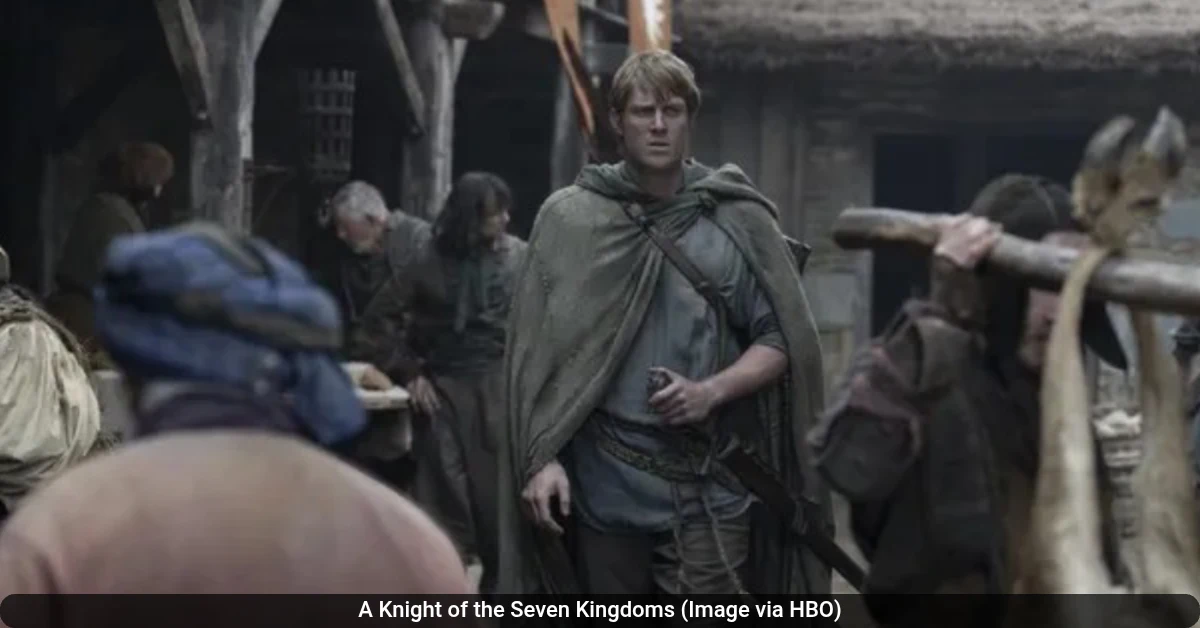
The newest show in the world of Game of Thrones is winning fans with its faithful yet fresh take on George R.R. Martin’s stories. A Knight of the Seven Kingdoms, which follows the adventures of hedge knight Ser Duncan the Tall and his young squire Egg, has started strong. While the show closely follows the first Dunk and Egg novella, it also adds new moments that are quickly becoming favorites. One expanded scene, featuring the charismatic Ser Lyonel Baratheon, was created just for television and is stealing the show.
The series is set about one hundred years before the events of Game of Thrones, in a simpler time without dragons. It tells a smaller, more personal story focused on a lowborn knight and his mysterious companion. Showrunner Ira Parker has aimed for a faithful adaptation, but some smart additions have made the journey from page to screen even richer.
The Laughing Storm’s Grand Entrance: A Scene Built for Television
In George R.R. Martin’s original novella The Hedge Knight, the knight Lyonel Baratheon is mainly seen from a distance. Readers watch him compete in the Tourney at Ashford Meadow, earning his nickname The Laughing Storm by laughing during his jousts. For the television series, the writers decided he needed a proper introduction.
The new scene shows Dunk, feeling hungry and out of place, stumbling into a lavish feast in a grand pavilion. The host is none other than Lyonel Baratheon, played by Daniel Ings. Instead of punishing the intruding hedge knight, Lyonel is amused. What follows is an invented sequence of drinking, talking, and even an impromptu dance between the two men. This early meeting establishes a quirky and compelling dynamic that book readers never saw.
The scene does important work for the story. It highlights the vast gap in social class between a noble lord and a hedge knight with no family name. Lyonel lives a life of privilege where a lost tournament only means ransoming back expensive armor. For Dunk, a single loss could mean losing everything he owns. Their conversation makes these stakes clear.
“You’re tall,” Lyonel tells Dunk. “Be tall.”
This advice resonates. Later, when young Egg asks for his name, the knight confidently states, “Ser Duncan the Tall,” embracing the identity Lyonel encouraged. The show’s writers used this new scene to build a connection that makes their future interactions in the story more meaningful.
More Additions Beyond the Book: Humor and New Perspectives
The expanded Baratheon scene is not the only change. The very first episode made a loud statement with a moment that surprised even George R.R. Martin. Early on, as Dunk dreams of being a heroic knight, the iconic Game of Thrones theme music swells. This epic feeling is abruptly cut short by a very different scene: Dunk having a sudden, messy bathroom break behind a tree.
Author George R.R. Martin had a clear reaction to this addition.
“Not to say that my characters don’t take shts, but I normally don’t write about them at any length,” Martin said. “I don’t know if we really need the sht.”
Showrunner Ira Parker explained the choice was about character, not just shock value. He wanted to show that Dunk is not a proven hero yet, but a nervous young man scared of the dangerous path ahead.
The scene also serves as a clever signal to the audience. By interrupting the famous theme song, the show tells viewers it is doing something different. A Knight of the Seven Kingdoms has no formal title sequence, setting it apart from its predecessor shows. The moment establishes that this story will focus on grounded, often humorous reality rather than grand mythology.
Other characters also get more screen time. The book has very few female characters in this part of the tale. The show introduces Red and Beony, two camp followers who offer witty commentary on the events. They draw a sharp parallel between knighthood and their own work, noting both involve using one’s body for the entertainment of others.
Why New Scenes Work for This Adaptation
Fans of book adaptations often worry about unnecessary changes. The response to these additions has been largely positive because they feel true to the spirit of the story. The new scenes add depth without changing the plot’s core direction.
The Dunk and Egg novellas are quite short. To create a multi-episode season, the television series naturally had to expand on moments only briefly mentioned in the text. The writers looked for opportunities “between the paragraphs” to show more of life at the tourney. The scene with Lyonel Baratheon is a prime example, taking a character who plays a key role later and making audiences care about him immediately.
The changes also help translate internal thought to external action. In the book, readers hear Dunk’s doubts in his own head. The show finds ways to make these thoughts visual or give them to other characters. For instance, Dunk talks to his horses, showing his kindness and loneliness. At the end of the episode, a line about the luck of a falling star, which Dunk thinks to himself in the book, is given to Egg to say aloud, strengthening their new bond.
Also Read:


Fan Reactions to the Expanded Story
The early response from viewers highlights the successful new scenes. Many fans online have pointed to the Lyonel Baratheon introduction as the best part of the premiere. Comments on social media praise the show’s lighter, funnier tone and the performance by Daniel Ings, who brings a chaotic and charming energy reminiscent of a young Robert Baratheon.
The show’s different approach has been noted. One viewer commented on the change from the epic Game of Thrones style, saying, “I’m all for it… I love the light hearted feel to it. I enjoy learning other characters in this universe.”
Even with the additions, the show is recognized for its faithfulness. George R.R. Martin himself has expressed his overall happiness with the adaptation.
“It’s as faithful an adaptation as a reasonable man could hope for,” Martin stated, after viewing the episodes.
This balance—staying true to the source material while confidently adding effective new moments—is what makes the early episodes of A Knight of the Seven Kingdoms stand out. It proves that a good adaptation can both respect the original book and use the strengths of television to enhance the story for a new audience.
Also Read: Hijack Season 2 Explores a Berlin Subway Crisis and the True Origins of Its Story