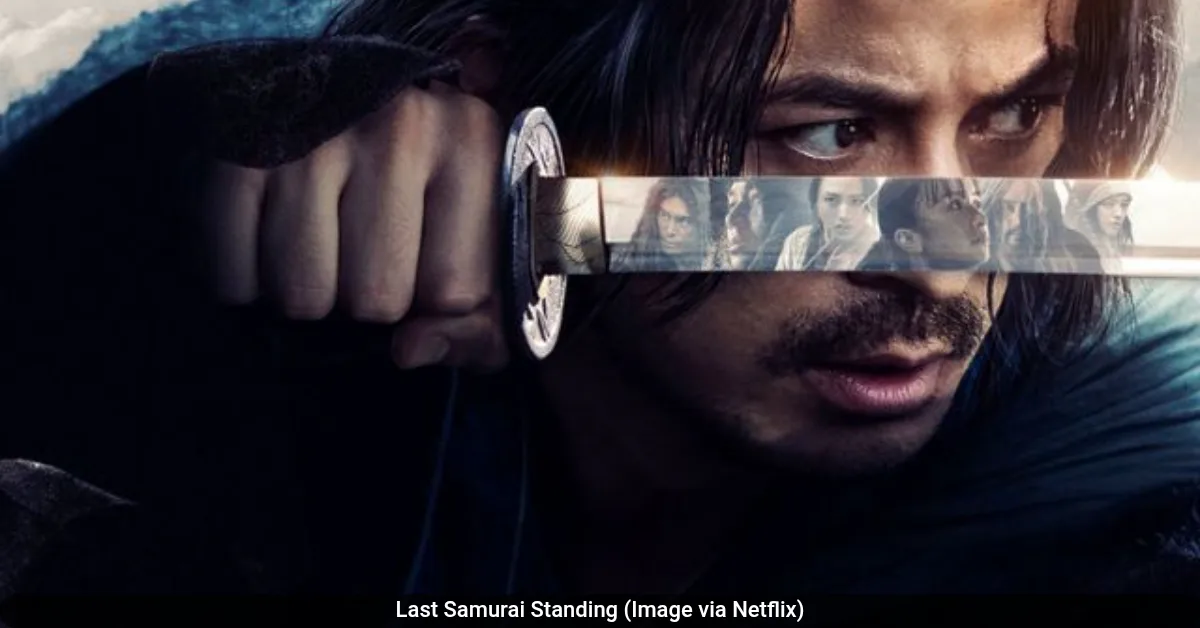
The new Netflix series Last Samurai Standing is generating buzz, and many viewers are noticing a familiar pattern. The show’s premise of desperate people competing in a deadly game for a massive cash prize instantly brings the global hit Squid Game to mind. While the new series is a historical drama set in 19th century Japan, its core structure shares a striking number of similarities with the Korean thriller, creating a sense of déjà vu for audiences.
The Deadly Contest for Cash
At the heart of both stories is a high-stakes, life-or-death competition. In Squid Game, 456 players in financial despair play children’s games for a prize of 45.6 billion won. In Last Samurai Standing, 292 impoverished samurai are lured into a deadly race called the “Kodoku” for a prize of 100 billion yen.
The Kodoku is named after a Japanese folklore ritual where insects are sealed in a jar to fight to the death, a concept very close to the battle royale format of Squid Game. In Last Samurai Standing, the contestants must travel from Kyoto to Tokyo, killing each other to collect wooden tags needed to pass checkpoints. The rules are clear: try to quit or reveal the game to the public, and you will be executed by the organizer’s private army.
Desperate Players With Nothing to Lose
Both shows invest heavily in their characters’ motivations, ensuring the audience understands why someone would agree to such a horrifying contest. The players are not there by chance; they are there because they feel they have no other choice.
The protagonist of Last Samurai Standing, Shujiro Saga, is a former samurai struggling with poverty and PTSD. He joins the game to win prize money for medicine after his family falls ill during a cholera outbreak. This mirrors Squid Game‘s Seong Gi-hun, a man drowning in debt who needs the money to support his daughter and regain control of his life. Other characters in both shows have similarly desperate backstories, from needing to rescue family members to paying off insurmountable debts.
The Voyeuristic Elite
A key element of social commentary in both series is the presence of wealthy spectators. In Squid Game, masked VIPs watch the games from a luxurious viewing room, placing bets on the contestants and treating their deaths as entertainment.
Last Samurai Standing features a nearly identical plot device. The Kodoku is funded by a group of rich businessmen who bet on the samurai for their own amusement. Meanwhile, the game’s organizer, Toshiyoshi Kawaji, watches from the shadows, manipulating the event for his own political goals. This dynamic reinforces the same central theme: the lives of the poor are often just a game for the powerful.
Reluctant Heroes and Protective Alliances
Both series feature a central hero who is fundamentally at odds with the violence surrounding them. Shujiro Saga has lost his taste for killing and struggles to draw his sword, much like Squid Game‘s Gi-hun, who rigidly adheres to a pacifist moral code despite the circumstances.
They also form protective alliances that become emotional anchors for the audience. Gi-hun teams up with the young Kang Sae-byeok and the elderly Oh Il-nam. Similarly, Shujiro forms a crucial bond with Futaba, an inexperienced teenage girl he vows to protect. This “lone wolf and cub” trope adds a layer of emotional depth and humanity to the brutal survival narrative.
A Fight Against the System
The protagonists of both shows find themselves battling against a vast, impersonal system designed to crush them. In Squid Game, the players are monitored by guards in pink jumpsuits and the enigmatic Front Man. The system is designed to make them feel like pawns.
In Last Samurai Standing, the samurai are surveilled by a private army and the game’s organizers, who represent the new Meiji government power structure. Shujiro and his fellow samurai are “ghosts” of a bygone era, being systematically eradicated by a new world order that sees them as obstacles to progress. Both shows explore the individual’s struggle against an oppressive and manipulative power structure.
Stylized Violence and Action
While both shows are intensely violent, their action styles are tailored to their settings. Squid Game often features blunt, shocking violence to underscore the horror of the situation. Last Samurai Standing, as a samurai drama, features highly choreographed martial arts and sword-fighting sequences. The fights are described as graceful and beautiful, even as they are brutal.
The lead actor, Junichi Okada, who also served as the show’s action choreographer, aimed to create a “new kind of period drama” with grounded, practical fight scenes that don’t rely heavily on CGI or stunt doubles.
More Than Just an Imitator
Despite these clear parallels, critics and creators emphasize that Last Samurai Standing is not a mere copycat. The series is based on the 2012 Japanese novel Ikusagami by Shogo Imamura, giving it its own original source material. Its strengths lie in its unique setting and its deep roots in the samurai film tradition.
Screenwriter and director Michihito Fujii stated that his goal was to “update the Japanese period piece,” focusing on character drama and accurate, beautiful action. The show uses its historical backdrop to explore themes of a class of warriors losing their purpose, a narrative that resonates with modern anxieties about job displacement and economic uncertainty.
“My hidden goal was to create a new kind of period drama, one that’s also an action drama… Something made entirely in Japan, but made for the world,” said lead actor and producer Junichi Okada.
Also Read:




A Different Kind of Commentary
Whereas Squid Game is a direct critique of modern capitalism and class disparity, Last Samurai Standing uses a historical lens. It examines a specific moment of societal upheaval: the Meiji Restoration, which saw the rapid Westernization of Japan and the abolition of the samurai class. The show contrasts the traditional clothing of the samurai with the European-style suits and military uniforms of the new ruling class, visually representing the end of an era.
The game’s organizer, Kawaji, holds a personal vendetta against the samurai, believing they stand in the way of Japan’s industrial progress. This sets up a conflict between honor and tradition versus modernization and “progress,” giving the show a distinct political and historical flavor.
The Unfolding Mystery
Like Squid Game, which ended its first season with a cliffhanger that had audiences theorizing for years, Last Samurai Standing concludes its first chapter with many unanswered questions. The fates of several main characters are left uncertain, and the true, far-reaching ambitions of Kawaji are still coming to light. The season ends with an “End of Chapter One” title card, clearly setting the stage for a continuation of the story.
A Familiar Thrill in a New Package
For viewers who loved the high-stakes tension and social commentary of Squid Game, Last Samurai Standing offers a similar narrative structure transplanted into a rich, historical setting. It proves that the theme of desperate people fighting for survival against a rigged system is a universal one, capable of being told across different cultures and time periods. While it walks a familiar path, it does so with its own unique sword in hand.
Mayor of Kingstown Has Taylor Sheridan’s Most Divided Rotten Tomatoes Score