The creatures in “Monarch: Legacy of Monsters” do not look like computer drawings. When a Titan moves on screen, it carries real weight. When Godzilla emerges from the sand, dirt actually falls off his scales. When the Frost Vark breathes in the snow, its skin shifts like a living animal. The Apple TV+ series has earned praise for making its monsters feel like they exist in the real world, and the team behind the visual effects followed a strict rule to get there: start with nature, then build from there.
Visual Effects Supervisor Sean Konrad led this effort, and he had a major advantage. He worked on the 2014 “Godzilla” film as an artist and later contributed to “Godzilla: King of the Monsters” . This meant he understood the MonsterVerse language before the show even began filming. But bringing Kaiju to television came with new challenges. The team had to make creatures look massive on small screens without losing detail.
Building Monsters From Real Animals
The creative team refused to simply invent creatures from imagination. Instead, they studied how real animals look and move. For the Frost Vark, which appears in snowy environments, the designers combined two very specific animals: a pangolin and a star-nosed mole . The pangolin provided the body armor with its overlapping scales. The star-nosed mole contributed the strange, tentacled nose. Then they added aggressive features like jagged teeth and large claws to make it threatening.
But the design was only the beginning. The animation team watched hours of footage showing how rhinos charge, how bears swipe with their paws, and how hippos move their massive bodies . They applied these real movements to the Frost Vark so viewers would subconsciously recognize the behavior as authentic. Even though the creature never existed, its actions felt familiar.
The Brambleboar followed the same path. This creature needed to look like it grew from the forest itself. The team studied decomposing flesh and various moss types to understand how organic matter decays and regenerates . They added branches and foliage directly onto the creature’s body. This created a monster that truly belonged in its wooded environment rather than just passing through it.
The Ground Rules For Monster Size
Sean Konrad learned a valuable lesson earlier in his career that shaped the entire show. A former supervisor taught him the “iPhone test” . The idea was simple: if a monster shot works on a small phone screen with clear action, it will work anywhere. This became the guiding principle for every Kaiju scene in the series.
The team also followed rules about how large creatures should behave. When Kong throws a punch in the MonsterVerse, his body follows through with the momentum and takes time to recover . This is exactly how heavy animals move in nature. They cannot stop instantly or change direction without effort. The animators built this weight into every creature movement.
Small details made the biggest difference. Konrad explained that secondary elements sell scale more than the creatures themselves . When a tail swings through a city, it should drag dust and kick up chunks of ground. When Godzilla moves through water, the displacement must look correct. These are things viewers recognize from real life, even if they do not consciously notice them. The details build trust with the audience.
Shooting In Real Places Changed Everything
The production team made a crucial decision early on. They wanted to shoot in real locations whenever possible rather than relying on bluescreen stages . This forced the visual effects to interact with actual environments, which automatically made the monsters feel more grounded.
The Mother Longlegs versus Mantleclaw fight in Episode 1 shows this philosophy perfectly. The crew scouted locations in Hawaii and found the Lānaʻi Lookout on O’ahu, a volcanic rock peninsula stretching into the ocean . The location was so striking that director Matt Shakman decided to design the monster fight around the actual geography. The creatures had to work with the real rock formations, the actual water patterns, and the genuine lighting conditions.
Shooting there was difficult. The location acted like a wind tunnel, forcing the crew to adjust their schedule constantly . But the results speak for themselves. The crab and spider creatures move across real volcanic rock, casting real shadows, interacting with real water pools. The digital elements blend with the practical environment so well that viewers cannot see the seam.
Rising Sun Pictures handled the visual effects for this sequence. They added details the filmmakers had not even considered during shooting. Water dripped from the crab as it emerged from the ground. The creatures’ legs cast proper shadows across the rocks. The animation team studied real spider movements to get the body bounce correct. They discovered that daddy longlegs spiders move erratically while some spiders keep their bodies rigid . They chose the aggressive, predatory movement style for the Mother Longlegs to make it feel more dangerous.
Recreating Godzilla With New Details
Godzilla himself required special attention. The show spans multiple timelines, so the team needed different versions of the King of Monsters. For the flashback scenes set during the 2014 San Francisco attack, Sean Konrad made a bold decision. Instead of reusing footage from the original film, he rebuilt the sequence from scratch with MPC .
This allowed the team to show the attack from a new perspective. Viewers see it through the eyes of Cate (played by Anna Sawai), who was a child on a school bus when Godzilla destroyed the Golden Gate Bridge. The sequence uses the same assets and animation style as the 2014 film but renders everything with modern technology. The original film used RenderMan REYES, while the show uses RenderMan RIS . This means the new Godzilla looks even better while matching the original design perfectly.
The show also revealed new details about Godzilla. Konrad pointed out that the team added small scratches, dirt, and damage to his dorsal fins . Previous films never got close enough to show this level of wear. By putting the audience right next to the monster, the team had to consider what decades of swimming and fighting would do to his skin. These tiny details make the creature feel like it has a real history.
In Episode 6, Godzilla awakens from underground. Rodeo FX handled this sequence and focused heavily on the interaction between the creature and the environment . As Godzilla rises, sand falls from his body. The ground collapses beneath the scientists’ feet. A massive shockwave ripples outward. Every element sells the idea that something enormous is waking up after a long sleep.
Creating Completely New Titans
The show introduced several new creatures that had never appeared in any MonsterVerse film. Each one required the same grounded approach.
The Endoswarmers appeared in the abandoned energy plant sequence. Rodeo FX faced a difficult problem. The creatures needed to swarm together and form a massive tower that could trap the human characters . Normal crowd simulation software could not handle the complex layering required. The team solved this by working backward. They simulated the swarm as beans falling to the ground, then played the simulation in reverse. This gave them precise control over how the creatures moved and stacked.
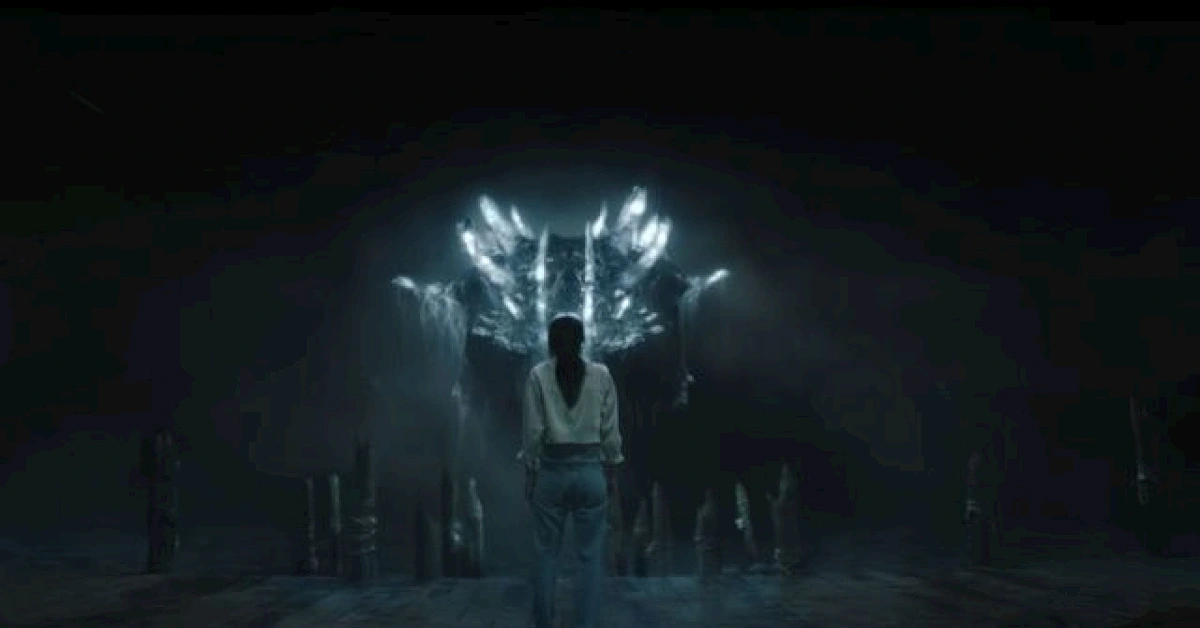
The Ion Dragon fought Godzilla in the final episode. This creature had to feel like a worthy opponent for the King of Monsters. The design combined reptilian features with insect-like wings, but the movement stayed rooted in real animal behavior. When it flew, the wings moved like a real dragonfly. When it fought, its body showed the same weight and momentum as Godzilla.
The team at THE THIRD FLOOR provided previs and techvis across the entire season . They helped plan the Golden Gate Bridge sequence specifically. The decision to show the action from Cate’s perspective came from these early planning sessions. The previs team studied the 2014 film to make sure the new shots would feel like a natural extension of the original scene. They even created mock-ups of motion control bases for the school bus and tracked the sun position to match shadows correctly .
Also Read:
Why The Monsters Feel Real
The secret behind the realistic Kaiju comes down to one word: integration. The creatures do not exist separately from their environments. They interact with everything around them.
For the Frost Vark, Framestore had to integrate the creature into both daytime and nighttime snow shots . The daytime scenes were shot in bright sunlight reflecting off real snow. This made it difficult to keep the creature looking mysterious and scary while still visible. The nighttime scenes were shot on soundstages with controlled lighting. The team had to recreate that lighting perfectly to make a giant creature look natural in near-darkness.
The Brambleboar sequence required even more interaction. The creature needed to breathe on Cate’s face. On set, the effects team used a blow gun to simulate the creature’s breath hitting the actor . This gave the actor something real to react to, and the visual effects team matched the digital creature’s breath to the practical effect. The result looks like the creature is genuinely there, exhaling warm air onto a terrified human.
Rodeo FX delivered 300 shots across four sequences, creating 121 assets and managing 577 crew members . These numbers show the massive effort behind each monster moment. But the work stays invisible to viewers. Audiences do not think about the 2,000 individual scales on the Frost Vark or the CFX simulations preventing those scales from colliding. They simply see a monster that looks right.
Sean Konrad summarized the approach simply. The goal was always to tell a human story with monsters that feel like they belong in the world . The creatures are too big to capture entirely in frame sometimes, and that is okay. Viewers only see part of a leg or a glimpse of a tail. This matches how people would actually experience a giant monster attack. They would not get perfect wide shots. They would see fragments of something massive and terrifying.
The philosophy paid off. Monarch: Legacy of Monsters proved that television could deliver the same quality of creature effects as theatrical films. By starting with nature, shooting in real locations, and obsessing over environmental interaction, the visual effects team created Kaiju that viewers believe could actually exist.
Also Read: Maitreyi Ramakrishnan Cast in Elle Season 2 as Elle Woods’ New Rival
Stay with VvipTimes for more breaking news and behind-the-scenes exclusives from the entertainment world.