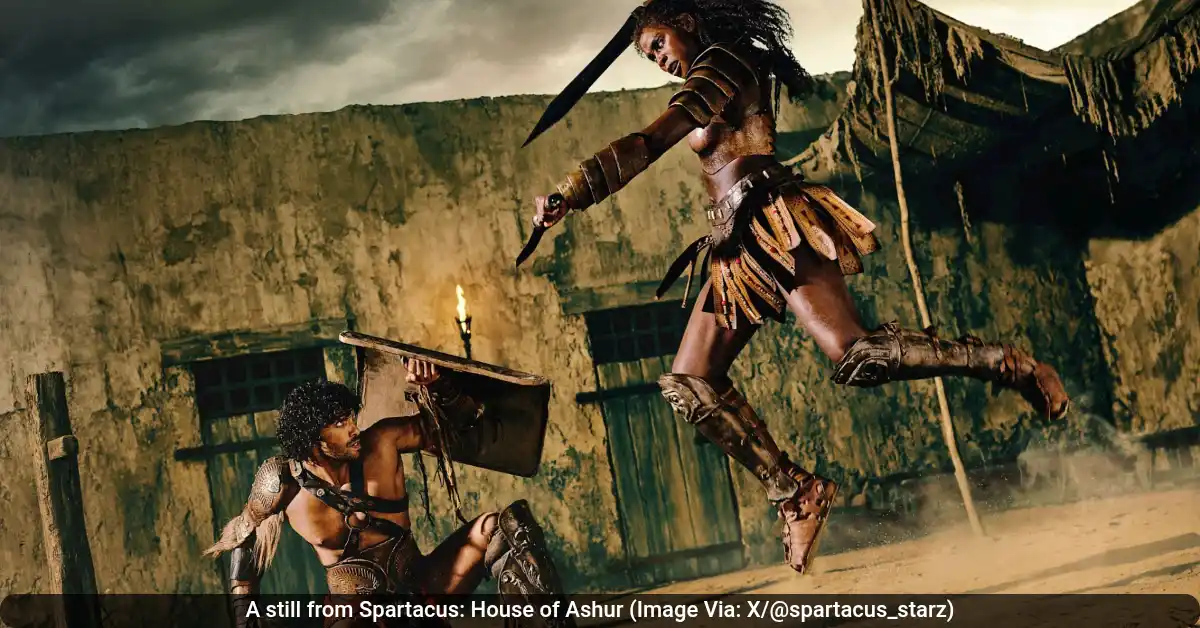
The new Starz series Spartacus: House of Ashur continues the franchise’s tradition of extreme graphic content, earning a definitive TV-MA rating for pervasive, explicit depictions of violence, sex, and strong language that make it unsuitable for younger viewers.
The show, which premiered on December 5, 2025, is a spinoff set in an alternate timeline where the treacherous character Ashur (Nick E. Tarabay) survives to become the master of a gladiator school. While the premise offers “campy” and “hedonistic” fun for adult fans of the original series, multiple parental review guides unanimously classify its content as “severe,” detailing why it is intended for mature audiences only.
A Content Breakdown: Why It Earns Its TV-MA Rating
The rating for Spartacus: House of Ashur is not a suggestion but a firm warning. Reviews from Common Sense Media, IMDb’s parental guide, and PluggedIn.com provide a detailed, consistent picture of the show’s intense adult content, which is present from the very first episode.
Extremely Graphic and Frequent Violence
The violence in the series is stylized but relentless and explicit. It is central to the gladiator arena setting and extends into scenes of punishment and torture.
- Graphic Combat: Gladiator fights feature extended, close-up scenes of stabbings, slashing, impalement, and decapitation. The Hollywood Reporter notes the show serves a “bacchanalia of sex and violence” where characters are hacked apart with enough blood “to fill the Mediterranean”.
- Bodily Harm: Acts include throat-slitting, characters being burned or crushed, and visible severing of limbs. One particularly disturbing scene involves a man’s genitals being torn off, shown in explicit detail.
- Visual Realism: The camera does not shy away from the aftermath. Viewers see lingering shots of injured or dead bodies with exposed wounds, blood spurts, and decay.
Explicit Sexual Content and Nudity
Sexual content is as frequent and graphic as the violence, woven into the plot and setting, which includes brothels and sexual slavery.
- Full Nudity: The show features full frontal nudity of both men and women, including exposed breasts, buttocks, and male genitalia.
- Simulated Sex: Sexual acts are graphically simulated on screen. Content includes heterosexual encounters, same-sex encounters, group sex, and orgies.
- Themes of Coercion: The show depicts sexual violence, including rape, attempted rape, and coerced sexual acts involving enslaved individuals. Sexual humiliation is also used as a form of punishment.
Pervasive Strong Language
The dialogue is saturated with modern, harsh profanity, which reviewers note can feel anachronistic in the ancient Roman setting.
- Frequent Profanity: The f-word and s-word are used constantly. The c-word is also used liberally for both genders.
- Crude Dialogue: Language includes crude sexual terms, insults, and slurs related to status and slavery. PluggedIn.com’s review of the first episode alone counted 53 uses of the f-word and 10 uses of the s-word.
Additional Mature Themes
Beyond the core categories, the show deals with other intense subject matter.
- Drinking: The consumption of wine is frequent and often leads to or accompanies debauchery.
- Emotional Intensity: The plot revolves around betrayal, power struggles, and brutal confrontations, creating a consistently tense and sometimes disturbing atmosphere.
- Historical Brutality: Like its predecessor, the series does not romanticize the ancient world. It portrays a brutal, patriarchal slave society, which inherently involves depicting exploitation and suffering.
Understanding the Show’s Context and Appeal
For parents or viewers curious about the show’s premise, Spartacus: House of Ashur is a direct spinoff of the original Spartacus series (2010-2013). It revives the villainous Ashur, who was killed in the original story, via an alternate timeline where he killed Spartacus instead.
The show is created by Steven S. DeKnight, who helmed the original series, and brings back fan-favorite actor Nick E. Tarabay as Ashur. It also features returning star Lucy Lawless in a guest role and new characters like the gladiatrix Achillia, played by Tenika Davis. Its appeal lies in what The Hollywood Reporter calls “lizard-brain pleasures” – an unapologetic, over-the-top spectacle of scheming, bloody combat, and sexual intrigue designed purely for adult entertainment.
How This Compares to Other Series
Spartacus: House of Ashur is part of a premium cable tradition known for mature content, but it pushes boundaries further than many of its peers.
- Compared to Game of Thrones: Reviewers state the new Spartacus spinoff makes Game of Thrones “look restrained” in its depictions of sex and violence.
- Franchise Consistency: It faithfully maintains the signature style of the original Spartacus series, which was already known as a pinnacle of graphic content on television.
- Lack of Mitigating Factors: Unlike some historical dramas that might offset brutality with profound narrative or moral lessons, critics describe House of Ashur as primarily focused on “fun and flamboyant adventures” and “cheerfully hedonistic” spectacle.
Final Verdict for Parents and Guardians
The consensus across all parental review platforms is absolute: Spartacus: House of Ashur is strictly for adults.
Common Sense Media, which recommends the show for ages 17 and up, states plainly: “Parents need to know that Spartacus: House of Ashur… is got lots of grisly violence… Sexual content includes full frontal nudity and simulated sexual acts. There’s also frequent cursing”.
The IMDb parental guide, which aggregates user reviews, labels the sex, violence, and profanity each as “Severe”. This means the content is not just occasional but pervasive, explicit, and integral to the viewing experience. For teenagers, even older ones, and certainly for children, the intense and graphic nature of this series is likely to be inappropriate, disturbing, and without educational merit in the context of understanding ancient Rome.
Also Read: The Great Flood Ending: An-na’s Final Reunion With Ja-in Explained