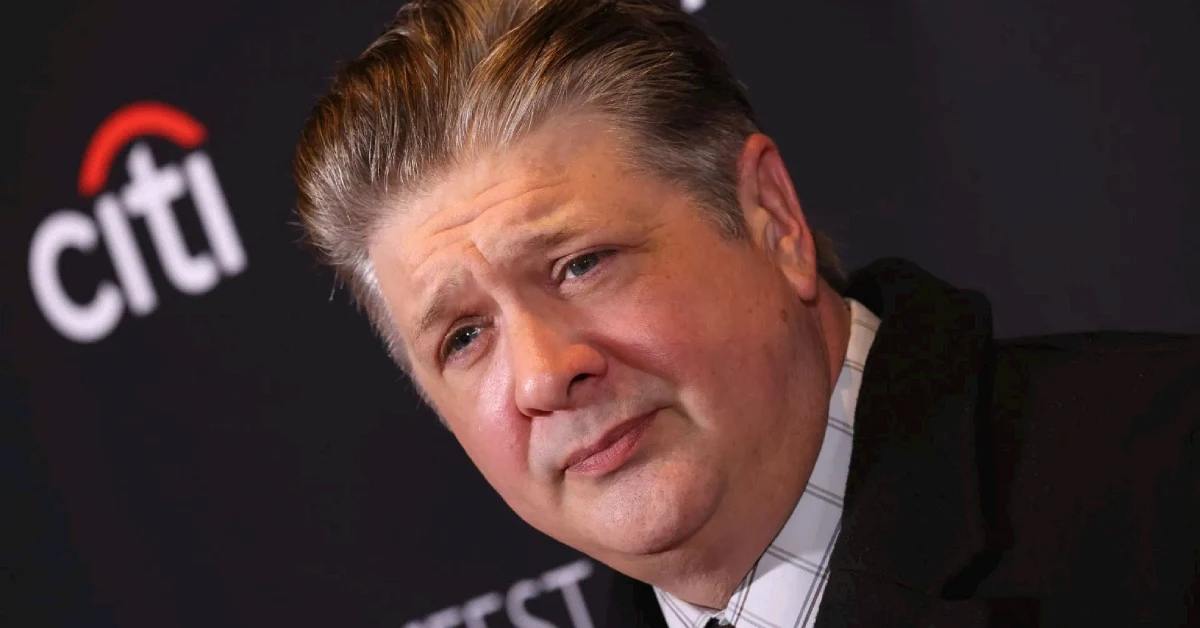
Chuck Lorre, the creator behind both The Big Bang Theory and its prequel Young Sheldon, has openly said he regrets a major story decision made nearly two decades ago. Lorre now wishes he never decided to kill off Sheldon Cooper’s father, George Sr., in the backstory of the original sitcom.
This regret was shared in a message from the writer, known as a vanity card, shown after a key episode of Young Sheldon. In that card, Lorre explained that eighteen years ago, when the original show was being made, giving Sheldon a childhood marked by his father’s death seemed like a good creative choice. He wrote that no one could have known they would one day regret that decision, and he stated, “That someday is now”.
The message continued, noting there were many tears on set when the episode’s final scene was completed. Lorre described it as “a reminder that we had all fallen in love with a fictional character,” which he said is itself “a reminder to love the characters in our life who are real. To do otherwise, is to live with regret”.
Why Killing George Sr. Became a Problem
In The Big Bang Theory, the adult Sheldon Cooper, played by Jim Parsons, frequently talked about his father. Sheldon described George Cooper Sr. as a hard-drinking, often neglectful parent who was unfaithful to Sheldon’s mother, Mary. This portrayal established a core part of Sheldon’s personality and his complicated feelings about his childhood in Texas.
However, when Young Sheldon began, it showed a very different man. Played by actor Lance Barber, the younger George Sr. was shown as a flawed but kind and compassionate father. He loved his family, even if he sometimes struggled to connect with his highly gifted son. The prequel did not just show George as a better person; it also showed that he and Sheldon often had a warmer relationship than Sheldon’s adult stories suggested.
This created a major contradiction for the show’s writers. They were building a heartfelt family comedy around a character whom the audience knew was destined to die, based on a quick decision made for a different show years earlier. The impending death of George Sr. became a dark cloud hanging over the generally light-hearted series.
How Young Sheldon Handled George’s Death
The storyline of George’s death was addressed in the final season of Young Sheldon. The episode titled “Funeral” dealt with the young Sheldon, played by Iain Armitage, navigating the immediate aftermath of his father’s passing. His official cause of death was never clearly stated but was once vaguely listed on one of Sheldon’s charts as “S.B.L.”.
The death itself happened off-screen. The pivotal moment came in the episode “A New Home and a Traditional Texas Torture,” which ended with the Cooper family receiving the tragic news. This episode was the one that concluded with Chuck Lorre’s candid vanity card expressing his regret.
The series finale of Young Sheldon later provided an interesting explanation for some of the differences between the two shows. It revealed that the entire prequel series was being narrated by an adult Sheldon as he worked on his memoirs with his wife, Amy, played by Mayim Bialik. This meant each episode was an excerpt from Sheldon’s autobiography—a memory shaped by time, perspective, and his own personal biases.
Not Everyone on the Team Shares the Regret
While Chuck Lorre has expressed his regret, other key people involved with Young Sheldon see the death of George Sr. as a necessary and powerful part of the story.
Co-showrunners Steve Molaro and Steve Holland have said they believe the event gave the series strong emotional closure. “I think it gave the show a real strong emotional closure, and death is so important to Sheldon as a character,” Holland explained in an interview. “Looking back on that death as an adult has really framed what this show’s been about, I think”.
Molaro agreed, stating, “I don’t regret that it’s happening. It’s a strong ending and a part of life”. They both acknowledged that the character of George on Young Sheldon had evolved into someone much more likable than originally planned, thanks to Lance Barber’s performance. Trying to force him back into the box of the “bad dad” from The Big Bang Theory would have felt wrong for the show they were making.
As Molaro once said regarding other inconsistencies between the two series, “We don’t have a precise roadmap in front of us — and to some extent, we don’t feel handcuffed to things that were said on Big Bang“. He argued that the writers had to do what was best for Young Sheldon as its own series, even if it meant altering parts of the established backstory.
Fan Reactions to the Contradiction
The difference between the two versions of George Cooper has been a major topic of discussion among fans. On social media and fan forums, many viewers have pointed out the contradiction.
One fan commented on the issue, writing, “Yes I was disappointed when he passed on Young Sheldon. Also the George character on Young Sheldon was a great father and husband and absolutely contradicted the BBT George”.
Another fan offered a theory that helps explain the difference, suggesting, “I think that Sheldon has his own views and perceptions of his dad given his age when he passed i do think the finale of Young Sheldon shows that writing the memoir may have given him a more complete adult view of him”.
Some fans believe the decision was meaningful for Sheldon’s character development. One person noted that the loss “humanizes Sheldon more than any of the other characters,” suggesting that Sheldon’s famous habits and rituals are a way to stabilize himself after a traumatic loss he never fully processed.
George Cooper’s Return After Young Sheldon
Although George Sr. died in Young Sheldon, actor Lance Barber has returned to play the character in the new spinoff series, Georgie & Mandy’s First Marriage. He appears in dream sequences, not as a living character.
Also Read:


In an episode titled “Typhoid Georgie,” the adult Georgie, played by Montana Jordan, falls ill. During a fever dream, he sees his father. However, the George in the dream is a creation of Georgie’s own mind, wrestling with feelings of not living up to his father’s example. The dream even takes a scary turn when George temporarily appears as a zombie, telling Georgie to “get to work”.
Executive producer Steve Holland explained that the idea came from Chuck Lorre’s own experience. “Chuck had always said that he lost his father many years ago and he still dreams of him to this day. So it always seemed like a possibility to bring George back in that way,” Holland said. He clarified that in these scenes, “Lance is not playing George Sr., George Sr. is gone. This is the George who’s living in Georgie’s head”.
The return was an emotional moment for the production team. Holland shared that seeing Barber back on a recreated version of the old Cooper family kitchen set was a “surreal and familiar and comforting” experience.
The legacy of George Cooper Sr. continues to be a complex and emotional part of the Big Bang Theory universe. What started as a simple character detail in 2007 grew into a central tragedy that shaped two different television series. While the creator may wish he had made a different choice, the death of George ultimately provided a depth of emotion that helped Young Sheldon become more than just a standard sitcom, giving fans a father figure they grew to love and mourn alongside the Cooper family.
Also Read: Dare You to Death Episode 3: January 2026 Release, Streaming Info, and What Comes Next