


South Korean actress Ha Young is at the center of a growing controversy after her agency confirmed that her great-grandfather was a member of a pro-Japanese organization during Japan’s colonial rule of Korea. The Our Sticky Love star issued a public apology on August 11, 2026, just one day after her agency initially denied the allegations.
The situation has drawn significant attention because Ha Young had recently spoken proudly about her family’s four-generation medical background on a television program. That appearance led online users to investigate her family history, uncovering records that linked her great-grandfather to pro-Japanese activities during the 1910-1945 colonial period.
How the Controversy Began
The trouble started when Ha Young appeared on the KBS2 variety show Problem Child in House on August 7, 2026. During the episode, she talked about her family’s medical legacy, sharing that her great-grandfather studied Western medicine in Japan and opened one of the first Western-style clinics in Seoul. She also mentioned that he treated Emperor Gojong.
While Ha Young did not reveal her great-grandfather’s name on the show, internet users quickly identified him as Ahn Sang-ho. He became the first Korean to obtain a Japanese medical license in 1902 and was known for treating members of the royal family.
After his identity became public, online communities began raising questions about Ahn Sang-ho’s activities during the Japanese colonial period. Historical records showed that he was listed as a council member of the Daejeong Friendship Association (Daejeong Chinmokhoe) in 1916, an organization that historians have identified as pro-Japanese.
Agency’s Initial Denial and Quick Reversal
On August 10, 2026, Ha Young’s agency, Bistus Entertainment, responded to the growing allegations by calling them “groundless”. The agency confirmed that Ahn Sang-ho was indeed the actress’s great-grandfather but dismissed claims of pro-Japanese activities as unfounded.
However, just one day later, the agency completely reversed its position. After conducting further verification, Bistus Entertainment acknowledged that historical records do exist showing Ahn Sang-ho’s name on the 1916 council roster of the Daejeong Friendship Association.
“Following further verification, we have confirmed that records do indeed exist showing that her great-grandfather, Mr. Ahn Sang-ho, was listed as a council member of the Daejeong Friendship Association in 1916. We sincerely apologize for causing confusion by hastily responding that the allegations were ‘groundless’ without sufficient verification.”
Ha Young’s Public Apology
Through her agency, Ha Young expressed deep regret over the situation. The agency released a statement saying the actress is “deeply troubled” that her remarks unintentionally led to controversy.
“Ha Young feels a heavy heart for unintentionally causing controversy, and we sincerely apologize for causing confusion by dismissing the claims without thorough investigation.”
The agency also acknowledged the importance of careful verification when sharing historical information with the public.
“Through this incident, we have come to realize the importance of prudent verification in conveying historic fact and an individual’s personal history to the public. Ha Young will take to heart the concern she has caused, and will take on a more prudent and humble attitude.”
What Historical Records Show About Ahn Sang-ho
Ahn Sang-ho was a prominent physician during the early 1900s. He studied at Tokyo Jikei Medical School and passed his medical licensing exam in July 1902. After returning to Korea, he opened what is considered one of the first Western-style medical clinics in Seoul.
His connection to the Japanese colonial government has been documented in several historical sources. According to a December 1918 article in Maeil Sinbo, the official newspaper of the Japanese colonial government, Ahn Sang-ho was quoted as saying his household was “completely assimilated,” mentioning that he wore Japanese clothes, married a Japanese woman, and prohibited the Korean language at home.
The Daejeong Friendship Association, where Ahn served as a council member, was established in November 1916. It included business figures, bureaucrats, journalists, educators, lawyers, and medical practitioners. The organization was described by the Japanese Government-General’s Police Bureau as a group aimed at “endorsing the Governor-General’s politics and harmonizing the Japanese and Korean peoples”.
The association was led by pro-Japanese figures including Min Yeong-gi and counted among its members Yi Wan-yong, who signed the 1905 Eulsa Treaty and the 1910 Japan-Korea Annexation Treaty.
It is worth noting that Ahn Sang-ho’s name does not appear in the Biographical Dictionary of Pro-Japanese Collaborators published by the Center for Research on National Issues. However, the confirmed record of his membership in the Daejeong Friendship Association has been enough to fuel public criticism.
Impact on Ha Young’s Career
The controversy comes at a challenging time for Ha Young, who has been building a successful acting career. She made her debut in the 2019 drama Doctor Prisoner and has since appeared in several popular Netflix series.
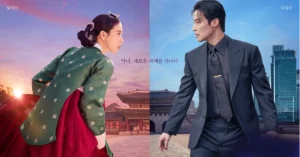
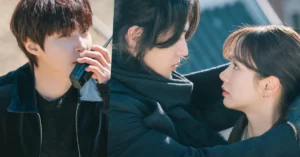
Her recent works include The Trauma Code: Heroes on Call (2025), Boyfriend on Demand (2026), and Teach You a Lesson (2026). She is currently starring in the Netflix rom-com series Our Sticky Love, which premiered on August 7, 2026 — the same day her controversial TV appearance aired.
The timing has been particularly difficult, as Our Sticky Love is a major project for the actress. Reports indicate that Ha Young has canceled scheduled interviews amid the growing backlash.
Public Reaction and Historical Context
The controversy has sparked widespread discussion in South Korea, where historical issues related to Japan’s colonial rule remain highly sensitive. Many citizens view pro-Japanese activities during the colonial period as a betrayal of the nation.
The debate has extended beyond Ha Young’s personal situation. Some online users have drawn comparisons to other celebrities who faced similar controversies over their family members’ historical actions. The situation has also raised questions about whether descendants should be held responsible for the actions of their ancestors.
Agency’s Final Statement
Bistus Entertainment concluded its apology by emphasizing that both the agency and Ha Young have learned an important lesson from this experience.
“Both the agency and Ha Young have deeply realized how important verification process is when sharing historical facts with the public.”
The agency added that Ha Young “deeply regrets the concern this incident has caused and will approach her work with an even more cautious and humble attitude going forward”.
Related:


What This Means for the Actress
For now, Ha Young has publicly apologized and acknowledged the gravity of the situation. Whether this controversy will affect her future projects remains to be seen. Her agency has not announced any changes to her current commitments.
The incident serves as a reminder of how quickly public perception can shift when historical issues come to light. For Ha Young, who built her career on talent and hard work, this controversy has added an unexpected chapter to her story — one that she did not choose but must now address.
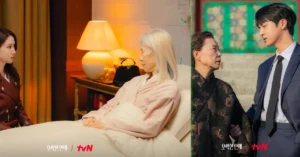
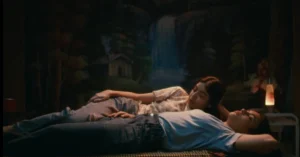
Also Read: Jung Hae In and Ha Young Face Love, Lies, and a Gang Boss in “Our Sticky Love”
Stay updated with the latest entertainment news and celebrity updates from around the world. For more stories like this, keep reading VvipTimes for your daily dose of Korean entertainment and global showbiz coverage.





































Leave a Reply