

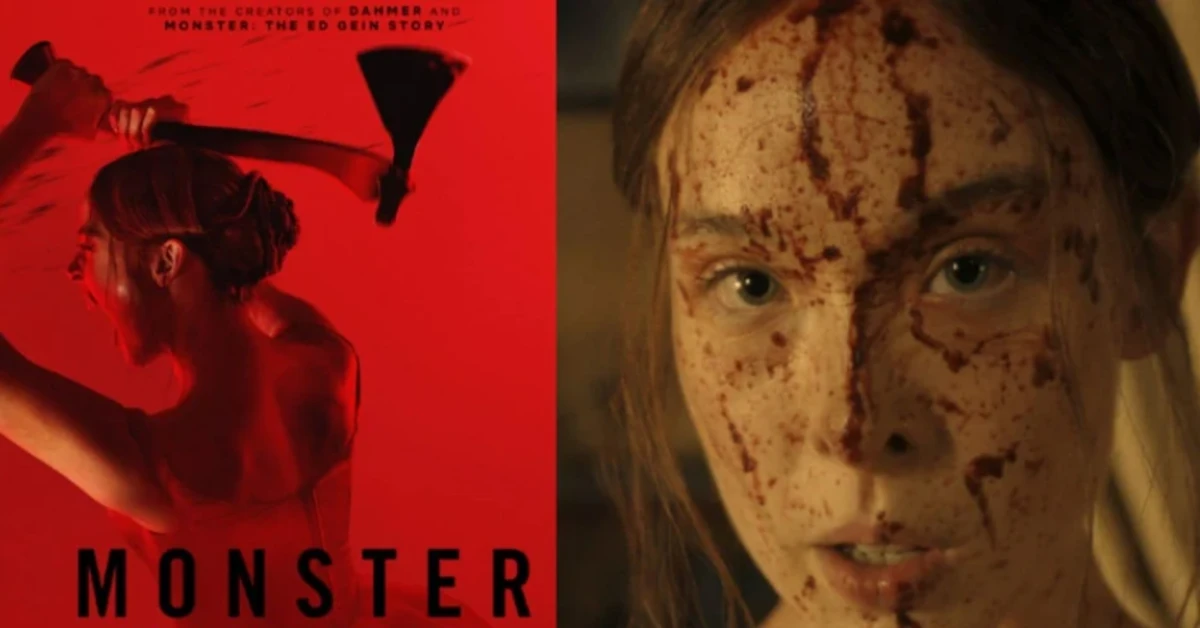
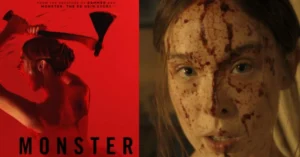
Netflix’s Monster: The Lizzie Borden Story has become one of the most talked-about shows of the year, pulling viewers back into the 1892 axe murders that have fascinated the world for over a century. The fourth season of Ryan Murphy’s anthology series, which began streaming on Sept. 17, 2026, stars Ella Beatty as Lizzie Borden, the Massachusetts woman accused of killing her father Andrew and stepmother Abby with a hatchet. The eight-episode season was directed in part by Max Winkler and also features Charlie Hunnam as Andrew Borden, Rebecca Hall as Abby Borden, and Vicky Krieps as the family maid Bridget “Maggie” Sullivan.
The series takes a bold approach. Unlike previous seasons, this one openly presents Lizzie as guilty from the start, even though she was acquitted by an all-male jury in 1893. Netflix itself describes the show as a “very fictionalized version” of her life. But while the series dramatizes the murders and the trial, it also leaves out several real details that are just as strange and shocking as anything on screen. Here are the biggest facts the show never mentions.
Lizzie Was Far More Involved in Her Community Than the Show Suggests
In Monster, Lizzie comes across as a lonely woman who spends her days tending to her doves and cherry blossom trees, rarely engaging with anyone outside her home. The real Lizzie was quite different. She taught Sunday School for the children of Chinese immigrants and was an active member of the Christian Endeavor, the local Fruit and Flower Mission, and the Women’s Christian Temperance Union. Her volunteer work also included helping at the Good Samaritan Charity Hospital and cooking the church’s annual Christmas dinner for local newsboys.
She Had Already Traveled Across Europe Before the Murders
When Lizzie meets Bridget in the series, she seems fascinated that the maid has traveled all over Europe, as if Lizzie herself had never left the country. The truth is that her father sent her on a months-long tour of Europe when she was 30 years old. According to National Archives records, she traveled with two of her cousins. This detail paints a very different picture of Lizzie — not a sheltered homebody, but a woman who had seen the world before the tragedy at home.
The Poison Purchase the Show Replaced with a Made-Up Plot
Monster invents a storyline where Lizzie and Bridget try to poison Andrew and Abby with bad oysters. The real case had something far more direct. Pharmacists claimed Lizzie tried to buy prussic acid, a deadly poison, the day before the murders, but was refused because she had no prescription. The family had indeed been sick shortly before the killings from what was blamed on spoiled food in the summer heat, but no poison was found in the victims’ stomachs. This prussic acid allegation was part of the investigation but was limited or excluded at trial. The show never mentions it.
Andrew Borden Destroyed the Pigeons, Not Abby
One of the most emotional moments in the series shows Abby slaughtering Lizzie’s beloved doves with an axe, which becomes a major trigger for Lizzie’s rage. The historical record tells a different story. It was Andrew who killed pigeons, not Abby. Lizzie had apparently built a roost for them in the barn, and her father destroyed it because he believed the birds carried disease. There is little solid evidence they were cherished personal pets in the dramatic way the show portrays them.
Bertha Manchester Had Nothing to Do with Lizzie
In the show, Lizzie and Bridget murder a woman named Bertha Manchester as a kind of practice run before killing Andrew and Abby. The real Bertha Manchester was murdered with an axe in Fall River, but the timing makes the show’s version impossible. Manchester was killed days before Lizzie’s trial, while Lizzie was locked up in jail. A Portuguese immigrant named Jose Correa de Mello was charged and sentenced for her death, which came from more than 20 axe blows. Lizzie and Bridget were never connected to the crime.
Bridget Sullivan’s Real Life After the Trial
The series gives Bridget a romantic partnership with Lizzie and a dramatic shared future. The real Bridget was an Irish immigrant who gave consistent testimony as a key witness and was never charged with any crime. After the trial, she returned briefly to Ireland, then moved to Montana, where she married an Irish immigrant in 1905. She refused to discuss the Borden family for the rest of her life and died in 1948. There is no evidence of a romantic relationship between Bridget and Lizzie, though the idea has been explored in fiction before.
Lizzie’s Health Issues in the Show Were Largely Invented
Monster depicts Lizzie suffering from extreme menstrual pain and an imperforate hymen, a rare condition where the hymen blocks the vaginal opening. Bridget is the one who supposedly diagnoses her. In real life, nothing substantiates that Lizzie was diagnosed with this condition. No evidence indicates she experienced abnormally painful periods either. However, Lizzie did mention her periods to police after the murders. Investigators found bloody cloths in a bucket in the basement, which she claimed were for hygienic reasons because she was menstruating at the time. The family doctor confirmed her timing, so the rags were not analyzed further.
Uncle John Morse Was a Real Suspect
Lizzie’s maternal uncle, John V. Morse, stayed overnight at the Borden house the night before the murders and had breakfast with the family. He was one of the last people to see Andrew and Abby alive and was briefly considered a suspect. He had an alibi involving visits elsewhere that morning, which checked out. The series gives him little to no meaningful attention, focusing almost entirely on Lizzie and Bridget.
What Happened After the Acquittal
The series ends with an imagined scene in the afterlife, featuring Lizzie and Bridget greeting Aileen Wuornos, played by Sarah Paulson. The real Lizzie lived for another 34 years after her acquittal. She was shunned by her community in Fall River and became socially isolated. She and her sister Emma lived together in a large Victorian house Lizzie named Maplecroft, but the sisters became estranged and Emma moved out in 1904. Lizzie died of pneumonia on June 1, 1927, at the age of 66. She had undergone gallbladder surgery before her death and experienced other health issues later in life that the show omitted completely.
A Show That Chooses Drama Over History
Monster: The Lizzie Borden Story is designed to entertain, not to teach. The show’s creators were open about taking liberties. Director Max Winkler explained that the season got to “go a bit more off script” because so little is actually recorded about what happened inside the Borden house on Aug. 4, 1892. The show also weaves in the story of Aileen Wuornos to draw parallels between how society has treated women who kill across different centuries.
The series is streaming now on Netflix worldwide, including in the USA, UK, Canada, Australia, and India. All eight episodes are available. For viewers who want to know what really happened — and what the show left out — the historical record offers plenty of strange and shocking details that no scriptwriter needed to invent.
Also Read: Lizzie Borden Song Lyrics and Origin Explained as Netflix Monster Revives the Chilling Rhyme
Did you know the Borden house is now a bed and breakfast? Explore more surprising true-crime facts only on VvipTimes.










































































Leave a Reply