

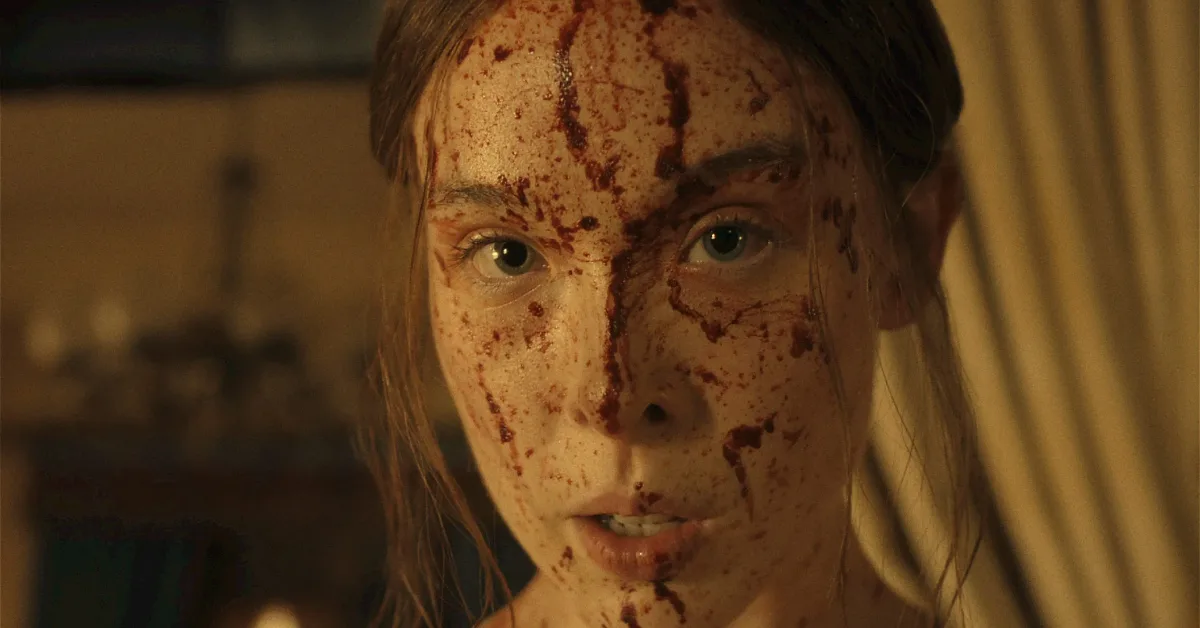
The rhyme “Lizzie Borden took an axe” has echoed through schoolyards, campfires, and sleepovers for more than a century, turning one of America’s most infamous murder cases into a piece of folk entertainment. Netflix’s Monster: The Lizzie Borden Story, which premiered on September 17, 2026, has brought the eerie verse back into the spotlight, prompting fresh questions about where it came from and why it has lasted so long.
What Are the Lizzie Borden Song Lyrics
The most widely known version of the rhyme reads:
“Lizzie Borden took an axe,
And gave her mother forty whacks.
When she saw what she had done,
She gave her father forty-one.”
A lesser-known second verse offers a darker glimpse into the public’s early judgment of Borden:
“Andrew Borden now is dead,
Lizzie hit him on the head.
Up in heaven he will sing,
On the gallows she will swing.”
This second stanza matters for historians. Its clear assumption of guilt suggests the verse was written before the trial concluded, when public opinion had already turned against Borden.
The Rhyme Gets the Facts Wrong
The numbers in the song do not match what actually happened. Trial records show that Abby Borden, Lizzie’s stepmother, was struck about 18 or 19 times. Andrew Borden, her father, suffered around 10 or 11 blows. The rhyme’s “forty whacks” and “forty-one” are creative exaggerations that have stuck in the public imagination far more stubbornly than the real details.
The song also refers to Abby as Lizzie’s “mother,” when she was in fact her stepmother. Andrew married Abby three years after the death of his first wife, Sarah, in 1863. Lizzie and her sister Emma were reportedly not fond of their new stepparent.
Where the Lizzie Borden Song Came From
The exact origin of the rhyme remains unknown, but historians have a strong working theory. The most plausible explanation is that it was created by media reporters covering Borden’s dramatic 1893 murder trial. The case became one of the earliest examples of “trial by newspaper,” with coverage shaping public opinion well before any legal verdict arrived.
Megan Alves, a tour guide and Borden historian at the Lizzie Borden House in Fall River, has studied the rhyme extensively. She classifies it not as a poem or a limerick, but as a doggerel — an informal verse with a playful, sing-song quality that relies more on rhythm and rhyme than literary sophistication.
Alves also identified the tune. The lines are commonly sung to the melody of “Ta-ra-ra Boom-de-ay,” a popular song from the late nineteenth century. That rhythm was characteristic of playground songs and music written for young children, which helps explain why the verse spread so quickly through schoolyards.
When the Rhyme First Appeared
The famous four-line chant did not appear during the trial. It surfaced years later. The rhyme’s first appearance in The Boston Globe came in 1933, when reporter Roger Batchelder wrote about Lillian Gish playing Borden in a Broadway show. Batchelder noted that “Lizzie Borden was publicly condemned despite her official acquittal. But it came to a point where a doggerel rhyme was circulated.”
Earlier newspaper traces exist. Michael Martins, curator of the Fall River Historical Society, said the rhyme seems to have originated around 1893 or 1894. It first appears in newspapers around early 1894, less than a year after Lizzie was acquitted — but with 50% fewer whacks than the version known today:
“A Boston lady who brought her children up very carefully, and never allowed them to see a newspaper, found them, on going into her nursery, the other day, singing: ‘Lizzie Borden took an ax / And gave her mother twenty whacks; / After seeing what she’d done, / She gave her father twenty-one.’”
This early version was reprinted in newspapers from Washington to Delaware throughout February and March 1894. Like many anonymous items in newspapers at the time, it had no byline and was almost certainly a joke designed to illustrate how unavoidable Lizzie Borden gossip had become.
The Murders Behind the Rhyme
On the morning of August 4, 1892, Andrew and Abby Borden were found brutally murdered in their Fall River, Massachusetts home. Abby was killed upstairs around 9:30 a.m. Andrew was attacked later while napping on a sofa downstairs. Lizzie and the family’s servant, Bridget Sullivan, were the only other people at home. Lizzie’s sister Emma was visiting friends in nearby Fairhaven.
Lizzie Borden was tried for the murders in 1893 and acquitted. The jury concluded the prosecution failed to prove her guilt beyond a reasonable doubt, and significant evidence was excluded from the trial, which weakened the case against her.
Netflix’s Monster Brings the Rhyme to a New Generation
Ryan Murphy and Ian Brennan‘s Monster anthology chose Lizzie Borden as the subject of its fourth season, marking the first time the series has focused on a female killer. The eight-episode season premiered on September 17, 2026, and features the famous rhyme in its teaser trailer, introducing the doggerel to viewers who may never have heard it before.
Ella Beatty leads the cast as Lizzie Borden. She is joined by Vicky Krieps as Bridget “Maggie” Sullivan, Charlie Hunnam as Andrew Borden, Rebecca Hall as Abby Borden, and Billie Lourd as Emma Borden. Sarah Paulson also appears in the season.
Beatty spoke about the weight of playing the first female subject of the Monster series. “I felt incredibly lucky to be the first woman monster,” she said. “I also knew from the beginning that Ryan Murphy and Ian Brennan were really interested in exploring the reasons why women kill, specifically.”
You May Also Like:









Why the Song Outlasted the Trial
The Lizzie Borden rhyme has survived because it is catchy, short, and easy to pass along — qualities that made it spread through newspapers, vaudeville stages, and eventually schoolyards. By the 1920s, the rhyme was being printed in newspapers across the country, cementing its place in American folklore.
The Netflix series has introduced the rhyme to a global audience, many of whom are learning about the case for the first time. Whether sung around a campfire or recited in a classroom, the doggerel continues to shape how people remember Lizzie Borden — often in ways that have little to do with what actually happened in Fall River more than 130 years ago.
Also Read: Lizzie Borden Seizures, Acquittal and Bertha Manchester Case Explained as Netflix Monster Premieres
Stay tuned to VvipTimes for more in-depth coverage of the biggest shows and the real stories behind them.


Leave a Reply