
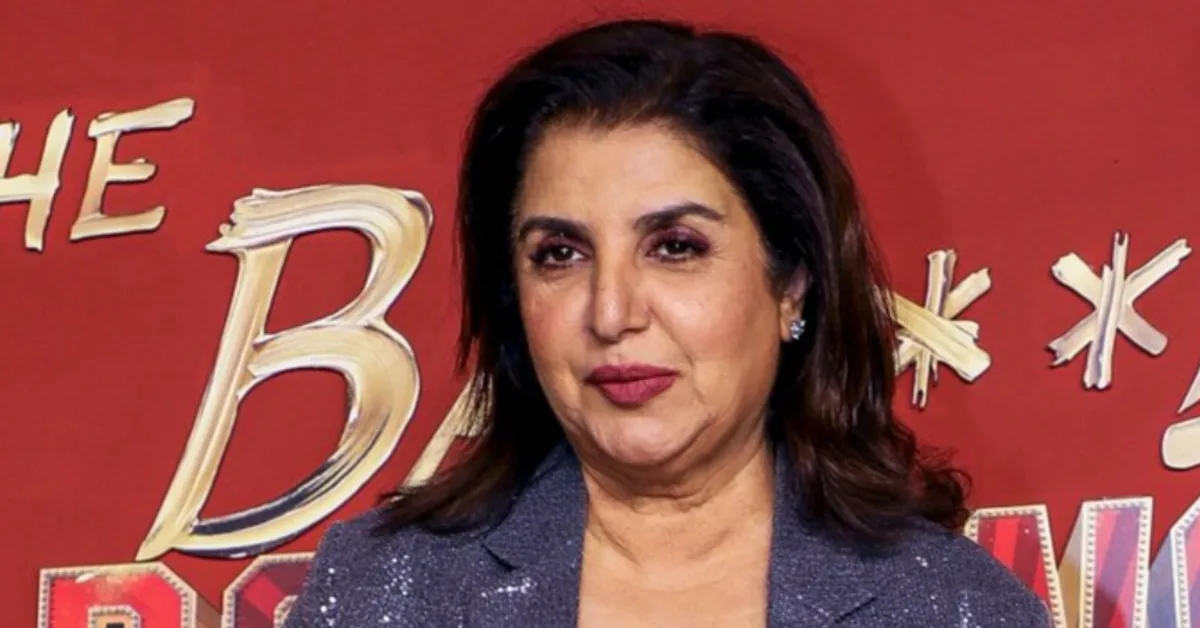

Filmmaker and choreographer Farah Khan has made a blunt observation about the current generation of Hindi film actors. During an appearance on Neha Dhupia and Angad Bedi‘s chat show Double Date, Farah said many younger actors lack confidence and try to control every part of filmmaking because they do not trust the people around them. She also agreed with Angad Bedi’s remark that the era of the superstar is over, naming Shah Rukh Khan, Salman Khan, Akshay Kumar and Amitabh Bachchan as the last of a rare breed. The episode aired on November 5, 2026, and clips from the conversation were shared widely by entertainment outlets.
Farah Khan’s Comments On Today’s Actors
The conversation moved to the way actors behave on set today. Farah Khan did not hold back. She said the current lot wants a say in choreography, music, casting and even direction, and she linked this behaviour to a lack of self-belief.
“In today’s actors, nobody has confidence. They want to interfere everywhere. They want to do the choreography themselves, interfere in the music, direct the film themselves and interfere in casting. That comes when you are not confident about yourself. You have to trust everyone.”
The quote was carried by Bollywood Hungama, Times Now and Tellychakkar, all of which reported the same remarks from the Double Date episode. Farah’s point was simple: an actor who is sure of their own craft does not need to grab control of departments that belong to other people.
She also took aim at the way some actors chase visibility before putting in the work.
“Aaj kal unhein magazine ke cover pe aana hai aur award chahiye, pehle picture toh dhang se kar lo.”
Translated from Hindi, the line means: “These days they want to be on magazine covers and win awards; first, do the film properly.” The remark landed as a direct criticism of a culture where red-carpet moments and trophy cabinets sometimes come before solid screen work.
What Shah Rukh Khan Did Differently, According To Farah Khan
Farah Khan contrasted today’s behaviour with her own experience of working with Shah Rukh Khan on two of her biggest directorial projects. She recalled that Shah Rukh never questioned her casting decisions, even when she picked names that were not the obvious commercial choices at the time.
“Shah Rukh Khan never interfered with anything regarding casting. When I said Sushmita Sen will do Main Hoon Na, she was not so big at that time. Any big heroine would have said yes, but he said nothing. I said I wanted a new girl for Om Shanti Om, and I showed him a picture. He said, ‘If you feel so, go ahead.’”
The Main Hoon Na example matters because Sushmita Sen was not the biggest name in the market when Farah cast her in 2004. The Om Shanti Om example matters even more. Farah chose a complete newcomer, Deepika Padukone, to star opposite Shah Rukh in 2007. A superstar with a weaker sense of security could have pushed back. Shah Rukh did not. That trust, Farah suggested, is what separates a confident star from an insecure one.
The Stars Farah Khan Named As Proof Of Hard Work
Farah did not stop at criticism. She offered examples of actors who keep working even after decades of success.
“You should believe in yourself. Shah Rukh works harder, Amitabh Bachchan is working so hard on Kaun Banega Crorepati, Salman Khan works every day. Akshay works every day and keeps everyone on their toes.”
The names she chose carry weight. Shah Rukh Khan has been a leading man since the early 1990s and remains one of the most bankable names in Hindi cinema. Amitabh Bachchan continues to host Kaun Banega Crorepati and appears in films at an age when most actors have retired. Salman Khan has maintained a steady release calendar for more than three decades. Akshay Kumar is known for completing multiple films in a single year and for arriving on set with a reputation for discipline. Farah’s list was not random. Each name represents a different kind of longevity, and each one backs up her argument that confidence comes from doing the work, not from controlling other people’s work.
Why The Lack Of Confidence Shows Up As Interference
Farah Khan’s observation about interference is not just about ego. It is about what happens when an actor feels uncertain. An actor who does not fully trust their own instincts may try to manage everything else on set. That can mean rewriting scenes, questioning music choices, or asking to be involved in casting. The behaviour can look like ambition. Farah framed it as anxiety.
She also pointed to the company actors keep.
“They think they know it all. They are surrounded by people who make them think they know it all.”
The line suggests that the problem is not only personal insecurity but also the echo chamber around young stars. Entourages, managers and yes-men can make an actor believe that every instinct is correct. When that belief meets a film set, it can turn into friction with directors and technicians who have spent years learning their craft.
The “Last Superstars” Comment
The most quoted moment from the episode came when Angad Bedi said the era of the superstar was over. Farah Khan agreed without hesitation.
“Yes, we had the last of them. Enjoy them.”
The response was short, but it carried a clear meaning. Farah believes the kind of star who could carry a film on name alone, across decades and across generations, belongs to a closing chapter. The names she had already listed, Shah Rukh Khan, Salman Khan, Akshay Kumar and Amitabh Bachchan, are the reference points. The current generation, in her view, has not produced replacements on the same scale.
This is not the first time Farah has spoken about the changing nature of stardom. She has worked with some of the biggest names in the industry as a choreographer and director, and her career spans from the 1990s to the present. Her view comes from direct observation rather than outside commentary.
A Quick Look At Farah Khan’s Films With Shah Rukh Khan
Farah Khan’s directorial debut, Main Hoon Na, released in 2004. The film starred Shah Rukh Khan, Sushmita Sen, Zayed Khan and Amrita Rao. It was one of the biggest commercial successes of that year and established Farah as a director who could handle a large ensemble with a mix of action, comedy and emotion.
Her second film, Om Shanti Om, released in 2007. It starred Shah Rukh Khan and introduced Deepika Padukone. The film became the highest-grossing Hindi film of 2007 and remains one of the most referenced Bollywood releases of its decade. The casting of Deepika, a newcomer with no film experience, opposite a superstar was a risk. Shah Rukh’s willingness to support that choice is the exact example Farah used on Double Date to explain the difference between confidence and insecurity.
Farah also directed Tees Maar Khan in 2010, starring Akshay Kumar and Katrina Kaif. The film did not match the box-office success of her first two projects, but it added to her experience of working with actors at different points in their careers.
How The Superstar Label Has Changed In Bollywood
The word “superstar” in Hindi cinema has historically meant something specific. A superstar could open a film on their name alone. A superstar could draw audiences to a theatre in a small town without a big director or a famous soundtrack. Shah Rukh Khan, Salman Khan and Akshay Kumar built their careers in that system. Their faces sold tickets before social media existed. Their fan bases were not measured in followers but in repeat audiences.
The industry has changed. Streaming platforms have created new kinds of fame. A young actor can become a household name through a web series or a viral clip without ever headlining a theatrical release. Visibility has increased, but the kind of long-term pull that fills theatres across the country for decades has become harder to build. Farah’s comment sits inside this larger shift. Her argument is not that young actors lack talent. It is that the ecosystem around them rewards noise over craft, and that the confidence to trust a director comes from doing the work, not from controlling the narrative.
What Farah Khan Said About Awards And Magazine Covers
The awards remark is worth separating from the rest of the conversation. Farah’s line about magazine covers and trophies was not a general attack on ambition. It was a comment on sequence. Her point was that recognition should follow the work, not replace it.
An actor who spends more time curating a public image than learning the job will eventually face the limits of that approach. Farah’s own career is built on technical skill. She started as a choreographer and moved into direction after years of learning how films are made from the inside. Her criticism of shortcuts comes from a professional who took the long route.
Related Stories
The Context Of The Double Date Appearance
Double Date is hosted by Neha Dhupia and Angad Bedi and streams on Neha Dhupia’s YouTube channel. The show premiered on May 14, 2026, with new episodes released every Thursday. The format places celebrity guests in a relaxed conversation about work, family and life. Farah Khan’s episode was released on November 5, 2026, and the clips were picked up by Bollywood Hungama, Times Now, Tellychakkar and Dailyhunt within hours of release.
The interview also touched on Farah’s memories of the film industry in the 1990s and her experience of working with actors across generations. The casting anecdotes from Main Hoon Na and Om Shanti Om formed the emotional centre of the conversation because they gave a concrete example of what trust between an actor and a director looks like in practice.
The full episode of Double Date featuring Farah Khan is available on Neha Dhupia‘s YouTube channel, with new episodes released every Thursday. For more entertainment stories, keep reading VvipTimes, where every report is checked against multiple sources before it reaches you.







Leave a Reply