
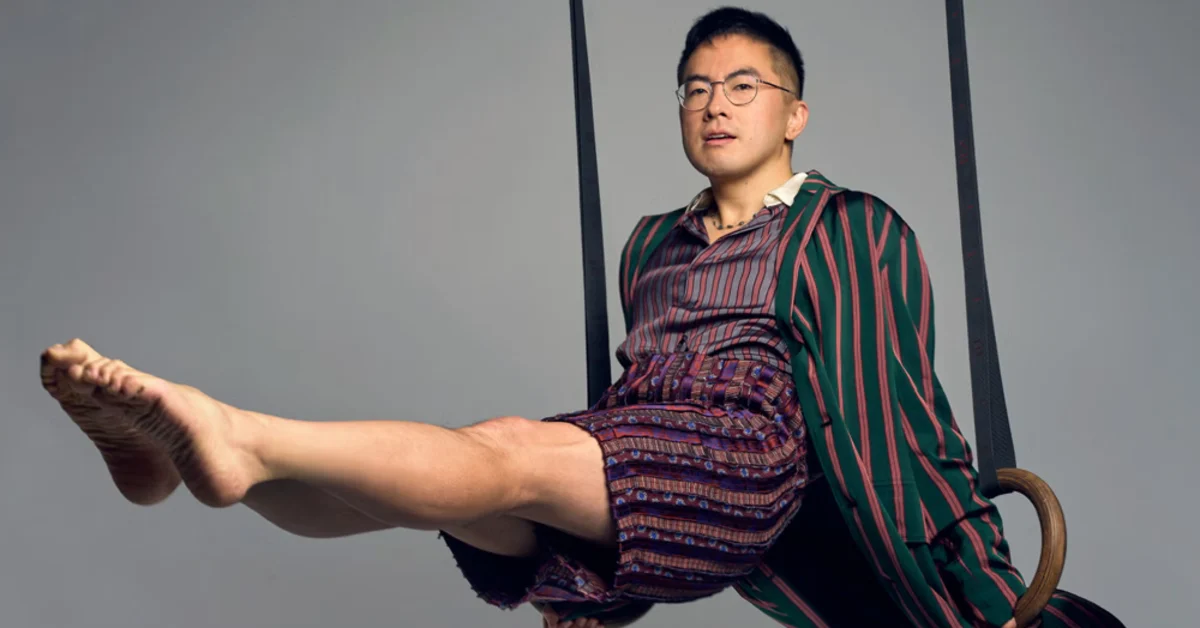

A resurfaced clip from the Las Culturistas podcast has placed comedian Bowen Yang under heavy criticism after he referred to Jewish singer Regina Spektor as a “Zio.” The term is widely documented as an antisemitic slur. The episode originally aired on October 14, 2026, but the clip began circulating widely on X on November 19 and 20, 2026, drawing strong reactions from public figures and Jewish advocacy groups.
The moment in question came during a conversation with guest Edy Modica. While discussing SUNY Purchase, a college Spektor attended, Modica described the singer as “a little Israel hardcore.” Yang responded, “Yeah, she’s Zio.” The exchange drew laughter on the podcast at the time. The resurfaced clip, however, has brought the term and its history into the spotlight.
Trigger warning: This article discusses antisemitism and the use of a slur.
What the Word “Zio” Means and Why It Is a Slur
“Zio” is an abbreviation of “Zionist,” but its use as a standalone label carries a different weight. According to reporting cited by The New York Times and The Forward, the term was popularized as a derogatory code word for Jewish people by former Ku Klux Klan leader David Duke. Jewish Journal has noted that the pejorative was later re-popularized by anti-Israel activists. The term reduces Jewish identity to a political insult and has a documented history of being used to target Jews.
(The remarks above reflect the personal views and words of those involved and are reported here purely in a news context.)
Amy Spitalnick, CEO of the Jewish Council for Public Affairs, was among the first to publicly address the clip. In a post on X, she wrote:
“‘Zio’ is an antisemitic slur popularized by David Duke, now being normalized on the far left & far right.”
Spitalnick added that it was “incredibly disappointing” that Yang used the word to describe Spektor. She said he could use the moment as an opportunity to engage on antisemitism, and concluded: “I hope he will.”
Regina Spektor’s Background Adds a Personal Layer to the Backlash
Regina Spektor was born in Moscow and left the Soviet Union in 1989 at the age of nine. Her family fled to escape Jewish persecution, arriving in the United States without knowing English. This background has been highlighted by many who criticized Yang’s comment.
One widely shared post on X described Spektor’s family history and then turned to Yang:
“And in five seconds, Bowen Yang – a barely talented hack – reduced this extraordinary woman’s entire life, her family’s sacrifices, and her accomplishments to a single word: ‘Zio.’ A slur rooted in the same Soviet antisemitic propaganda Regina’s family fled.”
The post, shared by the account The Persian Jewess, brought attention to the specific history behind the term and why it lands differently when directed at a Jewish refugee.
Public Figures Condemn the Comment
Reactions to Yang’s remark have been sharp, particularly from conservative and pro-Israel voices.
Meghan McCain wrote on X:
“Bowen Yang using antisemitic slang that was popularized and mainstreamed by KKK leader David Duke is really just chefs kiss for the guy who got Shane Gillis fired from SNL for racism.”
McCain also directed criticism at Disney, which owns the podcast network behind Las Culturistas, writing: “Well done buying this hate mongering podcast @Disney.”
Actor Michael Rapaport also spoke out, writing on X:
“These little hypocrites spend HOURS crying about the homophobia they’ve experienced, yet have ZERO problem being openly hostile, judgmental and dismissive toward JEWS.”
Rapaport went on to say that LGBTQ members demand tolerance and respect for themselves, “but apparently JEWS don’t deserve the same.” He called the comedian’s hypocrisy “disgusting.”
Another X user drew a direct comparison to the Shane Gillis controversy, writing that Yang “cried so hard” when Gillis was fired from SNL for past slurs, yet “casually us[es] a slur for Jews.”
The Hypocrisy Argument at the Center of the Reaction
A recurring theme in the backlash is the charge of double standards. Critics are pointing to Yang’s past public stance against anti-Asian and homophobic language, including his reaction to the Shane Gillis situation. Gillis was hired as an SNL cast member in 2019 but was fired before his first episode after past podcast clips surfaced in which he used slurs against Asians and gay people. Yang, who joined SNL in 2018, was widely reported to have been upset by the Gillis remarks.
The comparison has become a central talking point. One X user wrote that Yang “doesn’t see Jewish people as human, but thinks he’s the good guy.” The user called him a “hypocrite.”
This argument has resonated with audiences who see the term “Zio” as being treated differently from other slurs. Jewish Journal reported in 2019 that the term had been re-popularized by anti-Israel activists, and The Forward reported that David Duke had used the term 359 times on his radio program between January 2012 and 2017.
No Public Response From Bowen Yang or Regina Spektor
A representative for Bowen Yang did not immediately respond to a request for comment from TheWrap, according to the outlet. As of November 20, 2026, Yang has not issued a public statement about the clip or the backlash.
Regina Spektor has also not publicly commented on the podcast clip. The singer’s history as a Jewish refugee from the Soviet Union has been discussed widely online in the wake of the controversy, but she has not addressed the remark directly.
The Las Culturistas episode featuring Edy Modica remains available on podcast platforms. The clip continues to circulate on X, where it has drawn millions of views.
What the Term “Zio” Carries in 2026
The use of “Zio” has become a flashpoint in broader conversations about language and antisemitism. Amy Spitalnick’s post emphasized that the term is “now being normalized on the far left & far right,” suggesting that the slur is not limited to one political corner. The Jewish Council for Public Affairs has previously documented the term’s use in both extremist and activist spaces.
You May Also Like




For viewers and listeners, the controversy raises a straightforward question: why does a single word carry so much weight? The answer lies in its history. “Zio” was not born as a neutral abbreviation. It was pushed into circulation by a former KKK leader and has been used to label Jewish people as targets. When directed at a Jewish artist whose family fled antisemitic persecution, that history becomes even more pointed.
The Bowen Yang clip has not been removed from the Las Culturistas archive. The podcast, co-hosted by Yang and Matt Rogers, has been running since 2016 and is produced by Will Ferrell’s Big Money Players network and iHeartRadio.
Also Read: Bowen Yang’s Jensen Huang Crashes SNL with a Below-the-Belt Joke That Has Everyone Talking
For more entertainment news and updates, visit VvipTimes.































Leave a Reply