
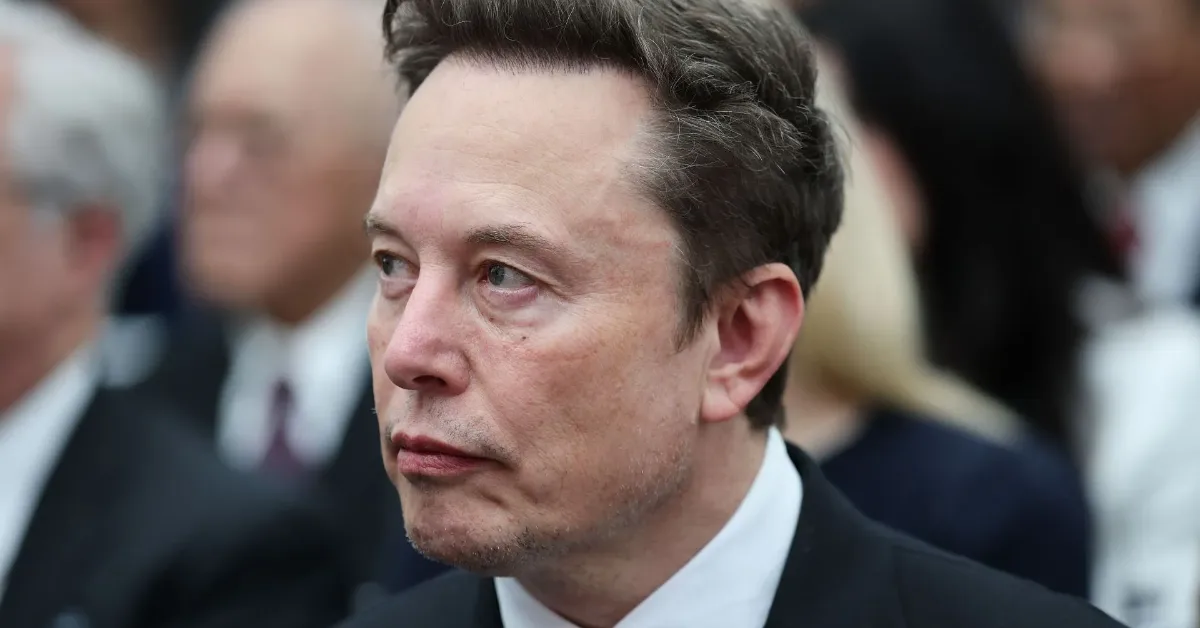

Elon Musk walked into The New York Times DealBook Summit on November 18, 2026, with a confession. The world’s richest person said he felt “pretty foolish” for pouring nearly half a billion dollars into the 2026 U.S. midterm elections and watching Republicans lose both chambers of Congress anyway. Within hours, Sen. Bernie Sanders fired back with a response that turned Musk’s personal regret into a much larger argument about money in American politics. The exchange has since pulled in President Donald Trump, Democratic lawmakers readying subpoenas, and a campaign finance bill that suddenly has a fresh talking point.
Musk’s Admission at the DealBook Summit
Speaking remotely with columnist Andrew Ross Sorkin from China, where he was traveling with Trump for the Asia-Pacific Economic Cooperation summit, Musk did not hide his disappointment. Republicans had just been swept out of power in the House and Senate, and the billionaire who bankrolled much of their effort was asked whether the money was worth it.
“I feel pretty foolish about having spent so much money and not seeing much for it,” Musk said. “If I could rewind the clock, I would have spent less money.”
He also argued that his spending may have prevented an even worse result for Republicans, and that the outcome proved elections are not simply bought. “It certainly shows that American elections are not just about money,” Musk added. “Obviously, you can put a lot of money into an election and have an effect that is relatively minor, and I think that was the case here.”
Musk used the same interview to distance himself from the MAGA movement he had embraced during the 2024 campaign. He described himself as “ideologically quite moderate” and said he was not sure what MAGA meant, but that he did not have “blind adherence to a set of policies by the Republican Party.”
Sanders Responds With Two Words and a Bigger Point
Sanders, the independent senator from Vermont, posted a reply on X on November 19, 2026. His message opened with a direct rejection of Musk’s framing.
“No, Mr. Musk. What’s foolish is that our campaign finance system allows one billionaire to spend over $450 million to undermine our democracy. Our job is to make sure you and other oligarchs never again have that opportunity.”
The post reframed the story. Musk had presented his spending as a bad personal bet. Sanders presented it as evidence that the rules themselves are broken. The Vermont senator has spent years arguing that super PACs and unlimited independent spending give wealthy donors outsized influence, and he used Musk’s own words to make that case to a national audience.
Where the $474 Million Actually Went
The exact total depends on who is counting. The New York Times analyzed Federal Election Commission and Internal Revenue Service records and put Musk’s spending at $474 million since January 1, 2025, calling it more than any non-candidate has spent in a single election cycle. The Associated Press and Reuters both reported figures around $445 million. Sanders used “over $450 million” in his post, a figure that sits comfortably within the range.
The breakdown from the Times analysis shows where the money landed:
- About $216 million to America PAC, Musk’s own super PAC, which ran a nationwide field operation.
- $168 million to the Senate Leadership Fund, the main super PAC backing Senate Republicans. Almost all of that effectively supported Ken Paxton, the Republican Senate nominee in Texas.
- $30 million to the Congressional Leadership Fund, which backs House Republicans.
- Roughly $44 million to other Republican groups and federal candidates.
- About $16 million to state-level political efforts in Michigan, Texas, and Wisconsin.
The Times noted that the figure is almost certainly an undercount because some donations were made through dark-money channels and federal records only run through October 14, 2026.
What the Money Bought: A Democratic Sweep
Democrats won control of both the House and the Senate, flipping nine Senate seats. The losses hit hardest in Texas, where Musk concentrated a large share of his spending and where Tesla and SpaceX have major operations.
Democrat James Talarico, a 37-year-old state legislator, defeated Republican Ken Paxton in the Senate race. Democrat Gina Hinojosa defeated Governor Greg Abbott. The Times reported that Musk poured about $200 million into efforts to keep the Texas Senate seat in Republican hands.
Talarico, after his win, criticized the role of wealthy donors and said his victory proved that people have more power than political money. The result gave Sanders and other campaign finance reformers a concrete example: the biggest spender in midterm history lost the races he cared about most.
Trump Calls Musk a Friend but Warns About Leaving MAGA
Trump was asked about Musk’s comments during a phone interview with NBC News on November 19 while flying back from Asia. The president did not attack Musk directly, but he did not fully endorse his political shift either.
“He’s a friend of mine. What can I tell you? I mean, you have to ask — there are lots of definitions out there. MAGA, to me, means something very specific, and when people veer from it, they don’t do very well. But Elon is — Elon’s got very good intentions. I mean, he was with me the whole — he traveled with me.”
The comment captured the awkward position Musk now occupies. He remains close enough to Trump to travel with him on a presidential trip, but he is publicly rejecting the label that defined his 2024 political identity. Musk wore a black MAGA hat at a Trump rally in 2024, called himself “Dark MAGA,” and took a front-row seat at Trump’s second inauguration in January 2025.
Democrats Say a Subpoena Is Still Coming
Musk’s attempt to reposition himself as a moderate did not soften Democratic lawmakers who have been preparing oversight efforts. Sen. Ruben Gallego of Arizona responded directly on X.
“You are still getting a subpoena.”
Rep. Yassamin Ansari of Arizona, a member of the House Oversight and Government Reform Committee, posted a similar message: “Yeah sure, but we’re still investigating you, Elon.”
Democratic lawmakers have signaled they plan to scrutinize Musk’s role at the so-called Department of Government Efficiency, his companies’ federal contracts, and his involvement in the Russia-Ukraine war. The subpoena threats show that Musk’s spending regret has not bought him any goodwill from the party that just won Congress.
The Campaign Finance Bill Behind the Spat
Sanders has a specific legislative vehicle for the argument he made on X. He introduced the Abolish Super PACs Act on May 20, 2026, alongside Rep. Summer Lee of Pennsylvania. The bill would amend the Federal Election Campaign Act of 1971 to place a $5,000 cap on individual donations to super PACs that make independent expenditures.
Current Federal Election Commission rules allow super PACs to accept unlimited contributions for independent political spending. Sanders has argued that this structure lets a single billionaire shape elections, and Musk’s $474 million cycle has become the most vivid example he could ask for.
The bill has not passed. But the exchange with Musk has given Sanders a fresh way to explain it to the public: the problem is not that one man spent too much. The problem, in Sanders’ telling, is that the system let him.
The Numbers That Make the Feud Unusual
Musk’s 2026 spending was more than the nearly $290 million he dedicated to political causes in the 2024 election cycle. Only Michael R. Bloomberg, the billionaire former mayor of New York City, has spent more in a single cycle, and that was during his own 2020 presidential run.
You May Also Like



The $474 million figure is also larger than the entire annual budget of some federal agencies. It went to a midterm election in which Democrats flipped both chambers and won the Texas races Musk had made a personal priority. Musk’s own conclusion — that elections are “not just about money” — is now being quoted by the same senator who wants to limit how much money people like him can spend.
Trump’s warning that people who leave MAGA “don’t do very well” adds another layer. Musk has not left the Republican Party. He has left the brand. Whether that distinction matters to voters, donors, or the Democratic investigators preparing subpoenas is a question the next few months will answer.
Also Read: Elon Musk Is Now a Skydance Shareholder, David Ellison Confirms: “An Honor and a Privilege”
For more stories like this, visit VvipTimes.
































Leave a Reply