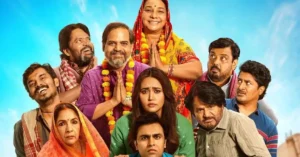


‘Ramayana: Part One’ has done something no Indian film has managed before in the United States. The Nitesh Tiwari-directed epic, starring Ranbir Kapoor, Sai Pallavi, and Yash, has become the highest-grossing Bollywood film ever released in the U.S., pulling in $17.89 million by its second Tuesday and overtaking Dhurandhar: The Revenge, which finished at $17.69 million. The bigger story, though, is not just the number. It is who bought the tickets. Nearly one-third of the film’s opening weekend revenue in North America came from outside the Indian diaspora, a figure that normally sits under 5 percent for Indian releases.
The Record Itself and the Film It Beat
The record-breaking run unfolded over several weeks. Ramayana: Part One opened on November 5, 2026, across 50,000 screens in more than 100 countries. By its first weekend in the U.S. and Canada, it had earned $8.6 million to $8.7 million, finishing fifth at the North American box office. The film’s highest single day came on its first Saturday, when it collected $3.76 million. By day three, the North American total had reached $9.57 million; by day eleven, it crossed $24 million in North America, surpassing the lifetime North American run of Baahubali 2: The Conclusion, which had earned $22 million.
The film that Ramayana replaced at the top of the Bollywood chart, Dhurandhar: The Revenge, had held the record since earlier in 2026 with $17.69 million. For Indian cinema overall, Baahubali 2 remains the benchmark in the U.S. with $20 million, and industry trackers expect Ramayana to finish between $21 million and $22 million domestically, putting that all-time Indian record within reach.
The Audience That Changed the Math
The demographic data explains why this record feels different. During its opening weekend, Postrak reported that the North American audience for Ramayana was 71 percent Asian American, 19 percent Caucasian, 5 percent Latino and Hispanic, and 3 percent Black. Those numbers translate to roughly $3 million in opening weekend revenue from non-Indian viewers alone, and total non-diaspora earnings are estimated to have crossed $5 million. For an Indian film, that is not a small shift. It is a structural change in who shows up.
The wider North American footprint also told a different story. Ramayana delivered the biggest second weekend ever for an Indian film in the territory, nearly doubling the previous best of $7.10 million held by Dhurandhar: The Revenge. That hold came even as the film underperformed in the Hindi and Telugu markets inside India, the two largest Indian language groups in the U.S. diaspora. The overseas numbers held because the film found viewers who were not part of the usual diaspora turnout.
The Marketing Campaign Behind the Crossover
Sony Pictures handled distribution outside India and backed the film with an extensive promotional push. Reports placed the combined international marketing investment at around $40 million, with Sony committing roughly $25 million and the producers contributing another $15 million. That spending is unusual for an Indian film in the U.S. market, and it was paired with a release strategy that gave the film 1,433 locations in North America on its opening weekend, the widest release ever for an Indian production in the U.S..
The marketing spend did not turn Ramayana into a $100 million American blockbuster, and the film still trailed the Japanese release Godzilla Minus Zero, which earned $31.6 million in the U.S. and Canada over the same opening weekend from a reported $19 million budget. But the campaign changed the film’s audience mix in a way that mattered more than a single weekend ranking. Ramayana reached viewers outside the core diaspora, and that reach is what pushed it past the old Bollywood record.
What Early Viewers Said
The first audience reactions from the Los Angeles premiere in late October set the tone for the release. Viewers praised the film’s scale, with one early reaction comparing it to The Lord of the Rings. Ranbir Kapoor’s portrayal of Lord Rama and Yash’s turn as Ravana drew steady praise, while some early reviews questioned the film’s music and the pace of its second half. The longer Hindi version also found more favor with Western viewers than the shorter English dub, which removed songs and key scenes that audiences had connected with.
“Epic #Ramayana crushes #Pathaan’s entire run as India’s #5 highest grossing film of ALL TIME at US #BoxOffice, in just 7 days”.
That social media post from box office tracker Luiz Fernando captured the speed of the run. The film entered the all-time top ten highest-grossing Indian films in the U.S. within its first week, passing Dangal’s entire $12.4 million U.S. run along the way.
A Release Built for Screens Everywhere
Ramayana: Part One arrived in Hindi, Tamil, Telugu, Kannada, and Malayalam, with an IMAX release also part of the plan. The film was produced by Namit Malhotra’s Prime Focus Studios in collaboration with the visual effects company DNEG and Yash’s Monster Mind Creations. Sony Pictures distributed the film internationally outside India, while Dharma Productions handled the Hindi-speaking market. The second part is scheduled for Diwali 2027.
The scale of the release gave the film a reach that most Indian titles in the U.S. never get. 1,433 theatres is a wide footprint, and the per-theatre average on opening weekend was a spectacular $8.5 thousand, the third-biggest for an Indian film opening in the U.S.. Those numbers made the crossover possible, and the audience data shows the film used that access to bring in viewers who had not been part of the usual Indian film audience in America.
You May Also Like





The Number That Matters Most
Ramayana: Part One now sits at $28 million in North America and counting, according to the latest domestic figures, and it has joined the top five highest-grossing Indian films of all time worldwide. The old Bollywood record in the U.S. belonged to Dhurandhar: The Revenge at $17.69 million. The new record belongs to a film that sold nearly a third of its opening weekend tickets to people outside the Indian diaspora. That is the part of the story that changes how Indian films are sold, booked, and marketed in America.
Also Read: Ramayana VFX Artist Says DNEG Layoff Came Just Before Gratuity Eligibility: ‘We Worked for Charity’
For more entertainment news and box office updates, visit VvipTimes.