

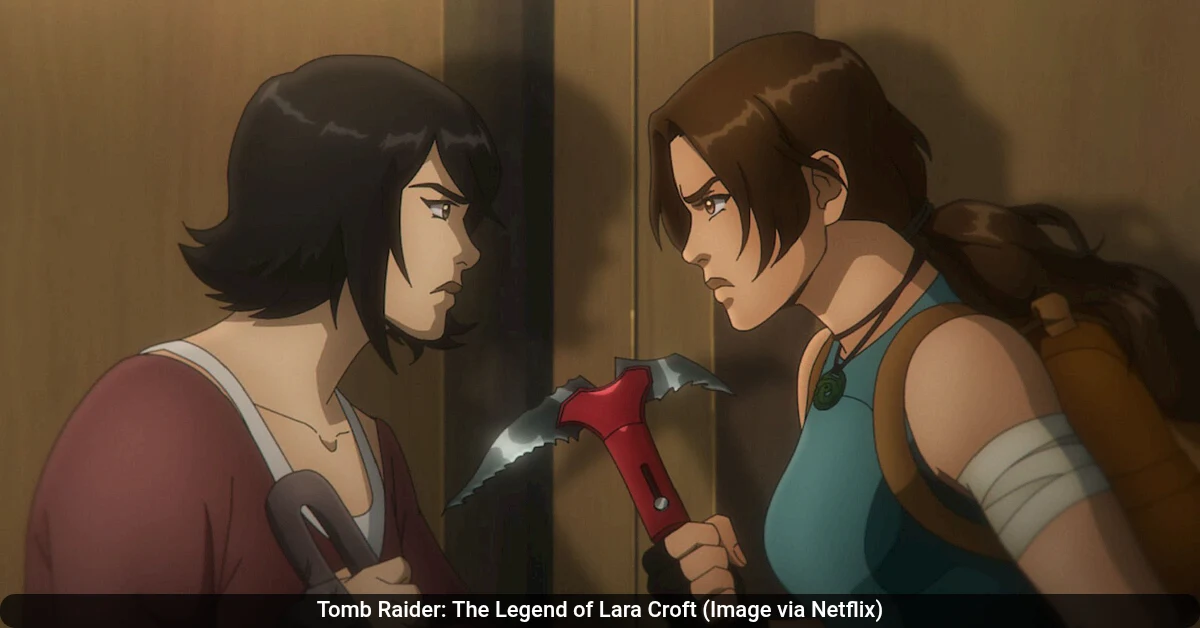
Netflix has decided not to continue with Tomb Raider: The Legend of Lara Croft, ending the animated show after its second season. The final episodes of the series were released on December 11, 2025. The cancellation follows a first season that did not meet the streaming service’s expectations for audience size and engagement, leading to the conclusion of Lara Croft’s latest animated adventure.
The Core Reasons Behind the Cancellation
The main factor in Netflix’s decision was the show’s performance. Reports indicate the first season had a modest debut, initially appearing at number nine on Netflix’s internal viewing charts but failing to climb higher or maintain a strong position. In the current streaming landscape, Netflix carefully examines a show’s ability to attract and keep a large audience to justify the cost of producing more seasons.
Critical and fan reception was mixed. The series holds a 73% rating on Rotten Tomatoes, which suggests a generally positive but not outstanding response from critics. Some viewers and reviewers noted that while the action scenes were well-executed, the storytelling sometimes felt slow or the characters lacked deeper development. This combination of middling scores and viewership that quickly declined after launch created a situation where renewing the show for more episodes was not a sustainable choice for Netflix.
The Impact of a Competing Live-Action Series
The cancellation news arrived shortly after a major announcement about the Tomb Raider franchise. On September 3, 2025, it was confirmed that Sophie Turner (Game of Thrones) would star as Lara Croft in a new live-action series for Amazon Prime Video, with acclaimed writer Phoebe Waller-Bridge (Fleabag) serving as creator. The animated series’ cancellation was confirmed just one day later, leading some fans to wonder if the two events were connected.
However, evidence suggests the live-action project was not the direct cause of the animated show’s end. The two series were developed by different companies—Netflix and Amazon—and no exclusive television rights for Tomb Raider prevent two shows from existing simultaneously. The decision to cancel The Legend of Lara Croft was based on its own performance metrics, which were likely assessed before the public announcement of Sophie Turner’s casting.
Production Background and Season 2 Details
Tomb Raider: The Legend of Lara Croft was first announced by Netflix in January 2021, a period when many animated projects were greenlit as the entertainment industry adapted to production challenges. The show, featuring Hayley Atwell (Captain America: The First Avenger) as the voice of Lara, finally premiered on October 10, 2024. Netflix announced a second season later that same month, but it is now confirmed as the final season.
The second season launched globally on December 11, 2025. The story follows Lara Croft and her friend Sam Nishimura (voiced by Karen Fukuhara) on a global quest to recover stolen African Orisha masks, putting them in conflict with a powerful billionaire. The complete voice cast for the final season includes Allen Maldonado as Zip, Earl Baylon as Jonah, and new additions O-T Fagbenle and Toks Olagundoye.
The official synopsis for Season 2 states: “Lara’s thrilling new adventure takes her around the globe as she delves deeper into the hidden secrets of Orisha history… discovering these relics contain dark secrets and a power that defies logic. Power that may, in fact, be divine.”
The Broader Tomb Raider Franchise Moves Forward
While Netflix’s animated chapter has closed, the Tomb Raider franchise remains highly active. The live-action Prime Video series starring Sophie Turner is scheduled to begin filming in January 2026. Sigourney Weaver has also joined the cast in a role created specifically for the show.
In the gaming world, the character of Lara Croft is also transitioning. At The Game Awards in 2025, it was announced that actress Alix Wilton Regan will become the new voice and performance-capture artist for Lara in upcoming games, taking over from Camilla Luddington. Luddington, who voiced Lara for a decade across three major games, publicly welcomed her successor.
Two new Tomb Raider games are in development: Tomb Raider: Legacy of Atlantis, a remake of the original game set for a 2026 release, and Tomb Raider: Catalyst, a new mainline sequel planned for 2027.
Netflix’s Strategy with Animated Adaptations
Netflix continues to invest in adult-oriented animated series, particularly adaptations of popular video games. Successful titles like Castlevania: Nocturne and Arcane have proven there is a substantial audience for this type of content. The platform has other similar projects in production, including Splinter Cell: Deathwatch and The Witcher: Sirens of the Deep.
The cancellation of Tomb Raider: The Legend of Lara Croft reflects a strategic shift where Netflix is becoming more selective, choosing to concentrate resources on animated series that demonstrate breakout potential or sustained high viewership from their initial release. This approach means even shows with dedicated fan bases may not continue if they do not achieve broad enough appeal on the platform.
Also Read: Mayor of Kingstown Season 4 Episode 8: Tracy McLusky’s Death, Explained

