

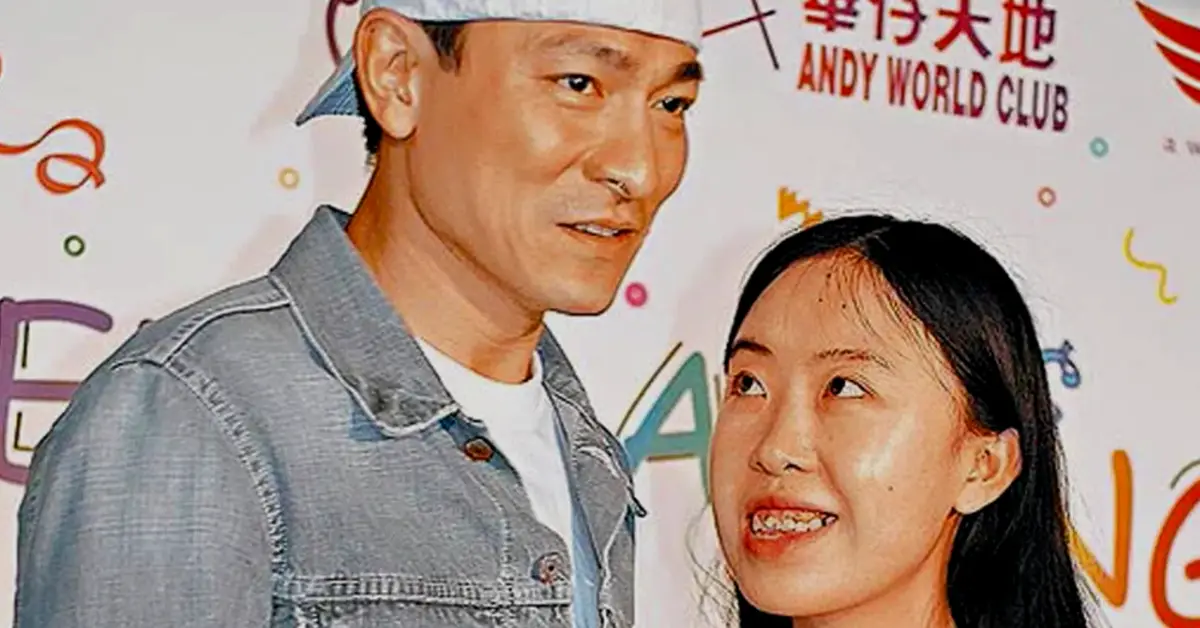

The name Yang Lijuan still triggers discomfort across Chinese-language entertainment circles nearly two decades after her obsession with Andy Lau consumed her family. In March 2007, the 28-year-old from Lanzhou finally met the Hong Kong superstar at a fan club birthday event in Hong Kong. She posed for a photograph with him. She did not get the private conversation she demanded. Less than twenty-four hours later, her 68-year-old father, Yang Qinji, jumped into the sea at Tsim Sha Tsui and drowned. The family had already sold their apartment. The father had attempted to sell a kidney to finance the pursuit. He was rejected by a hospital because organ trading is illegal in China.
The Thirteen-Year Pursuit That Bankrupted a Family
Yang’s fixation began in 1994, when she was sixteen. She told her parents she had dreamed of Andy Lau and believed the dream carried personal significance. Her father, a retired middle school teacher, was in his forties when she was born. He indulged her. Her mother was in poor health and could not work. The family lived on Yang Qinji’s monthly pension of 1,900 yuan, roughly $240 at the time. Yang quit school. She stopped working. She collected Lau’s photographs, cassette tapes, and magazine clippings. She refused to marry unless she could meet him intimately.
Between 1997 and 2007, the family made repeated trips to Hong Kong and Beijing. Each trip drained savings. Eventually they sold their sub-40-square-metre apartment in Lanzhou. They borrowed from relatives and high-interest lenders. In early 2007, Yang Qinji borrowed 11,300 yuan from a colleague’s son, pledging his pension as collateral. By then the family had no assets left. The father wrote a petition letter to Andy Lau’s management: “Mr. Lau, please meet our daughter. She has paid the price of her youth for her obsession with you. Only you can save her life”.
When the Kidney Sale Became a Media Spectacle
The kidney proposal was not a private family matter. In March 2006, Chinese media reported that Yang Qinji had visited a hospital in Lanzhou to discuss selling one of his kidneys to fund another Hong Kong trip. The hospital refused. Andy Lau’s management responded publicly. Through his agent, Lau called Yang’s behaviour “incorrect, abnormal, unhealthy, and unfilial”. He said he would not meet her under those conditions. He urged the father not to sell his kidney because doing so would make a meeting even less likely.
“If a girl likes me and does so many things that hurt her father, I feel regret. I hope she stops this unreasonable behaviour. Other fans must not learn from this.” — Andy Lau, April 2007
The media attention intensified the family’s resolve rather than extinguishing it. Yang Lijuan told reporters her father’s sacrifice proved the depth of her devotion. She said her parents were less important to her than Andy Lau. After her father’s death, she repeated that position in interviews.
The Hong Kong Meeting and the Twelve-Page Suicide Note
On 25 March 2007, Yang Lijuan attended a fan club birthday party in Hong Kong. Andy Lau’s fan club had arranged for her to join. Organisers allowed her on stage. She spoke with Lau and took a photograph with him. The event lasted over two hours. But Yang wanted more. She demanded ten minutes of private conversation. The request was denied.
Her father’s fury built overnight. At around 5 a.m. on 26 March, while his wife and daughter slept in a 24-hour McDonald’s in Tsim Sha Tsui, Yang Qinji wrote a 12-page suicide note and walked to the Star Ferry pier. Coast guard rescuers pulled him from the water. He died in hospital. The note called Andy Lau “selfish and hypocritical” and blamed the star for the family’s ruin.
“Andy Lau… my daughter has wasted her adolescence and we are living in heavy debt. Aren’t you guilty for this? I will not rest in peace until my daughter spends time with you again.” — Yang Qinji, suicide note, March 2007
Andy Lau’s Response: Shock, Refusal, and a Career Under Strain
Andy Lau released a statement hours after the death. He said he was “shocked” and urged fans to be rational. His management showed three photographs proving Lau had spent time with Yang at the fan event. They offered assistance on the day of the tragedy. But they refused to arrange a second private meeting. Lau’s representatives said Yang’s demands had crossed into “abnormal” territory and that the family should return to Lanzhou and rebuild their lives.
The backlash against Lau was immediate. Hong Kong tabloids labelled him “cold-blooded.” Yang Lijuan publicly accused him of causing her father’s death. She demanded he attend the funeral and bow to the body. She refused to collect her father’s remains until Lau met her conditions. She and her mother stayed in Hong Kong past their visa expiry and had to apply for extensions.
Behind the scenes, the incident took a personal toll. Reports later emerged that Lau sought psychological counselling after the tragedy. He was receiving more than 100 letters a day from fans, some threatening self-harm if they could not meet him. His security protocols tightened. His public engagements with fans became more controlled. The episode hardened a boundary that Lau had been drawing for years: fame does not create an obligation to individual fans’ emotional demands.
The Legal Aftermath: Yang Lijuan v. Southern Weekend
In 2008, Yang Lijuan and her mother sued Southern Weekend, one of China’s most influential newspapers, over an April 2007 feature titled “You Won’t Understand My Sorrow.” They claimed the article defamed the family and invaded their privacy. They sought 300,000 yuan in damages. The Guangzhou Yuexiu District Court dismissed all claims in July 2008. The Guangzhou Intermediate People’s Court upheld the ruling on appeal in September 2009.
The courts ruled that Yang had become a “voluntary public figure” by repeatedly contacting media and staging public appeals. As a voluntary public figure, she had surrendered a degree of privacy protection. The reporting was substantially true. The lawsuit failed. Yang was ordered to pay court fees. The judgment set a precedent in Chinese media law: individuals who actively court publicity cannot later claim the same privacy protections as private citizens when coverage turns unfavourable.
The Media Ethics Problem Nobody Solved
The Yang Lijuan case exposed a structural failure in Chinese entertainment journalism. From 2006 onward, local and national outlets treated the family’s financial collapse as a serialised drama. Reporters accompanied Yang to Hong Kong. They interviewed her father about the kidney plan. They published his petition letters. Some commentators later argued that media attention functioned as an accelerant, not a watchdog.
A 2007 China Youth Daily investigation suggested that some outlets had effectively become participants in the story, coordinating travel and amplifying the family’s expectations. Media ethicists pointed to a core contradiction. The same reporters who covered the father’s kidney plan did not intervene to stop the family from spending money they did not have. They covered the suicide as a moral parable about fandom. They did not examine their own role in normalising the pursuit.
What Yang Lijuan’s Life Looks Like Now
Yang Lijuan still lives in Lanzhou. She is in her late forties. She works at a supermarket chain as a shelf stocker. She lives with her mother, who has limited mobility, in a government-subsidised rental flat. The monthly rent is under 100 yuan. She has not married. She has no children. She told interviewers in 2019 that she regrets her obsession. “If I could live my life over again, I would not do things that way,” she said. She also said her father was “the best father there was” and hoped he would forgive her.
But her remorse has been inconsistent. In a 2018 interview, she said she should not be held fully responsible for the tragedy. “When you like someone, you cannot say you are at fault,” she said. She has occasionally accepted media interviews for money. She has also refused offers to livestream her story. She burned most of her Andy Lau memorabilia after returning to Lanzhou.
You May Also Like


View all articles about
The Industry Lesson: Fandom, Liability, and the Boundaries of Celebrity
The Yang Lijuan case did not produce a single industry-wide reform. It produced a template. Hong Kong and mainland talent agencies now routinely issue “rational fandom” statements when fan behaviour escalates. Fan clubs operate with stricter codes of conduct. Celebrities are advised not to meet individual fans privately outside organised events. The case is taught in media law courses as a cautionary example of voluntary public figure doctrine. It is cited in fan culture studies as evidence that parental indulgence and untreated mental illness can intersect with commercial entertainment machinery in catastrophic ways.
Yet the underlying dynamics have not disappeared. Parasocial relationships have intensified with social media. Fans can now reach celebrities directly through paid platforms and algorithmic amplification. The line between devotion and entitlement is blurrier than it was in 2007. Yang Lijuan’s story remains a reference point because it shows what happens when that line disappears entirely: a family sells its home, a father offers his kidney, a daughter gets a photograph, and a man jumps into the sea because the photograph was not enough.
VVIPTimes understands that the darkest chapters of celebrity culture are not about the stars at all—they are about the people who mistake proximity for salvation.


























Leave a Reply