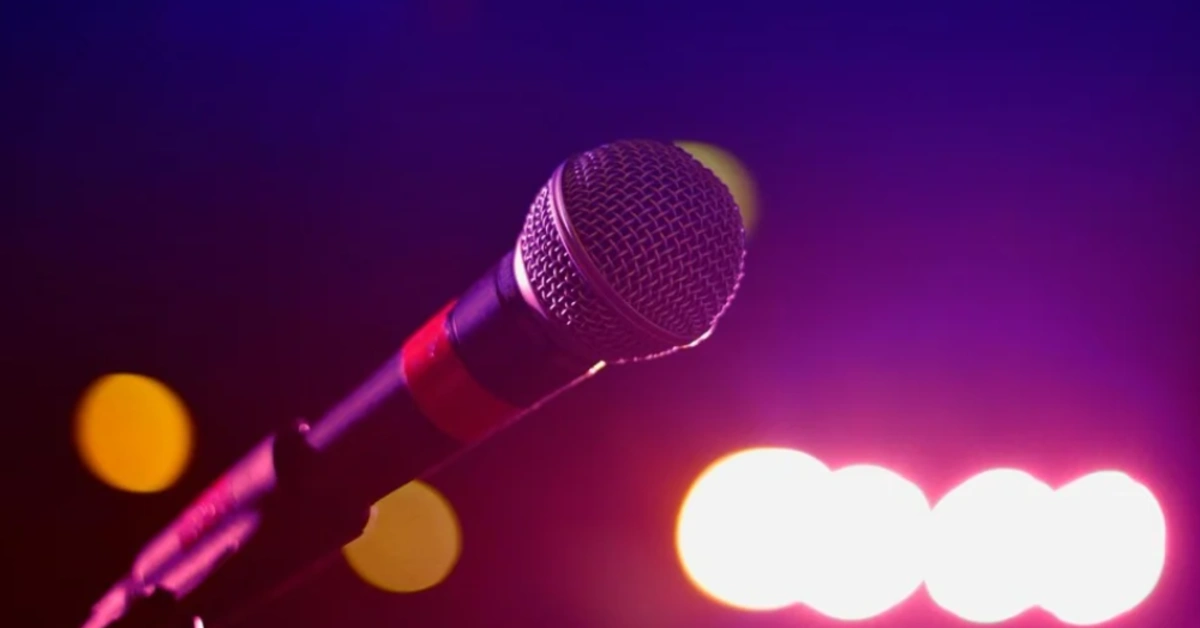
Australia’s music industry has taken a firm stand against artificial intelligence in music. The Australian Recording Industry Association (ARIA) announced that wholly AI-generated tracks will no longer be allowed on the country’s official music charts. The decision comes after a cover of Madonna’s 1989 hit “Like a Prayer” stormed the charts and sparked heated debate about whether AI-made music should compete with human artistry.
The new rules take effect from Friday, 28 August 2026, and apply to all ARIA Charts, including the top 50 singles and albums. Under the updated Code of Practice, music must be “substantially human made” to qualify. Tracks that use AI only in a supporting role can still chart, but songs created mostly or entirely by generative AI will be excluded.
The controversy centres on Queensland DJ and producer Josh Fawaz. His dance cover of Madonna’s “Like a Prayer” became the most-played song on Australian radio and reached number four on two ARIA charts in July. The track also topped the ARIA Top 20 Australian Dance Singles Chart and peaked at number two on the overall chart. It has been streamed more than 48 million times on Spotify alone.
How the Madonna Cover Exposed AI’s Growing Role in Music
Fawaz’s version of “Like a Prayer” used AI-generated vocals and drums. Music fans and producers quickly raised suspicions that the track was not produced by a human. Some accused Fawaz of relying heavily on AI tools and suggested the track may have been made using the AI platform Suno.
Music producer Mitch Thomas, who performs as Needs No Introvction, publicly criticised the track. Fawaz responded on Instagram, saying he used AI “as a tool” and told critics to stop overreacting. He later updated the track listing on Spotify to credit generative AI for the vocals and drums.
“I understand that AI in music isn’t for everyone and that’s fine. Good to see Aussie artists killing it globally!!” – Josh Fawaz on social media
Despite the backlash, Fawaz defended his use of AI. He described it as a “tool” in his music and said his focus was to provide listeners “good music”. He also called ARIA’s new rules a “great move”.
New ARIA Rules: What’s Allowed and What’s Not
Under the new rules, AI-assisted music can still appear on the charts. But there are clear conditions. For a recording involving generative AI to qualify, it must be “substantially human made,” comply with copyright laws, and raise no concerns around stream or chart manipulation.
Humans must have written the song and performed the lead vocal and primary instruments. AI can still be used for mastering, drum machines, and auto-tune. But tracks where AI generates most of the creative elements, such as lead vocals or key instrumentals, will not be eligible.
ARIA will use definitions from a global music industry labelling standard announced in July to distinguish AI-generated from AI-assisted recordings. Tracks are classed as “AI-Generated” if AI was used to create the “entirety or the primary portion of the creative elements” and “AI-Assisted” if the technology was used only for “some expressive elements”.
Artists will be required to declare AI use when they submit a song for chart consideration. If it later emerges that a song was largely AI-generated, ARIA can retrospectively adjust chart positions, withdraw accreditations, and even request that ARIA No. 1 Awards be returned. Artists and their representatives can challenge exclusions through an updated disputes process.
AI-generated music will also not be considered for recognition at the annual ARIA Music Awards.
Industry Leaders and Artists React to the Ban
ARIA CEO Annabelle Herd said the changes reflect the industry’s commitment to promoting human artistry.
“Artists already use AI tools in their work, the charts can and should evolve to keep room for that, but music generated wholesale by services built on artists’ recordings is a different matter.” – Annabelle Herd, ARIA CEO
She added that “a chart that rewards unlicensed AI output would undercut the very basis of the recorded music we exist to represent”. Herd also called on radio stations to adopt similar codes.
Australian electronic act Peking Duk supported the move. Band member Adam Hyde told Channel Nine’s Today show that AI-generated music was “removing the human experience from life”.
Oliver Bown, an associate professor at the University of New South Wales who researches the relationship between technology and art, said the impact of AI on creative industries demands urgent attention.
“Many large commercial AI music generation companies have assumed they can scrape training data without permission, and so are potentially predatory on artists. I believe people can do great artistic work using AI respectfully, but there is also a predatory phenomenon whereby you can just go fishing for plays and profits.” – Oliver Bown, UNSW Associate Professor
He added: “Many organisations have developed rules about AI use and an increasing number see the need to ban full-AI works. I think this is the right thing to do”.
You May Also Like:



A Global Movement Against AI-Generated Music
Australia is not alone in taking action. In July, the International Federation of the Phonographic Industry (IFPI) introduced new eligibility guidelines requiring chart entries to be substantially human made. More than 20 official chart programs internationally have already adopted similar principles.
Earlier this year, a song was banned from Sweden’s music charts because it was created by AI. The track, credited to an artist named Jacub, gained nearly five million Spotify streams and topped a national chart before it was pulled.
In the United States, the AI country act Breaking Rust reached No. 1 on Billboard’s Country Digital Song Sales chart in 2025. In April 2026, the AI act IngaRose topped iTunes charts in the U.S. and globally. These cases focused industry attention on the absence of chart rules governing AI.
A new study by SubmitHub found that almost 40 per cent of new music released globally in July 2026 used AI in its creation. The company analysed more than one million tracks and found that 23.2 per cent were fully AI-generated.
Spotify is also taking steps to make AI-generated artists easier to identify. From September 2026, the streaming giant will add an “AI Persona” badge to some artist profiles.
What This Means for Australian Artists
ARIA said it will keep the code under review as AI technology continues to develop. The new rules give Australian artists a clear framework to work within. ARIA’s move draws from principles published in July by the global body representing the recorded music industry.
In July 2026, Australian Prime Minister Anthony Albanese promised “the strongest possible protection” from AI for Australian creatives. Albanese pledged that writers and musicians would be able to choose if and how their work was used in AI training, saying it would be “theft” if creatives lost that control and were not paid.
ARIA compiles Australia’s most popular songs and albums in the ARIA Charts, which are released on Apple Music and Spotify every Friday. The changes will apply to the charts released on Friday, 28 August 2026.
Also Read: Dr. Dre Confirms He Uses AI to Make Music, Internet Says ‘Time to Retire Dre’
For more entertainment news and updates from around the world, stay connected with VvipTimes.


Leave a Reply